Just 15 kilometers from the border:
school shelter is a lifeline for Horodnia
In Horodnia, a Ukrainian border town that endured occupation and continues to live under the threat of attack, a renovated school shelter has become more than a place of refuge. It is helping 350 children return to in-person learning while providing a vital safe space for the wider community.
FOR UKRAINIANS, SCHOOL SHELTERS have long become more than just the only way for children to continue in-person learning. They also serve as safe spaces for civilians during air raid alerts and emergencies – acting as so-called “Points of Invincibility,” where community members can warm up, charge their devices, and stay connected during prolonged power outages.
Shelters are also used for community and cultural needs, hosting concerts, performances, school assemblies, and academic competitions. It is truly a safe space that gives children the familiar and vital social interaction of childhood.
However, not all children in Ukraine have the opportunity to continue studying at school alongside their classmates. As Minister of Education and Science Andrii Butenko said recently: “82% of schoolchildren and kindergarten pupils are currently covered by shelters, but we should distinguish between shelters used simply to take cover from an enemy attack and shelters where learning can continue. Only 42% of schools can continue the learning process during an air raid alert, rather than just sheltering the children.”
In October this year, the FCA team completed renovation works on one of the school shelters in the border town of Horodnia, in northern Chernihiv Oblast. We spoke with the school’s children and teachers, community members, and the engineer who worked on the construction to show, through one example, just how critical such a safe space is for the community.
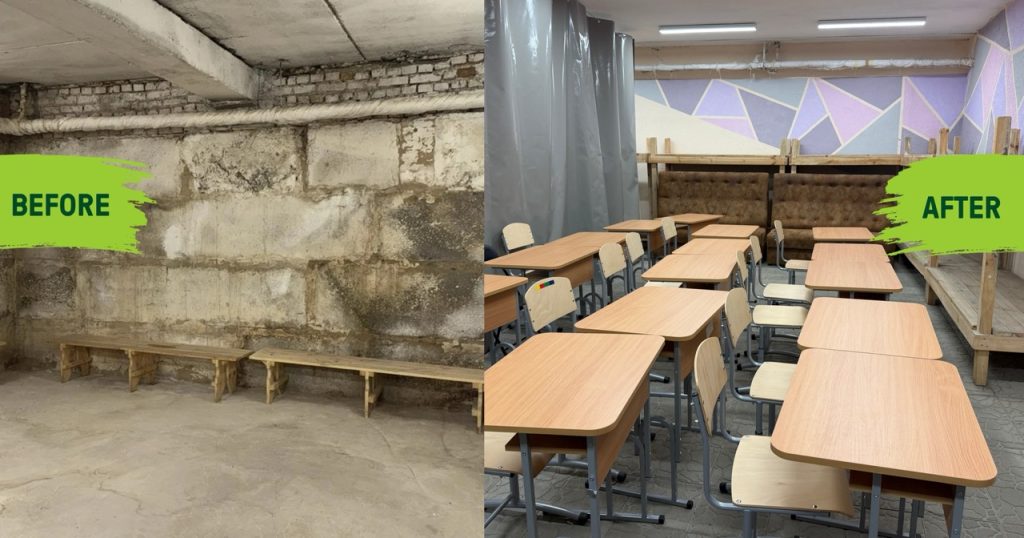
In the shelter children can study and be safe
“Today, November 2, for the first time since the beginning of the full-scale invasion, our school can accommodate this many children for learning. That is 350 children studying in the shelter right now,” shares the lyceum principal, Serhii Romanchuk, on the first day of classes after the autumn break.
Parents had been really hoping for the school shelter to open, as for many residents of this town – located just 15 km from the border – it is the only safe place in the area. “Quite often, parents bring their children to school during an air raid alert; drones frequently fly over the town, but in the shelter, the children can study and be safe,” Serhii Romanchuk continues.
Since July 2026, the FCA team has been carrying out the construction work, a process filled with challenges. Constant attacks on the town, a shortage of contractors and workers, and a lack of safe long-term housing for builders in the area – all of this required strong teamwork and professionalism. According to FCA Lead Engineer Serhii Dorozhko, who had to visit the town more than 11 times during the renovation, this has been one of the most difficult projects he has ever worked on. The main goal was to finish the shelter as quickly as possible for a full start to the new school year, though challenges like the need to reinforce the main wall slowed down the process.
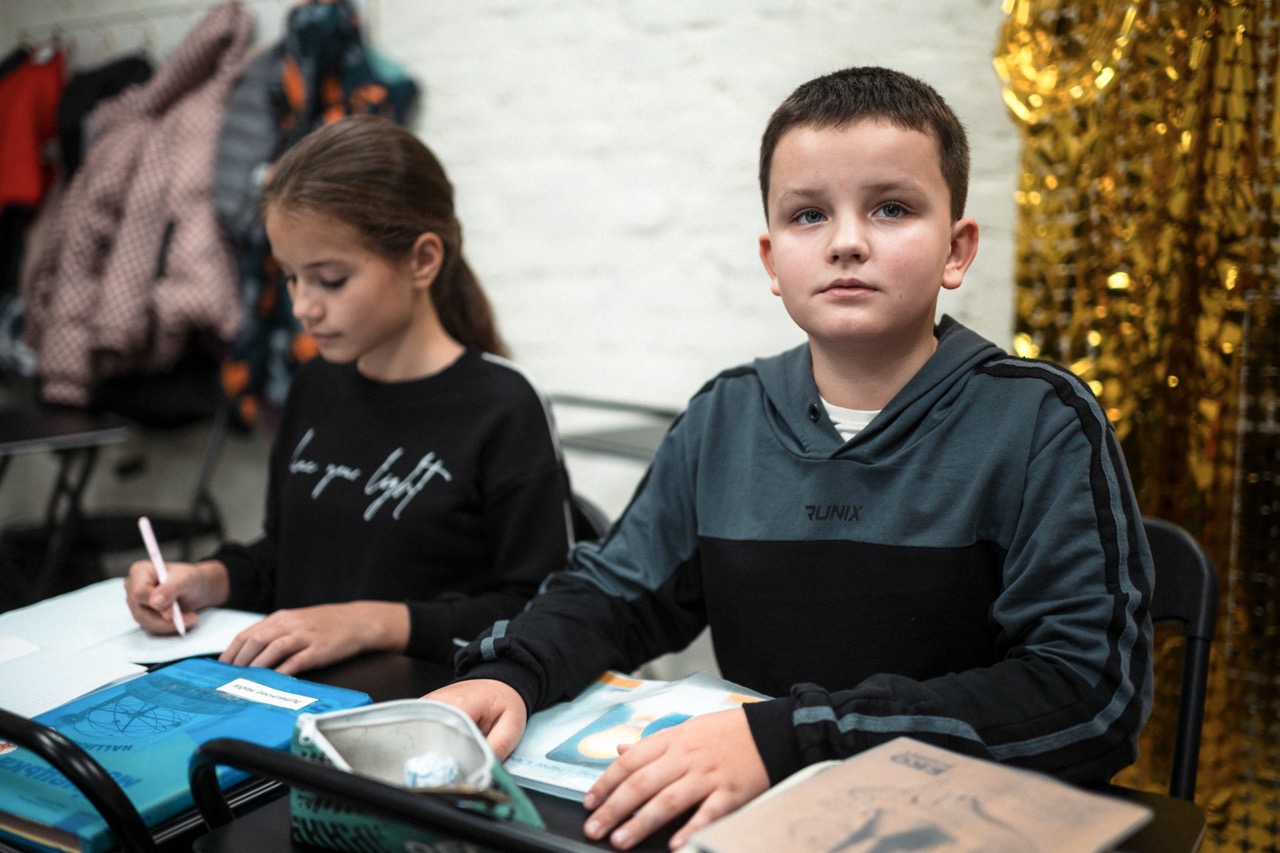
Still, learning never stopped: classes were already taking place in the completed section of the shelter while builders finished the final works. Fifth-grader Nikita Zhostkyi shares that for him, it is much more fun to study at school than at home: when they are in the shelter, they cannot hear the sounds of Shahed drones, and it feels safer to learn.
“There’s no fun if you’re not where your classmates are,” he says.
A town recovered from occupation still under threat
On the first day of the full-scale invasion, February 24, Russian troops entered Horodnia and its surroundings in the morning, just as local children were supposed to wake up and get ready for school. Horodnia remained under occupation for 37 days. A few dozen kilometers is a short distance for Russian artillery systems, so even after de-occupation, children could not return to school for a long time. Because shelling of the border areas continues daily, in-person learning was banned within a 40-kilometer zone from the border, forcing around 13,500 children across the region into distance learning.
It was only at the end of 2023 that this zone was reduced and local schools were allowed to reopen. However, the community faced a new challenge: the lack of proper, safe spaces where lessons could continue.
Despite everything, it is clear today how much the community has recovered since then. Two schools in Horodnia are now operating with fully equipped shelters, where children can not only stay safe during alerts, but also continue learning, spend time with friends, and enjoy normal school life. For a border town, this is much more than just restored infrastructure. It is a sign that life continues here, giving families the support they need to stay home and plan for the future.
Even in difficult times, the children never stop dreaming of a peaceful life and an open world. “If there were no war, I would like to travel the world with my parents. I also have a lot of friends living outside Ukraine, for instance in the Czech Republic, and I would like to visit them,” shares Nikita.
Safe spaces like these in their hometown help children hold on to their childhood, keep hope for the future, and move closer to their dreams.
—
The rehabilitation of school infrastructure is carried out under the Support to Safe Education project. Implemented in partnership with and funded by the European Union, the project helps children in Chernihiv, Kharkiv, and Poltava regions continue learning in safe, inclusive, and supportive environments.