Going to market
Somaliland’s digital entreprenurs
In Somaliland, as elsewhere in the world, digital channels have become important for users and advertisers. In a country with high youth unemployment, self-employment is vital. We met with young entrepreneurs in Hargeisa who are relying on digital advertising.
Traditional livelihoods, such as agriculture and the meat and livestock industry, have been important in the northern part of Somalia, known as Somaliland. However, excessive reliance on these sectors in a changing world has led to extremely high youth unemployment.
The Somaliland National Youth Organization estimates that up to 75 per cent of Somaliland’s youth are unemployed. According to a report by the Ministry of Labor, 80 per cent of jobs are not advertised, partly due to nepotism, i.e. favoritism towards relatives.
Higher education is valued in Somaliland, but even educated young people are easily left out of the workforce. Some try to move elsewhere, while for others the only option is to start their own business. That requires customers, and they may be easiest to find online.
Many entrepreneurs in traditionally-held industries in Somaliland have found social media as a new way to market their products. Marketing on social media has become an important part of the growth story of many companies worldwide.
Shukri and Asma hope digital platforms will expand their customer base
Shukri Hassan, 27, and Asma Muhamed, 21, are busy in their newly established sewing shop at the back of a marketplace in Hargeisa.
“We used to work from home, but it’s hard to find clients when you work from home,” says Shukri.
It’s easier in the marketplace.
“Here we not only sell directly to customers but also wholesale to neighboring stores.”
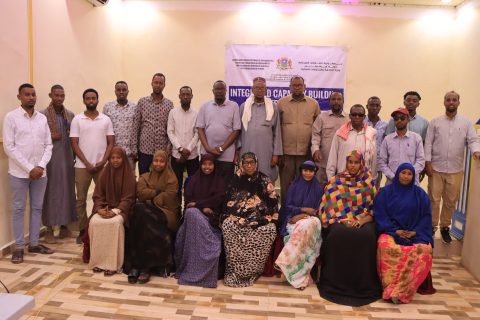
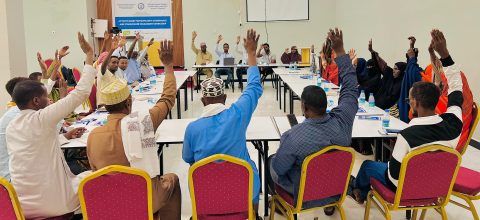
Both are trained seamstresses. An FCA training course designed for young entrepreneurs taught them digital marketing, graphic design, accounting and how to minimize business costs.
Starting a business can be difficult, but so far, things have gone according to plan. Orders have been coming in nicely. The company hasn’t found any customers online yet, but that’s what they’re working towards.
“We have just started a social media channel, but we already have some followers. We mainly do live videos on Tiktok because it is a big platform here and that is what our target audience uses,” Shukri says.
In addition to Shukri and Asma, the company has two other owners. The women hope to expand their operations if the business is successful.
“If business takes off well in the next six months, we will probably open another store somewhere else,” Shukri plans.
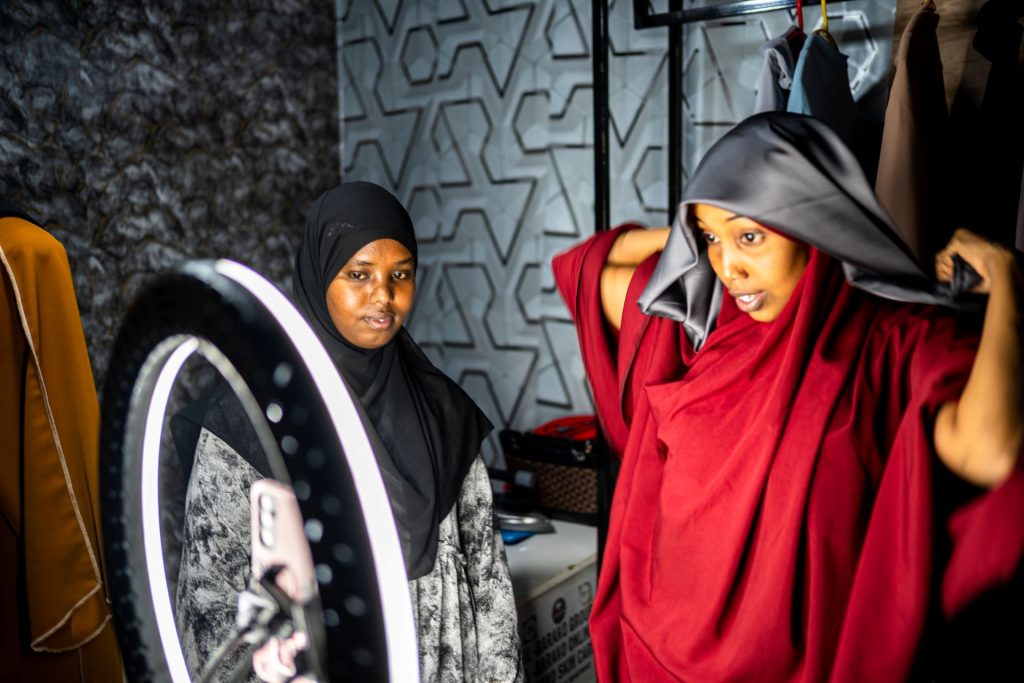
Money is very much needed. Shukri has three children and three siblings. Only one of her siblings has attended university. According to Shukri, they had to drop out of school when the person who financed their studies could no longer pay.
“I would like to study at university myself. I’m interested in economics because I want to be a proper businesswoman,” Shukri smiles.
We mostly make live videos for TikTok because it’s a big platform here and that’s what our target audience uses.
When they couldn’t find work after university, Samda and Huda founded a marketing company
Samda Abdifarah, 23, and Huda Ismail Mohammad, 23, founded Dhammay, a company specializing in social media marketing, with two other partners.
“We both graduated from university with top honors, but we still couldn’t find jobs anywhere,” says Huda.
Samda and Huda have known each other since university. Both studied economics. During their time on FCA’s course, they met their current colleagues and learned practical things, such as programming. They also received career advice during the course.
“Even before the course started, we had an idea for our own business, but we learned a lot of useful skills during the course. Programming, in particular, was important to learn,” Huda continues.
Currently, Dhammay manages clients’ social media accounts and produces videos and other digital content. The company also produces print materials, such as brochures.
“At first, it was hard to find customers. We advertised online, but we also went door to door. We did some work for free to convince our customers how valuable we could be to them”
Today, the company has customers and generates about 300 US dollars (approximately 250 euros) a month. The young entrepreneurs plan to invest the proceeds in printers.
“We’d like a printer that can print posters and another one that can print logos on clothing. Right now we can’t afford both, but hopefully we’ll be able to buy the second one soon. That would really boost our earnings.”
“It was difficult to find customers at first. We advertised online, but we also went door-to-door.”
Agriculture graduate Nimco sells nutritional supplements with her friends on Tiktok
Nimco Abdi Hassan turns on the ring light and positions herself in front of her phone’s camera. Now she’s promoting products in a live stream on TikTok.
“Digital channels are important. They’re a great way to find customers,” says Nimco.
She and two other women have a newly established dietary supplement company that has gotten off to a good start.
“Right now, we have five main product lines: dietary supplements for pregnant women; breastfeeding mothers; children; gym-goers; and those who want to gain weight,” says Nimco.
She explains that in Somaliland, women in particular want to gain a little weight, but not too much, to fit a beauty ideal.
“I’ve actually gained five kilos,” she smiles.
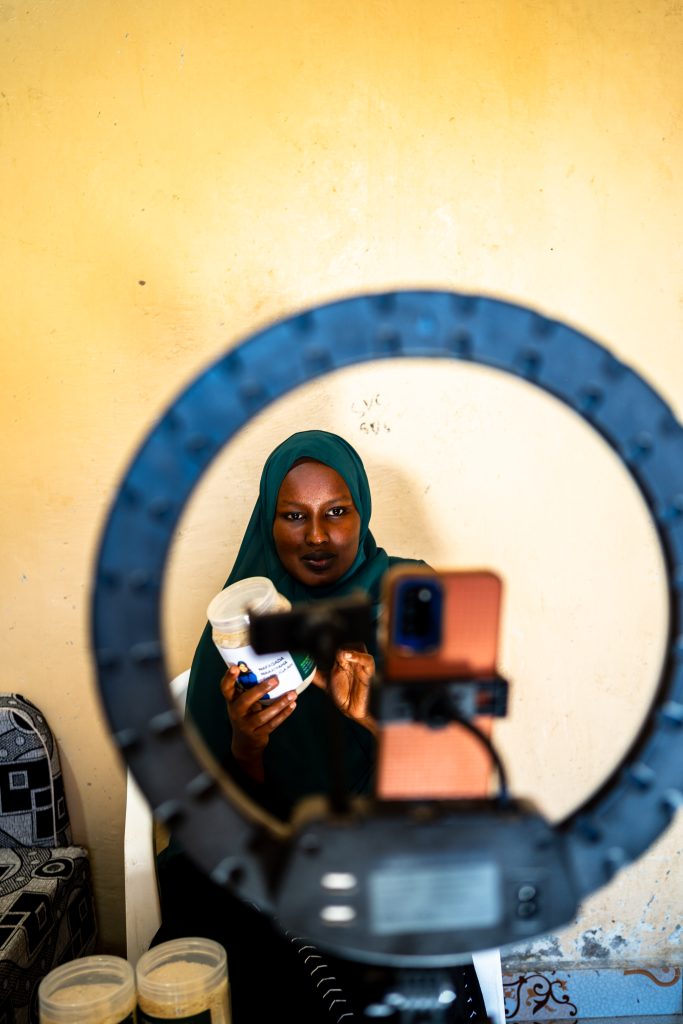
Nimco, 25, met her business partners Ayan Ali Osman, 28, and Nura Ahmed Ali, 20, at one of FCA’s business skills courses. During the course, the women realized that by combining their skills, they had the perfect set of expertise needed to start their own business.
“One of the assignments in the course was to come up with a business idea. According to the market research we conducted, people complain about food quality, chemicals, and other issues, but there wasn’t any business here focused on food supplements,” says Nimco, who studied agriculture and economics.
Nura, for her part, studied information technology, journalism, and graphic design, while Aya studied nutrition and graphic design. The three of them complement each other well and possess the expertise needed for every stage of the production chain.
“In the early days, we found most of our customers online. People watched our videos on social media and either ordered products online or came to visit us. These days, some people also recommend our products to others.”
Currently, the trio’s business generates a profit of about 60 US dollars (approximately 50 euros) per month. Half of that amount is reinvested in the business. Among other things, the trio has purchased a machine to grind the dietary supplement into powder, another to package the product, and a third to manufacture liquid products. The purchase of these machines has increased production.
“At first we invested everything, but now we’re starting to take some money out,” Nimco says.
—