Displaced children start school:
“Now I am learning new things every day”
Drought and conflict have kept thousands of displaced children in Somalia’s Southwest State out of school. With funding from the Ministry for Foreign Affairs of Finland, FCA is helping them into the classroom, many of them for the first time.
“BEFORE I WENT to school, I did not know how to read or write. Now I am learning new things every day.”
Aniso Farah Mohamed is a nine year old girl living in Dariley camp for internally displaced people in Southwest State, Somalia. Until this year, she had never been enrolled in school. Today she is in Grade 2 at Qasab Primary School, where she is learning to read, write and count for the first time.
Not far away, 11 year old Mohamed Munye Mohamed started at Al Nureyni Primary School in April 2026. Like Aniso, he is an internally displaced child whose access to formal education had been limited. Both children are among those reached by FCA’s education and emergency cash programme in Baidoa and Barawe.
Displacement keeps children out of the classroom
For years, recurring drought and conflict have forced families out of the Bakool, Bay and Lower Shabelle regions. Many arrive in Southwest State with few belongings and settle in camps on the edges of the main towns.
Baidoa, the interim capital of Southwest State, now hosts an estimated 1.6 million people, nearly half of whom are displaced. Meeting basic needs is a daily struggle. Across Somalia, close to one in five households lack reliable access to clean water, and in Baidoa a single 200 litre drum of trucked water can cost a family up to 2.50 US dollars (2.23 euros). Barawe, the state’s other main hub, is relatively calm, but few humanitarian organizations operate there.
For displaced families, the cost of survival is the main obstacle to education. When parents are struggling to pay for food and water, children are often kept at home or sent to work. Some parents are not aware that their children have a right to education. Girls face additional barriers, including a lack of sanitary supplies that keeps some of them at home every month, and children with disabilities are frequently not enrolled at all.
“I did not know how to read or write”
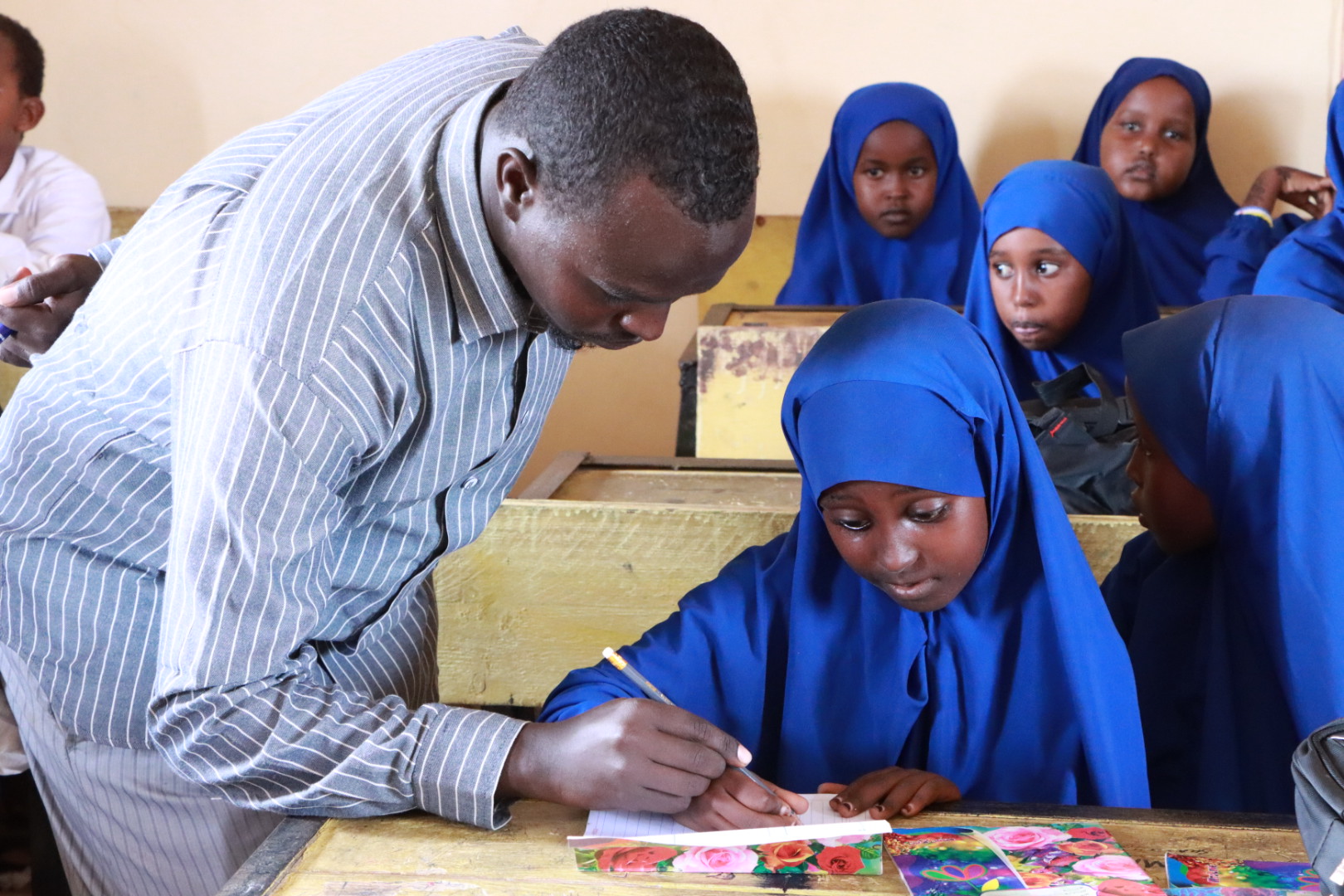
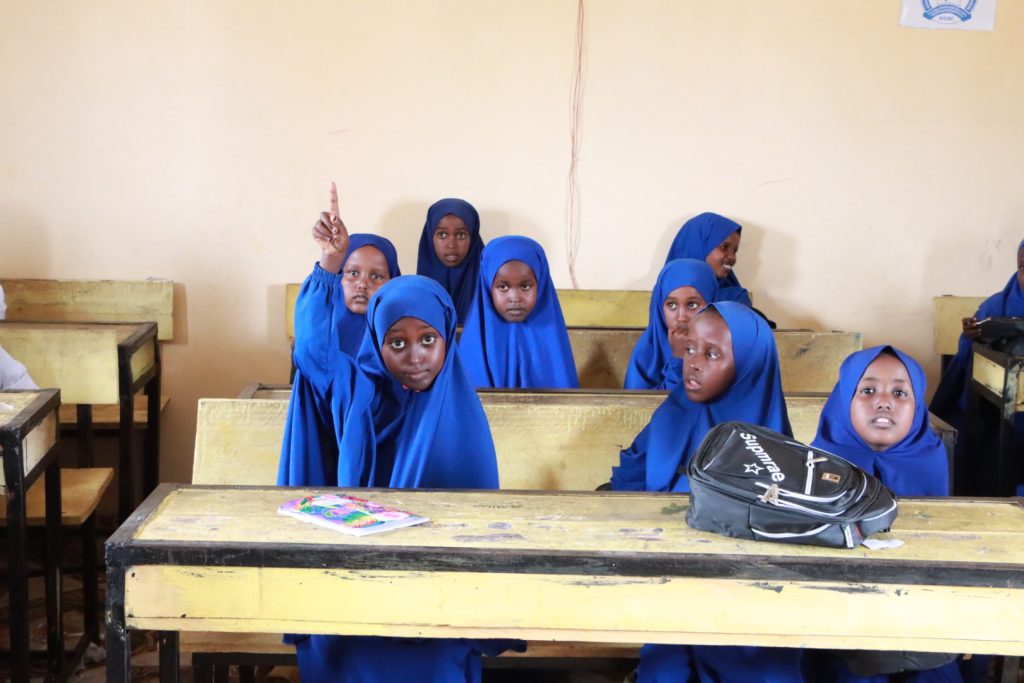
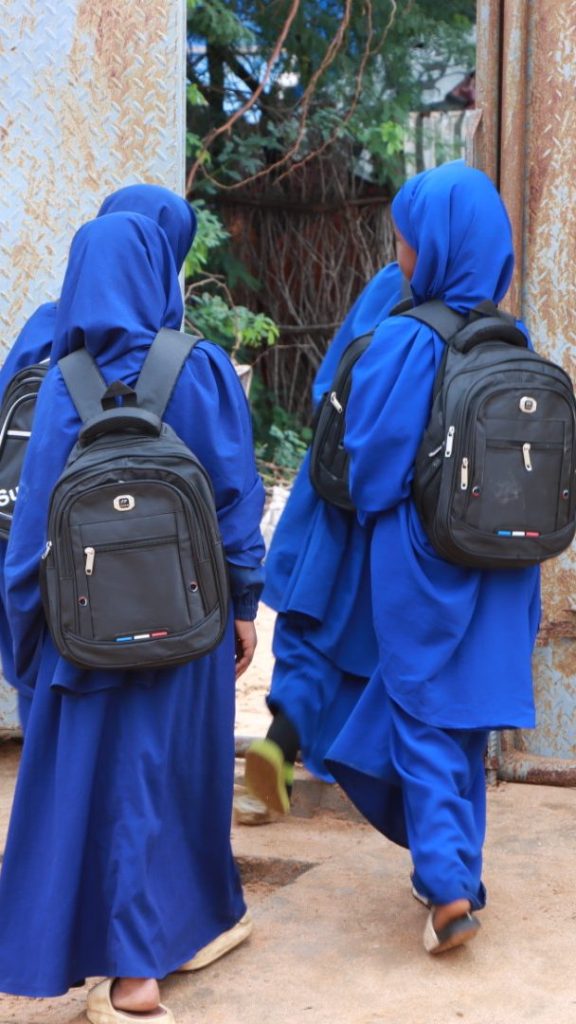
Aniso grew up in Dariley camp, where school was something she watched other children go to. This year, that changed. Each morning she puts on her blue uniform, picks up her backpack and walks to Qasab Primary School with other girls from the camp.
In class, she bends close to her exercise book and holds her pencil carefully as she follows the lesson. Her teacher, one of those trained through the programme, gives her individual support as she practises. On one recent morning, the word on the chalkboard was biyo, the Somali word for water.
Her progress shows beyond her exercise book. Aniso now sits with her classmates, raises her hand, answers questions and takes part in group activities.
“I am happy to go to school. I like learning and being with my classmates,” she says. “I like coming to school because I learn something new. I want to continue learning.”
At nine, she has started later than many children her age. But school has already changed how she sees her future. “When I grow up, I want to become a teacher so I can teach other children,” she says.
A notebook of his own
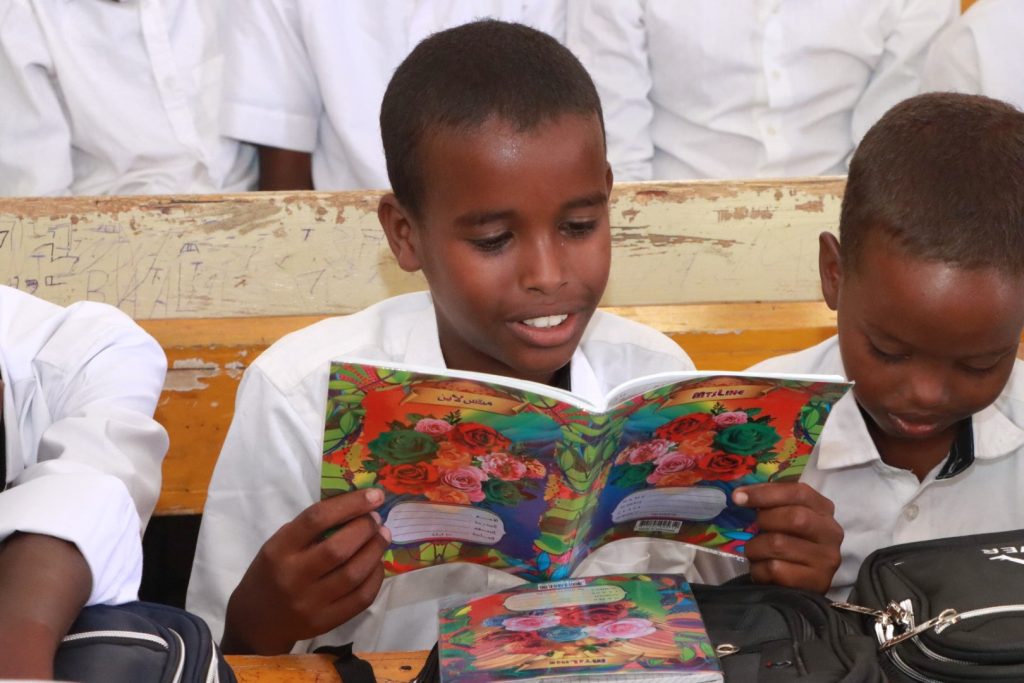
For Mohamed, three things made school possible: free tuition, trained teachers and learning materials of his own. Since April, he has had his own school bag, exercise books and pencils, so he no longer has to borrow or share. He has what he needs to follow every lesson, read, write and practise what he learns.
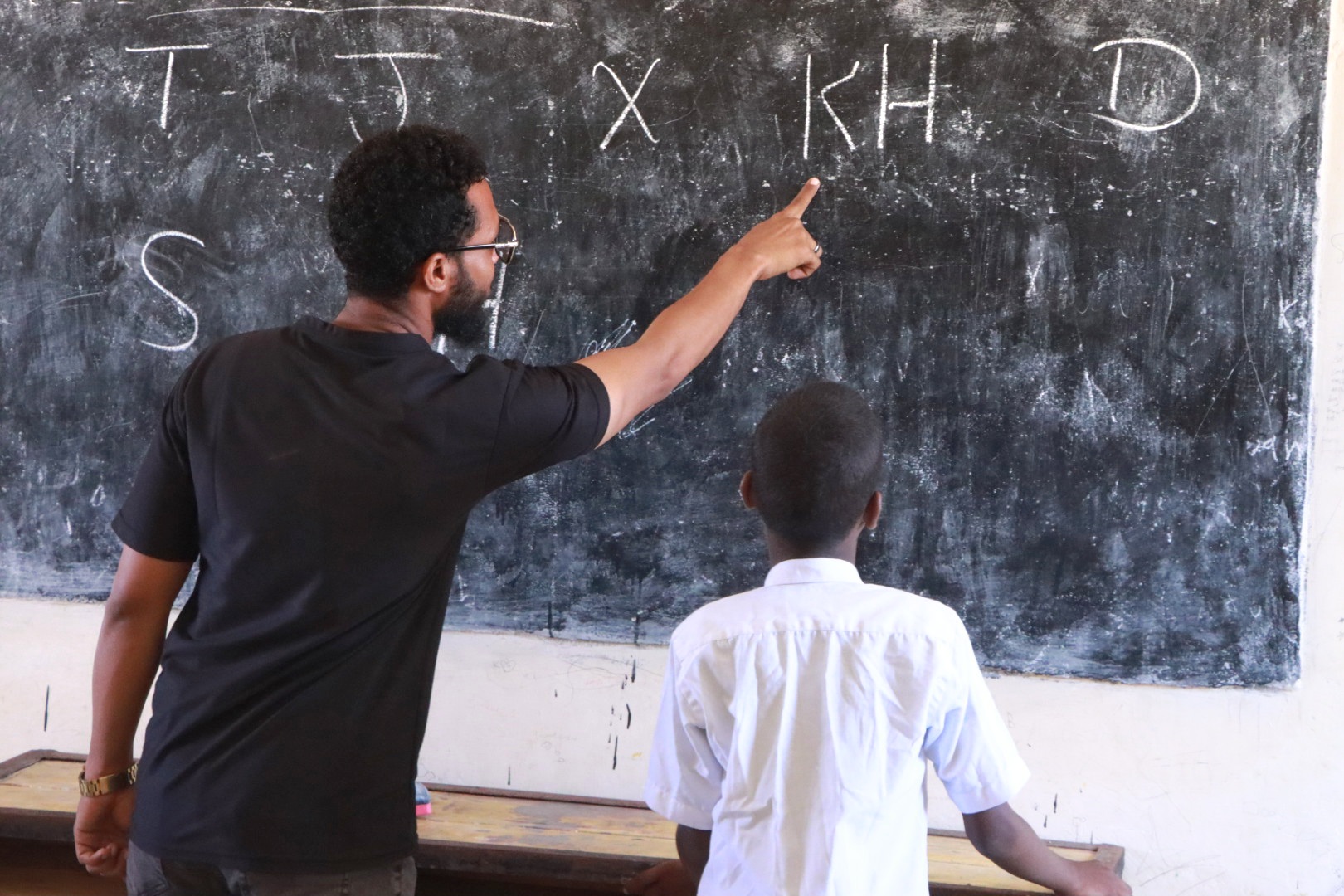
His teacher moves between the desks to check his work, and at the chalkboard Mohamed works through the letters of the Somali alphabet. School has also given him a daily routine, a place where he belongs and friends his own age. Six months ago, none of this was part of his day.
Removing the barriers one by one
Aniso and Mohamed did not end up in school by chance. Between January and June 2026, FCA worked on each of the barriers that keep displaced children at home, in five schools across Baidoa and Barawe.
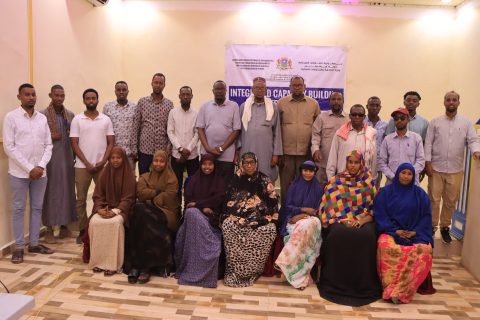
To find children who were out of school, ten enumerators and members of local school committees visited 3,602 households over five days. Women represented 1,448 of those households. The teams explained to parents that every child has a right to education, including girls and children with disabilities. The campaign aims to enrol 3,425 children who were previously out of school.
To make sure new pupils are well taught, FCA recruited and trained 26 teachers, five of them women. The programme aims for women to make up 30 per cent of teaching staff, to make classrooms safer for girls. In June, the teachers completed 14 days of training based on FCA’s Teachers in Crisis Contexts approach and Somalia’s Accelerated Basic Education curriculum, which helps children who missed early schooling to catch up. They now meet regularly in Teacher Learning Circles to share experiences and improve their teaching.
Support beyond the classroom
Getting children into school is only the first step. Keeping them there requires support for girls and their families.
FCA distributed 342 dignity kits containing reusable sanitary pads, soap and underwear to adolescent girls in the target schools, together with hygiene sessions. Before this, some girls missed school during their periods.
To ease the financial pressure that keeps children out of class, 730 households in 24 displacement sites have received the first two of three multipurpose cash payments. Of the recipients, 537 are women. Early monitoring shows that the payments cover basic food needs, giving families room to keep their children in school instead of sending them to work.
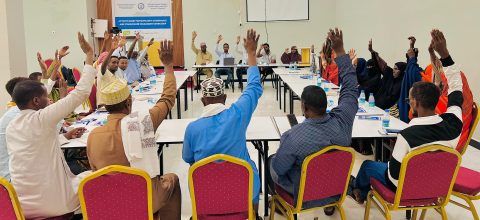
Each of the five schools now has a trained School Committee of 50 members and a Parent Teacher Association of 64 members, half of them women, who oversee the daily running of the schools. Association members have also taken part in sessions on disability inclusion, as the schools aim for children with disabilities to make up 5 per cent of their pupils.
Looking ahead
In the coming months, FCA plans to deliver learning materials to the 3,425 children the campaign aims to enrol. The programme will rebuild classrooms and latrines, add desks, chairs and solar power, and provide assistive devices to 100 children with disabilities. Once schools reopen, a third round of household visits will follow.
The first six months point to several lessons. First, reaching children who have never been to school means going to their homes and speaking with their parents directly. Second, enrolment alone is not enough: girls need dignity kits and families need cash support for children to stay in class. Finally, trained teachers and active school committees are what turn a classroom into a place where children like Aniso and Mohamed can learn.
For Aniso, the change is already clear. “Thank you to the people who gave me the chance to go to school,” she says. “I want to keep learning and achieve my dream.”
—
FCA’s education and emergency cash programme in Barawe aims to bring displaced and crisis affected children in Southwest State into safe, quality education. The programme is funded by the Ministry for Foreign Affairs of Finland.