Cuts to aid are worsening the Global Learning Crisis
CutstoaidareworseningtheGlobalLearningCrisis
The global learning crisis is no longer a looming threat – it is here, and it is accelerating. At a time when education is most needed to protect children, rebuild communities and stabilise fragile societies, international funding cuts are pushing millions further from the classroom and out of reach of a safe future, writes Pauliina Kemppainen, FCA’s Lead Advisor for Lifelong Learning
Today, UNESCO estimates that 272 million children and youth are out of school. Of these, more than 234 million school-aged children and young people live in crisis situations without any access to quality education, according to Education Cannot wait.
Meanwhile, climate change disrupted schooling for over 240 million children, UNICEF reports. These overlapping crises are eroding hard-won progress in education, particularly in low-income and conflict-affected countries.
What’s particularly alarming is that this represents a halt in progress. In 2000, around 401 million children were out of school. This decreased year on year until 2021, where it reached 240 million. Since then, however, due to population growth, the Covid crisis and growing armed conflicts, the number of children denied access to education has been once again growing.
Education is a priority – even in emergencies
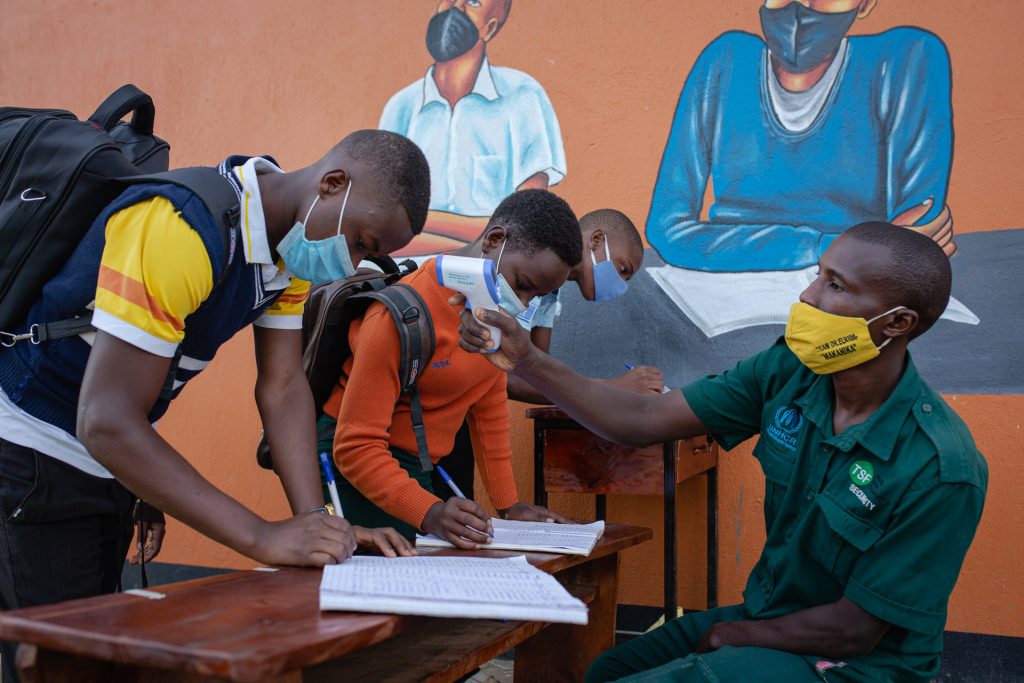
Children and parents consistently rank education among their top priorities, often above food and water, according to research by Save the Children. This may seem surprising until we recognise what education represents in times of crisis: safety, normalcy, hope and a path forward.
Education equips children and young people with the skills to adapt to dramatic changes in their lives. In emergencies, schools are often the only safe spaces available, protecting children from child labour, early marriage, exploitation and recruitment by armed groups.
Schools also connect children to essential services such as clean water, healthcare and nutritious meals.
Yet despite this, education remains chronically underfunded in emergencies. It is frequently among the first sectors to face cuts when aid budgets shrink – a decision that carries devastating and long-lasting consequences.
Aid cuts are fuelling a generational catastrophe
Finland has long been recognised as a global leader in education and has supported multilateral initiatives such as Education Cannot Wait and the Global Partnership for Education. However, Finland, along with other EU countries and the United States, has recently announced significant cuts to international aid – much of which directly supports education in developing and crisis-affected countries.
According to a new UNICEF analysis, international aid to education is projected to fall by 3.2 billion USD by 2026, a 24 per cent decline. If these cuts materialise, 6 million more children could be pushed out of school by the end of 2026 – 30 per cent of them in humanitarian settings. This would raise the number of out-of-school children globally from 272 million to 278 million. UNICEF states this is ‘equivalent to emptying every primary school in Germany and Italy combined.’
The impact will be most severe in low-income countries, where the learning crisis is already extreme. Nearly two-thirds of 10-year-olds globally cannot read and understand a simple text. In Sub-Saharan Africa, that figure rises to as high as 90 per cent. Even in high-income countries such as the United States and the United Kingdom, literacy gaps persist, with around 40 per cent of U.S. students struggling with basic reading.
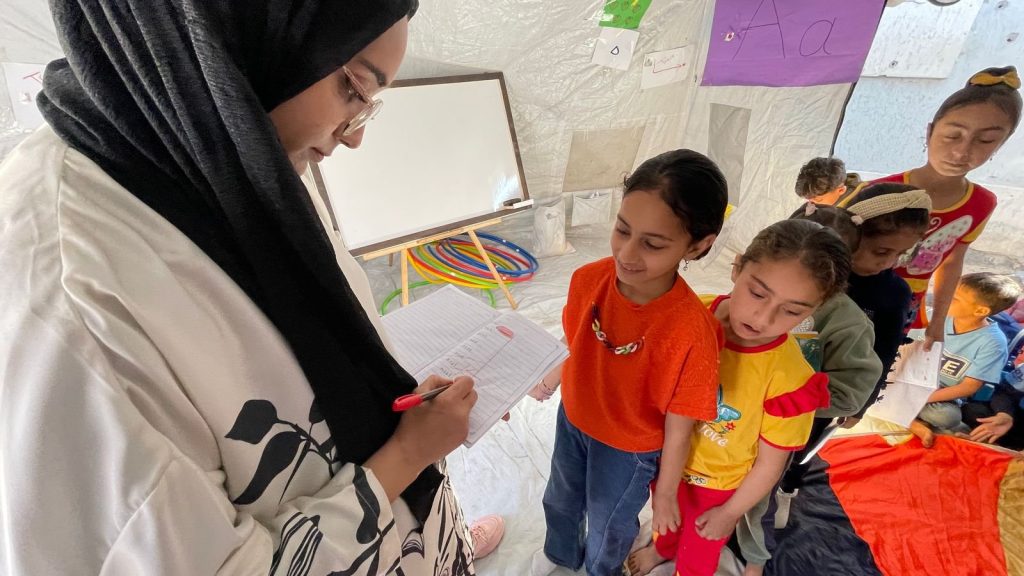
The situation in Gaza and the West Bank is particularly acute, where as of July 2025, 1,466,000 children are facing difficulties in gaining an education. By June 2025, 588 school buildings had been affected, of which 538 in the Gaza Strip (95.4 per cent) and another 50 in the West Bank.
The hidden costs of cutting education
The consequences of reduced education funding go far beyond enrolment numbers. The UNICEF analysis estimates that at least 290 million students could experience a sudden decline in education quality due to cuts in teacher training, curriculum development and learning assessments.
Cuts in budgets are much more than just numbers on a screen. They affect real lives. Once teachers leave and systems weaken, the damage cannot be quickly undone, even if funding later returns.
Primary education is facing the steepest reductions, with cuts of 856 million USD – a 34 per cent drop. This alone could result in 164 billion USD in lost lifetime earnings for affected children. Pre-primary education, already severely underfunded, continues to stagnate.
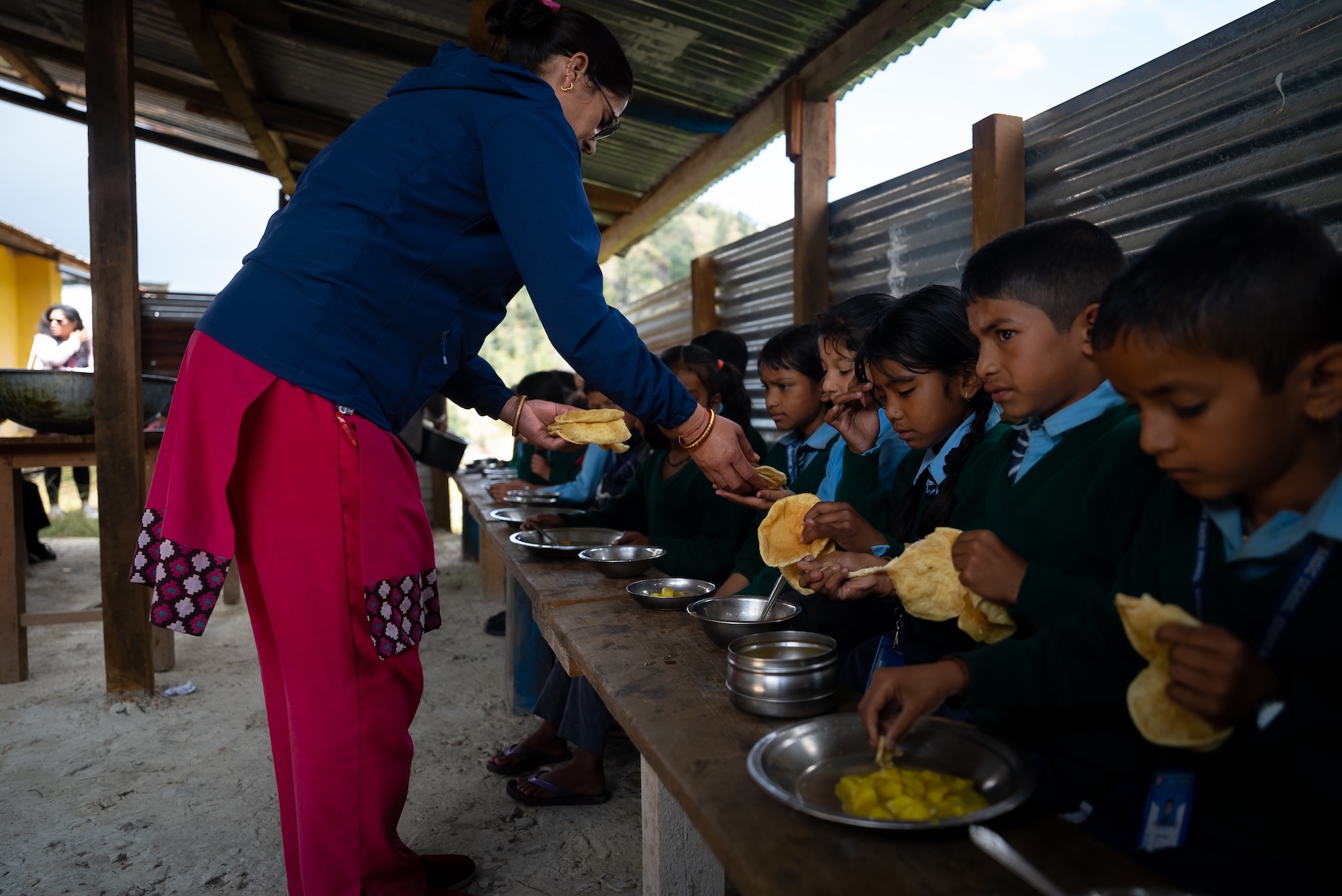
Essential services delivered through schools are also under threat. School feeding programmes face cuts of 57 per cent, depriving many children of their only nutritious meal of the day.
Gender-focused education aid, including girls’ tuition subsidies and safe sanitation facilities, is set to decline by 28 per cent, risking the reversal of major gains in girls’ education achieved over the past decade.

Education is a win-win investment – if we choose it
Education is both lifesaving and life-changing. It protects children today while building the foundations for peaceful, resilient and prosperous societies tomorrow. Educated populations are healthier, more productive and less vulnerable to conflict and extremism. There is no credible development or humanitarian strategy that succeeds without education at its core.
Cutting education funding is not a cost-saving measure – it is a costly mistake that shifts the burden to future generations.
How Finn Church Aid supports the right to education
To assess learning levels regularly, FCA works with ministries of education to strengthen data systems and classroom-based assessments, ensuring learning gaps are identified early. FCA helps prioritise teaching the fundamentals through teacher training focused on literacy, numeracy and inclusive education. Catch-up and remedial learning programmes enable children who have missed months or years of schooling due to conflict or climate shocks to regain lost ground and progress.
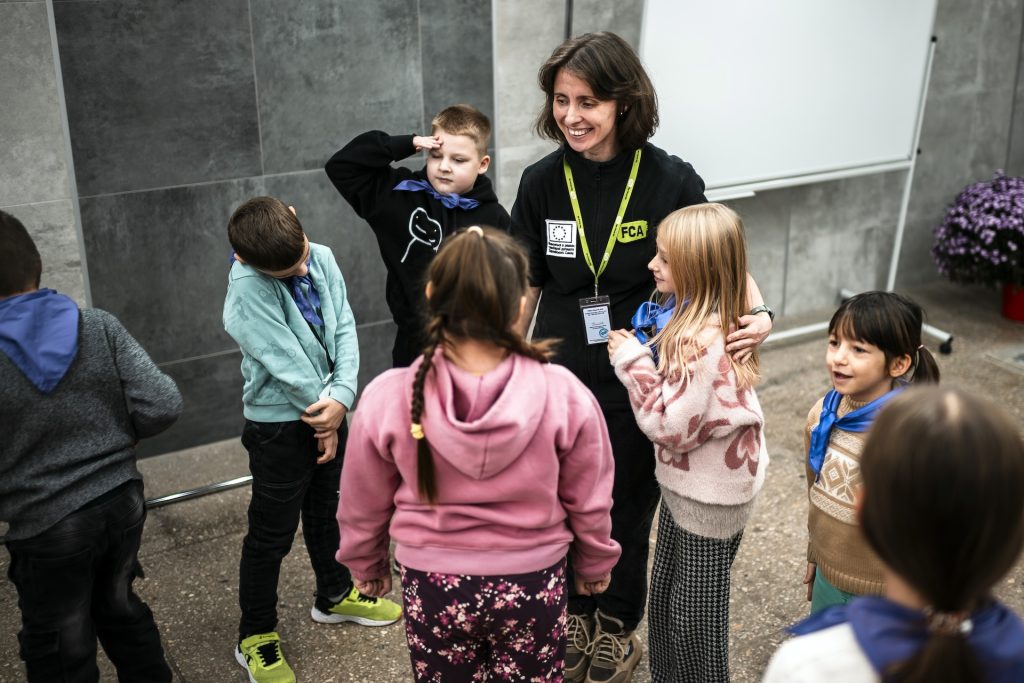
Finally, FCA integrates psychosocial support and well-being into schools, amongst others, in Ukraine and Gaza training teachers and counsellors to help children heal from trauma so they are ready to learn.
The message is clear: the global learning crisis can still be reversed – but only if governments choose to protect and invest in education now. The cost of inaction will be paid by children, communities and the world for decades to come.
Pauliina will be speaking on the Global Learning Crisis at the EDUCA education conference in Helsinki on Saturday 24 January. See below for details.
—
Want to learn more? Join Pauliina and other experts at EDUCA.
Come and tune in at EDUCA – Finland’s largest free education and training event, held in Helsinki on 23–24 January.
Explore how teachers, together with Finn Church Aid and Teachers Without Borders, can respond to the global learning crisis through international cooperation in crisis contexts.
🎤 The Global Learning Crisis – Opportunities for Teachers on International Arenas
Saturday 24 January | 12:45–13:25 | Speakers’ Corner (EN)
By Finn Church Aid, Teachers Without Borders and FinCEED
🎤 From Refugee Classrooms to Global Insights: Digital Pedagogy in Kenya
Saturday 24 January | 13:35–14:00 | Speakers’ Corner (EN)
By UNICEF (Global Learning Innovation Hub, Helsinki) and Finn Church Aid / Teachers Without Borders
Come meet us at our stand 6s100, next to the Civic Engagement Area to learn about international volunteering opportunities for experts from the Finnish education sector