The places we struggle to reach
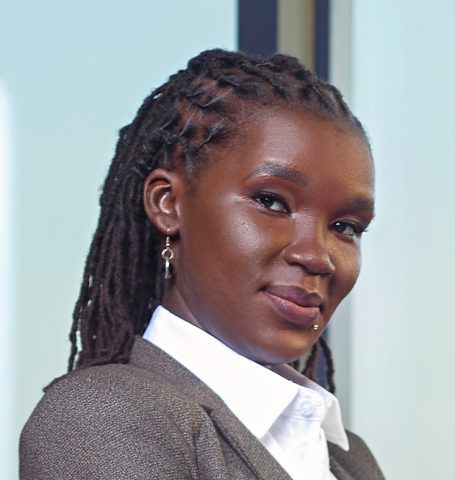
I can only write about what I have seen myself. I often think about this when I return home from a work trip, having spent hours conducting interviews, taken hundreds of photographs and heard stories that could never be condensed into a few paragraphs of text, writes Kiden Viola Lubang, communications specialist at FCA’s South Sudan country office.
ON BUSINESS TRIPS, the hours can be tough. Sometimes I find myself crying alongside the people whose lives our work supports.
When I started working in humanitarian communications, I never imagined that telling stories would require so much from me emotionally. I thought my job was simple: listen, ask questions, document what I see and tell the story as accurately as I can.
But travelling around South Sudan has changed the way I understand that work.
Some places are difficult to reach. Not difficult in a way we might normally describe a long journey, but difficult in a way that becomes part of everyday life.
I RECENTLY TRAVELLED to Paguir in Fangak County. A journey that started at 8 am only ended around 1 p.m., after several changes to routes. And that was just getting there.
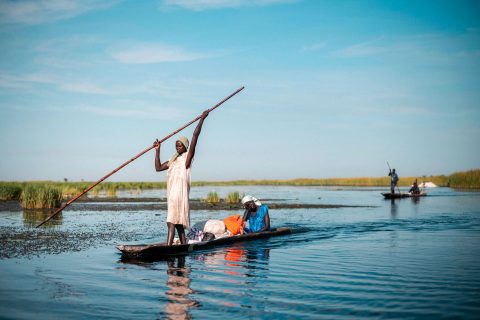
For another story, we spent about 4 hours travelling by canoe, and another 4 hours coming back. Imagine sitting in a canoe in the middle of the water for eight hours.
There is the heat. The mosquitoes. The Insects. The uncomfortable sitting. The tiredness. The uncertainty of the journey. After a while, you stop thinking about the journey as an adventure, and start thinking about how people who live there manage to do this whenever they need to move from one place to another.
That is what stays with me.
For me, eventually, the journey ends. I return to Juba. I go back to my home, my office and the roads I know. I can reach a shop, a hospital, a colleague or a government office without first having to think about whether the road is passable or whether a boat is available.
For many of the people I meet, there is no easy return to normal because this is normal.
I THINK OF Nyareak, a 42-year-old mother I met in Paguir. She has been raising her children without their father since 2018. She lives with them in a Tukul – a traditional, round single-room hut – that is slowly falling apart.
It is difficult to hear her story and then simply walk away.
Her life is not defined by one difficult moment. It is a series of challenges that she has had to navigate for years, finding ways to feed her children, support them and keep going despite the little she has.
When I sit with women like Nyareak, I am reminded that what we sometimes describe as resilience is often simply the result of having no choice but to continue. They continue because their children need them. They continue because there is no easy alternative. And they continue because, despite everything, life had to move forward.
Paguir is not only a long way from Juba. It is also a long way from the hospital and the school. The residents live far from any proper roads. When the floods start, the distance grows even greater.
That place left a lasting impression on me. I heard many stories about what it’s like to lose everything, to live as a refugee in one’s own country and to fear the next flood. I haven’t experienced the things they have to live with. I don’t have to struggle every day to feed my children. I just try to see the people behind the numbers.
THE FIGURES DO NOT paint a pretty picture in South Sudan: the numbers of internally displaced people and refugees who have fled the country, the victims of floods and other natural disasters, and the people dependent on humanitarian aid.
Behind every figure, there is always a person. There are people who have to get up every morning and face the difficulties of everyday life. People who cannot simply leave when floods or droughts destroy their crops.
People who cannot return from their trip to Juba, to another country or to safety.
We can. I can, but I carry the stories of the people I’ve met in my heart. I want to remind myself and all of us that even the most remote and hard-to-reach place is someone’s home.
Read Kiden Viola Lubang’s report on her trip to the al-Suddi wetlands.
—