New Country Director for Ukraine: Adam Jacovou
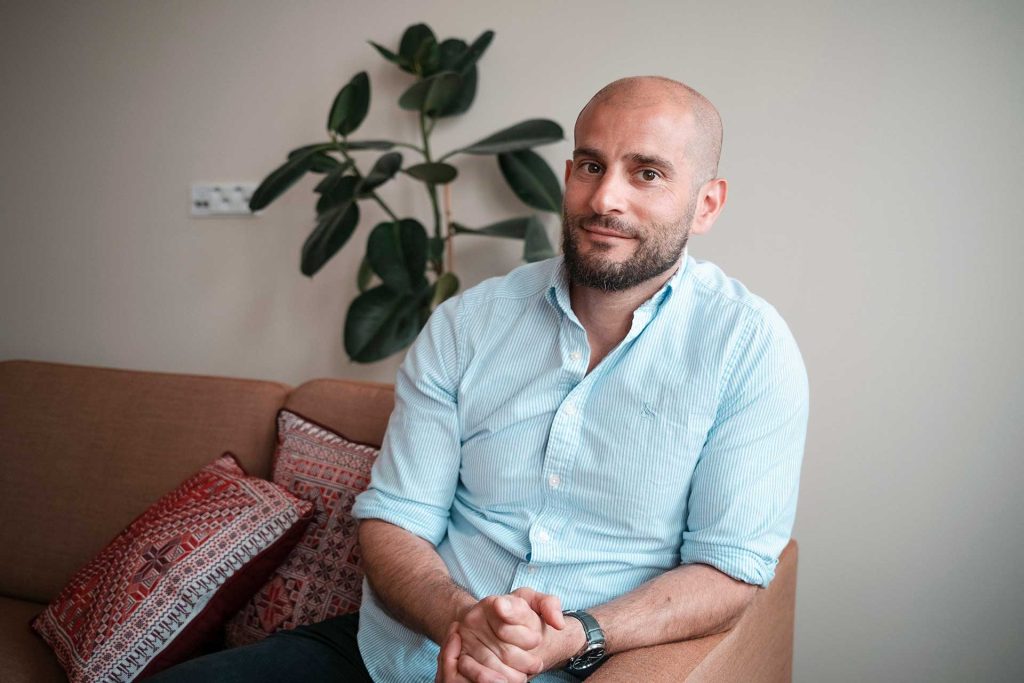
FCA’s Ukraine office enters its fifth year of operations amid the challenges posed by the protracted crisis.
Text: Elisa Rimaila
Photos: Antti Yrjönen
Adam Jacovou began his role as Country Director for Ukraine at Finn Church Aid (FCA) in April 2026, replacing Patricia Maruschak, who served as Country Director since the office’s opening.
THE FULLSCALE WAR launched by Russia’s invasion in February 2022 continues, upending everyday life for Ukrainians in many ways. The winter, with temperatures dropping below minus twenty degrees, has been particularly challenging due to Russian drone and airstrikes targeting the country’s energy infrastructure.
Jacovou has lived and worked in Ukraine for a year and a half prior to his current assignment, so daily life amid the war is familiar to him. Before Ukraine, he worked for various aid organizations in South Sudan, Lebanon, Iraq, Haiti, Egypt, Guinea, Romania, Philippines, and Turkey.
“In Ukraine it’s really a protracted crisis now. For the population throughout the whole of Ukraine, this has been extremely challenging.”
THE FRONT LINES have shifted throughout the four-year war, meaning that part of the country’s population has once again been forced to seek shelter elsewhere. The situation has required continuous efforts from both the Ukrainian government and organizations like FCA, as well as civil society.
The nature of the war has also changed. From Ukraine’s perspective, the development of drone warfare is particularly concerning. Drones used in combat have not only become more common: they can travel longer distances and are cheap to manufacture. As a result, anyone anywhere in Ukraine could be targeted by a drone strike, even in broad daylight.
“The war has really spread its fingers throughout Ukraine, up to the border of the European Union.”
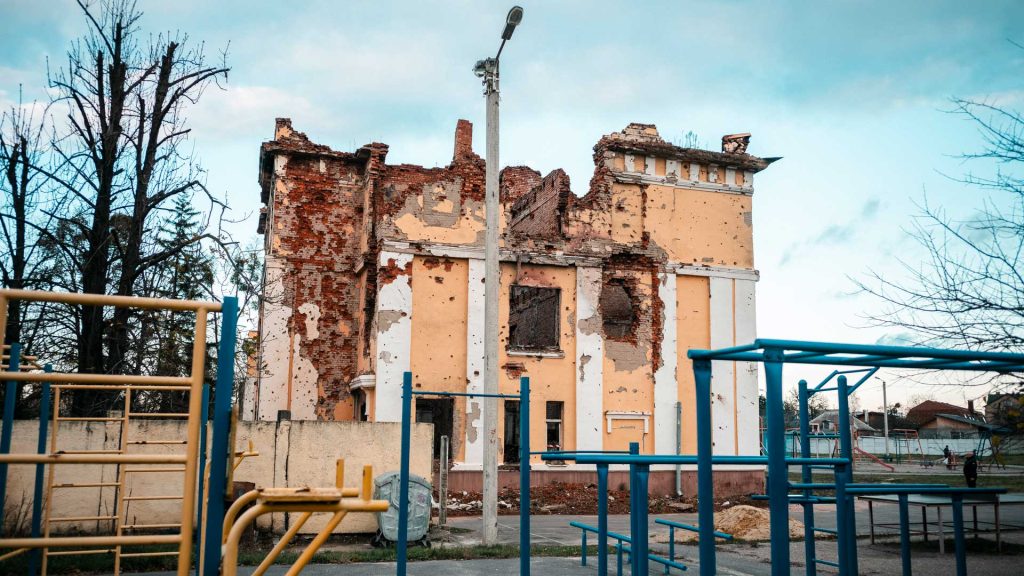
THERE IS a need for aid in all sectors, from healthcare to livelihood support and education.
FCA began its work in Ukraine immediately after the war began. Work in Ukraine focuses particularly on supporting education. To date FCA has repaired approximately 45 schools, equipped 150 bomb shelters in schools and daycare centres, and supported the training of thousands of teachers in psychosocial support skills as well as vocational training.
“Ensuring that children have a safe place where learning can continue is critically important for their future.
Because of the war, the education, and consequently the future, of millions of children is constantly at risk of being cut short.
“Ensuring that children have a safe place where learning can continue is critically important for their future. And that’s where FCA has invested most of its resources,” says Jacovou.
Having a safe learning environment is critical for the continuity of education and that’s where FCA has invested most of its resources: supporting schools, renovating underground school shelters.”
However, the work is not about to end anytime soon.
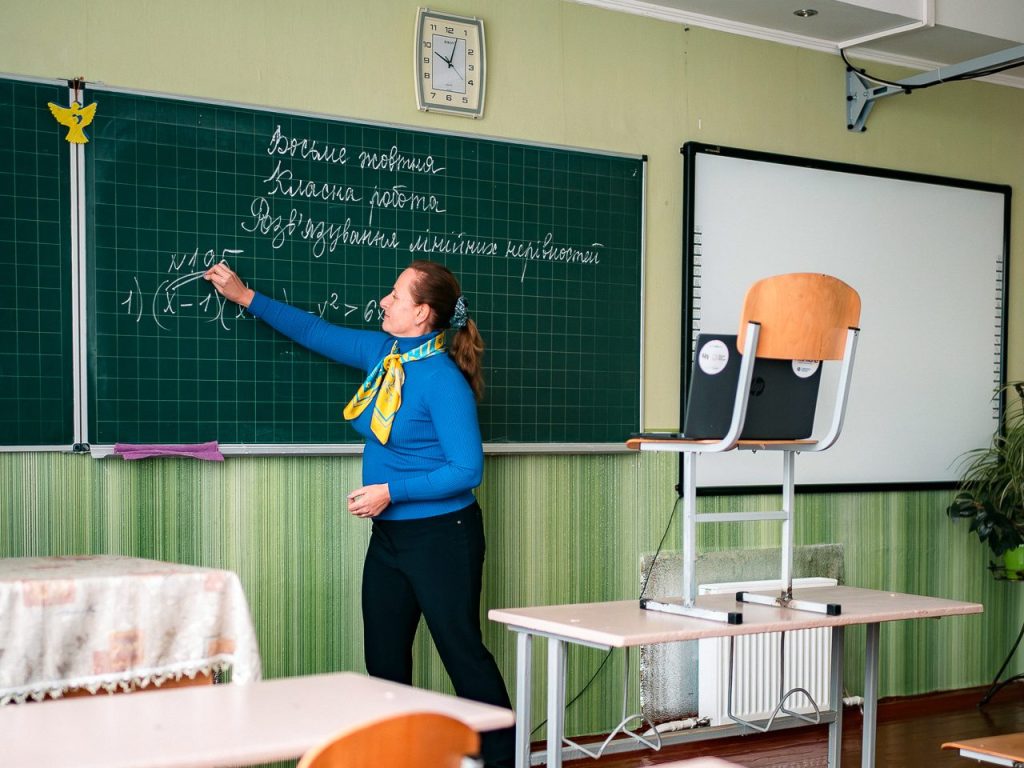
“There are still many schools awaiting repairs and bomb shelters awaiting equipment, because there are hundreds of thousands of children in Ukraine who are unable to attend the education they are entitled to or who are forced to study remotely, which is not the same as in-person instruction.”
It is harder for children to learn remotely, and it is harder for schools to provide the safe environment children need remotely. Due to these circumstances, the number of school dropouts and absences has risen alarmingly.
“My impression of Ukrainians is that they are very resilient. They try to carry on with their lives as normally as possible.”
“IT’S REALLY important that the support to Ukraine continues. I am grateful for the work FCA has done so far, and I am honored to continue this work,” Jacovou says, praising the staff at the Ukraine country office for their professionalism and dedication.
Jacovou does not foresee a quick end to the war, but preparations have been made for every eventuality. Even if the war were to end next week, the humanitarian needs of Ukrainians living amid the destruction would remain immense for a long time, and Ukraine would still need assistance.
Ukrainians have been put to the test over the past four years, but Jacovou admires how they have learned to live amid a difficult and unpredictable situation.
“My impression of Ukrainians is that they are very resilient. They try to carry on with their lives as normally as possible.”