“Whenever children hear aircraft
flying overhead, they become frightened”
Children in Myanmar’s conflict-affected Rakhine State are slowly returning to the classroom thanks to local volunteer teachers like Ko Myo, who is helping restore learning after years of displacement and disruption. Supported through an EU-funded project, the village teacher is not only bringing children back to school but also helping them cope with the fear and uncertainty of life amid ongoing conflict.
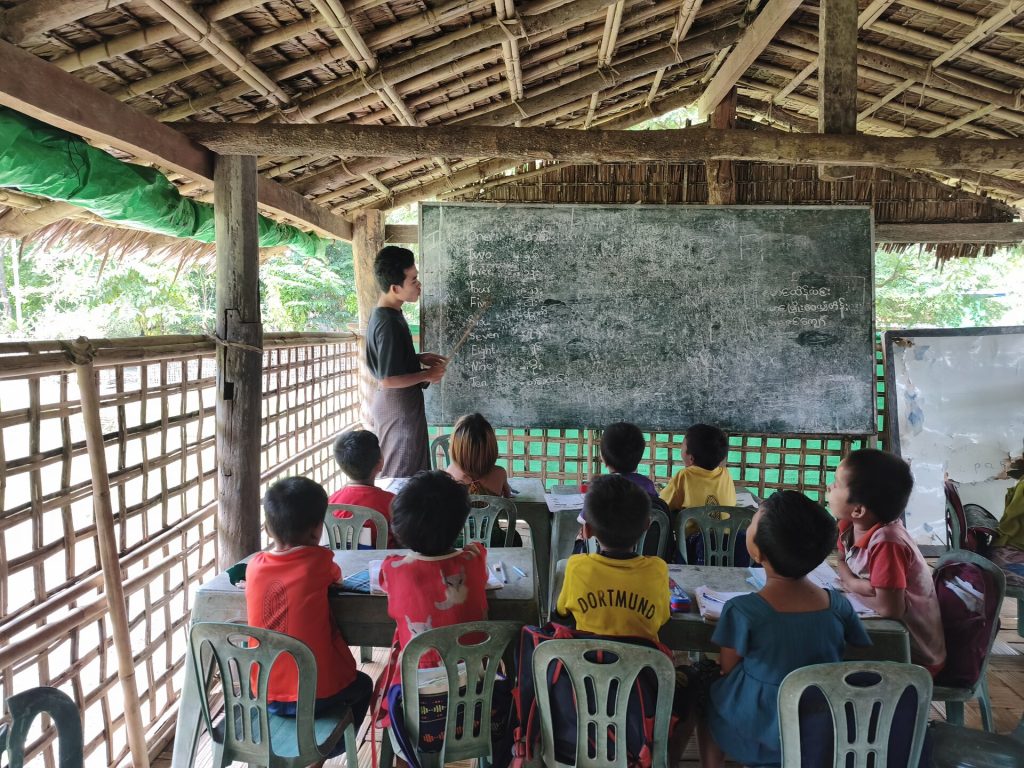
KO MYO IS PASSIONATE about teaching children. Since he completed his matriculation examination in 2018, he has worked as a village teacher in his home village in Rakhine State, locally known as a za-bah-daung-bya-saya. Under a traditional arrangement, students’ families paid him in paddy (unmilled rice) at the end of the year instead of regular tuition fees.
He is the second of three siblings and supports his elderly parents. Despite the challenges brought by the ongoing conflict, he has remained committed to helping children continue their education.
During the intense fighting in 2023 and 2024, all residents of his village were forced to flee their homes. The conflict severely disrupted their livelihoods and education, leaving families struggling to meet their basic needs.
During the 2025–2026 academic year, efforts were made to enable teachers to resume teaching at their assigned schools in parts of Rakhine State. However, teachers travelling from other areas could only come to the village for a maximum of two days per week due to financial difficulties and rising living costs caused by the conflict.
On days when teachers were absent, children had no classes to attend. Instead, they spend their time going into nearby forests and hills, fishing or engaging in other activities. As their learning gradually declined, parents became increasingly concerned about their children’s education.
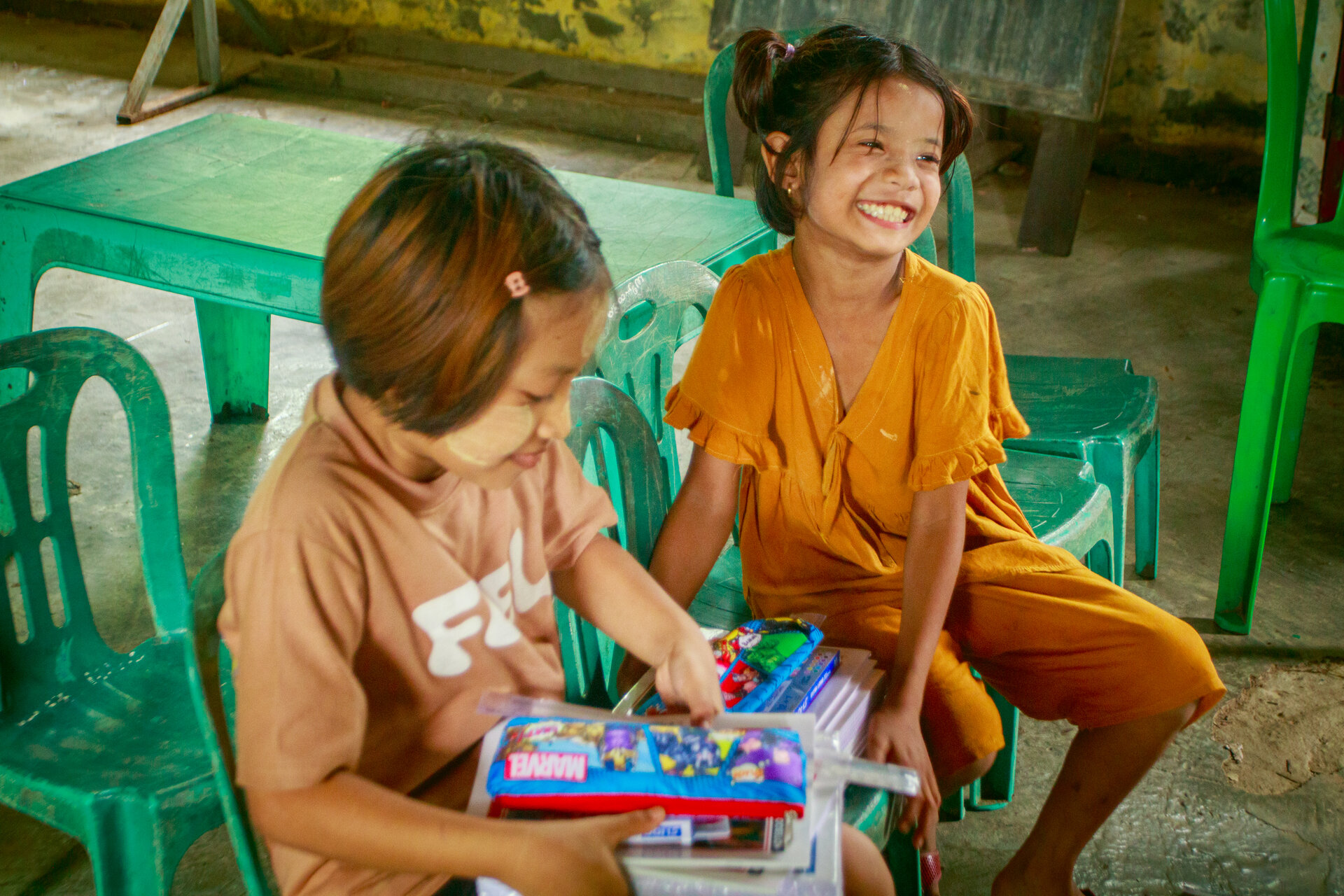
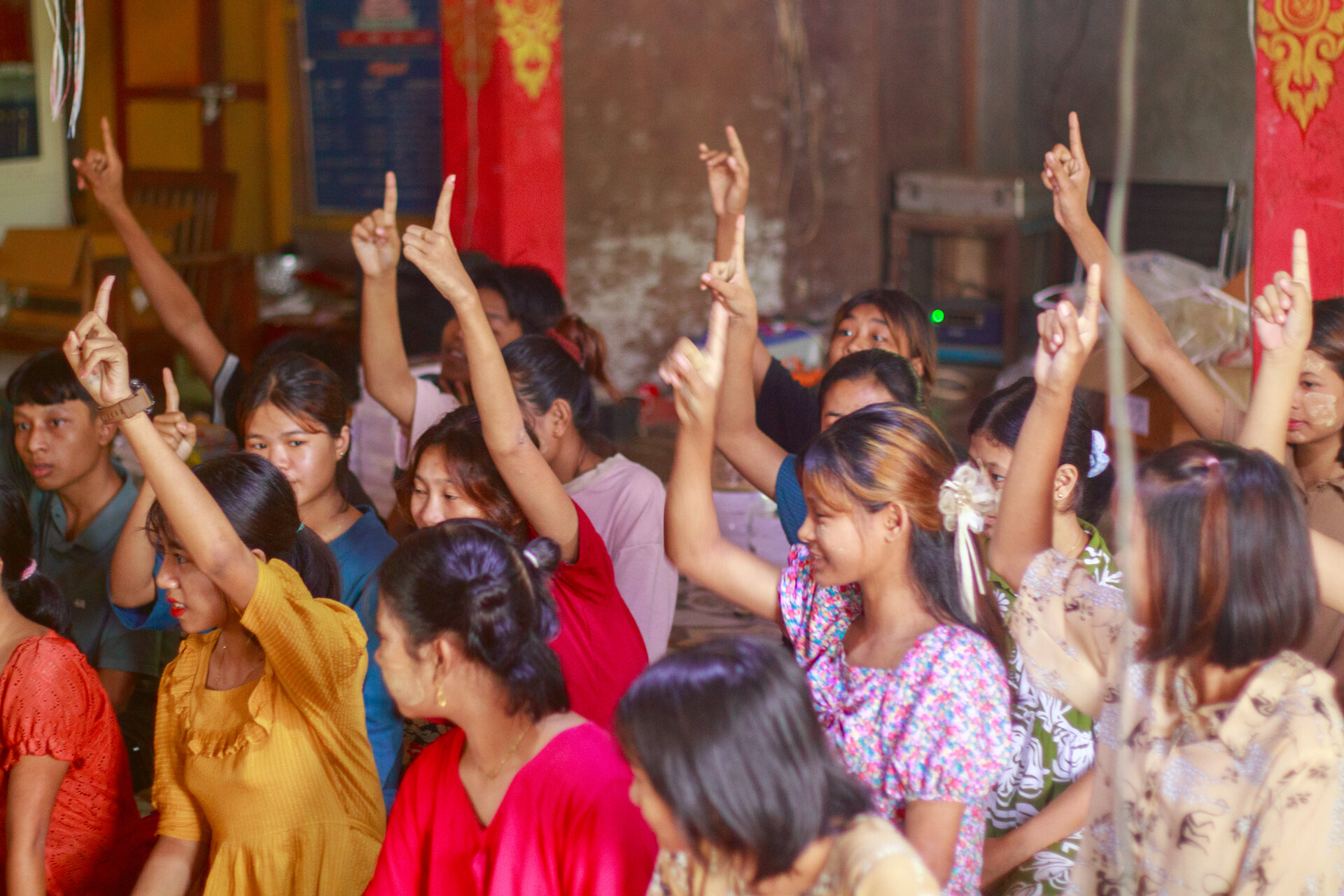
An opportunity to support children’s learning
FCA put together a project that would boost the number of teachers and bring children back to school.
In October 2025, staff visited the village to introduce the project. During a community meeting, they explained the planned activities, including the recruitment of volunteer teachers to support children’s education.
Recognising his experience and dedication to teaching, the Community Education Committee selected Ko Myo, who had already been teaching children in exchange for paddy, to participate in the project.
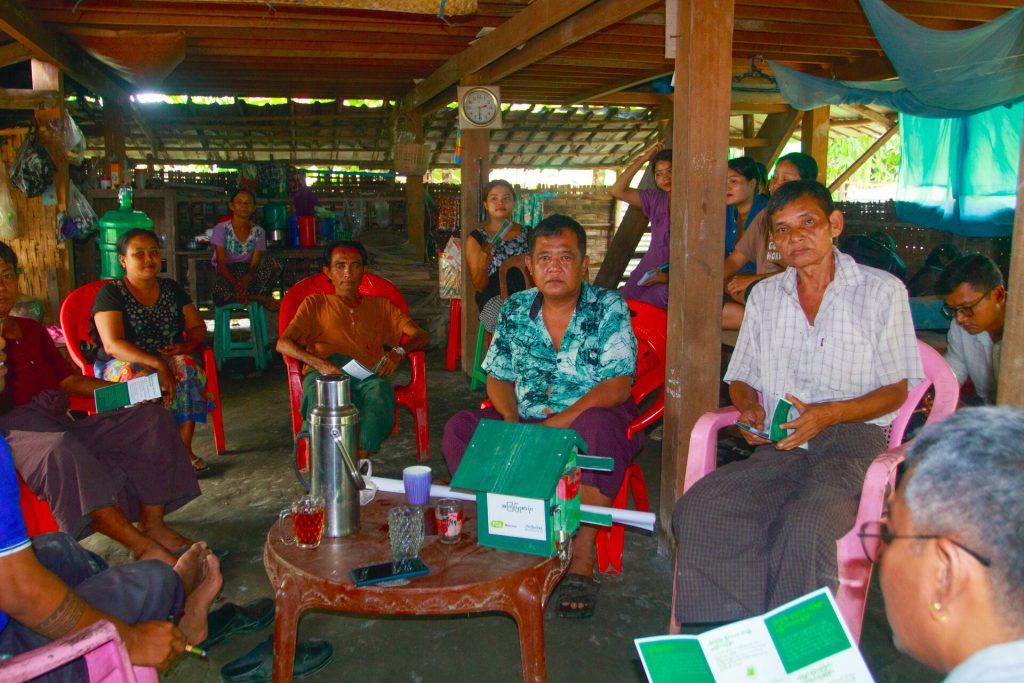
The project began appointing volunteer teachers on 1 November 2025. From that day, Ko Myo started teaching children regularly on every school day.
“When I heard that I could teach children in my own village, receive a regular monthly payment of 200,000 MMK (about 86.56 euros) and attend training, I was very excited. It was exactly the kind of work I was passionate about, so I accepted the opportunity,” he said.
“When I first started teaching, some children did not come to school every day. They had become used to not attending school regularly because their education had been interrupted for so long. I had to make a lot of effort to encourage them to attend classes regularly.”
With support from the project, children are now able to attend classes regularly.
Reducing the financial burden on families
The project has also helped reduce the financial burden on parents who were struggling to support their children’s education.
“During this difficult time, families are facing serious challenges in meeting their daily needs. Paying school fees has become another concern for parents,” Ko Myo explained.
“In the past, I did not have a regular salary. I only received payment when parents could afford to pay me, which was also difficult for me. Now that the project provides monthly financial support, parents no longer need to pay me separate tuition fees. Children can attend school regularly, and the situation has improved for both the families and me.”
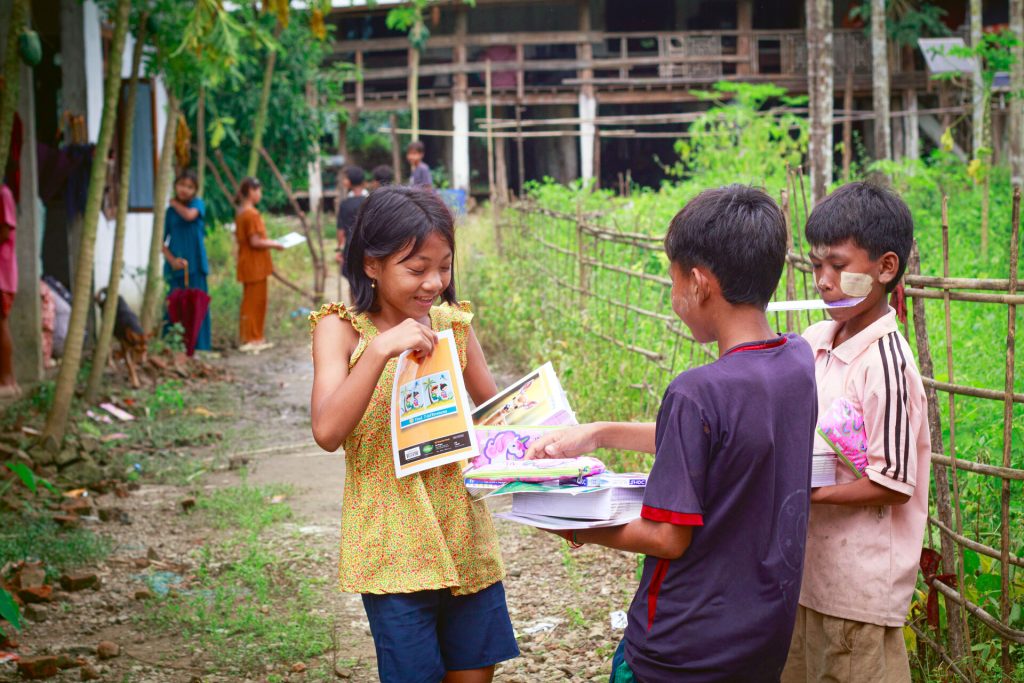
Learning to create a safer and more supportive classroom
Beyond financial support, Ko Myo particularly values the teacher capacity-building training provided through the project. He explained that the training has helped him improve his teaching practices and the way he interacts with children.
“Of all the support I have received, what I appreciate most is the teacher capacity-building training. The knowledge and skills I gained from the training have been very useful for me and beneficial for the children,” he said.
“After attending the training, I changed the way I interact with children. In the past, when children didn’t listen to me, I sometimes shouted at them or used physical punishment. I was not able to provide them with the support they needed.”
“Now, I teach with greater patience. I try my best to understand each child’s individual needs and provide the necessary support so that everyone can follow the lessons. I also pay more attention to their physical and emotional safety.”
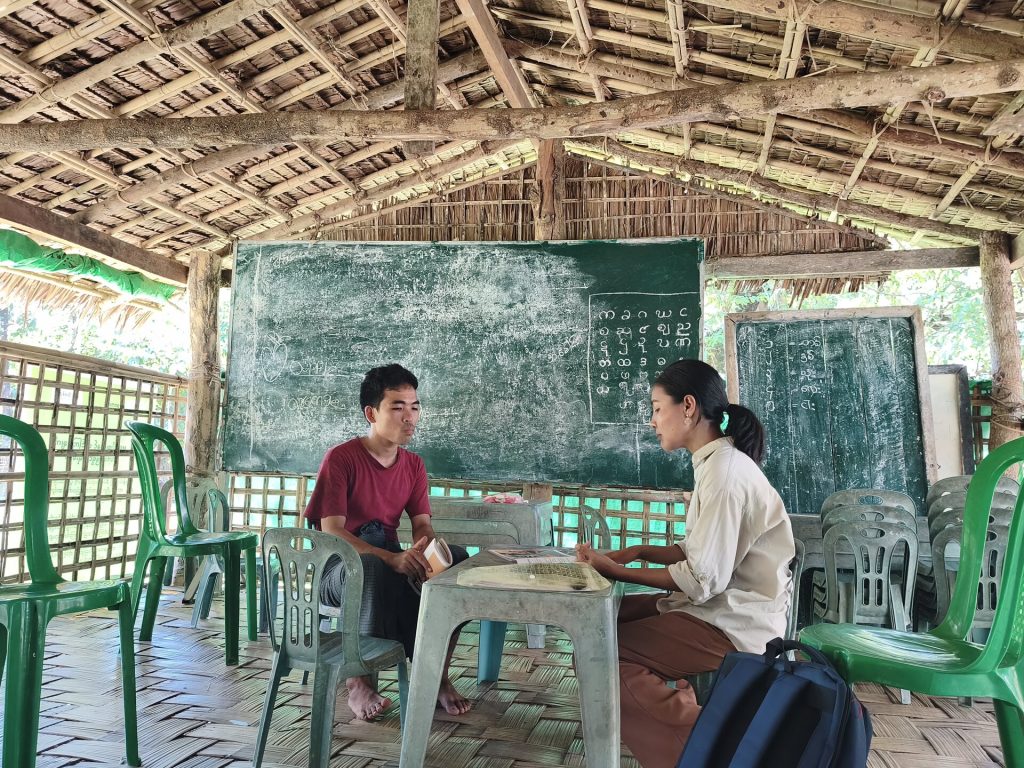
However, teaching in a conflict-affected area remains challenging, particularly when children experience fear and distress because of the ongoing security situation.
“Teaching during this conflict is very difficult. Whenever children hear aircraft flying overhead, they become frightened. On those days, I play games with them that I learned during the training and conduct mindfulness activities to help them feel calm again,” he explained.
“Even now, there are still days when we have to stop teaching and send the children home because of security concerns,” he added with sadness.
Hoping for continued support for children’s education
Despite the challenges, Ko Myo remains committed to supporting children’s education in his village. He expressed his appreciation to the donors and organizations that have helped children continue learning during the conflict.
“Lastly, I would like to sincerely thank the donors and organizations that have provided the necessary support to help children continue their education during these difficult times.”
“Without this kind of support, children from poor villages like ours would still not be able to attend school regularly. I hope this support will continue so that children can keep learning.”
—
The Education in Emergencies: Assistance to Crisis-Affected Children in Rakhine Communities Project is funded by European Union Humanitarian Aid and implemented by FCA.