Small miracles grow
in the shade of mango trees
Smallmiraclesgrowintheshadeofmangotrees
Malnutrition hinders the development of many children in the lush Mubende region of Uganda. In this empoverished area, parents of children living with disabilities face desperate choices. With the support of FCA and in partnership with UNICEF, children receive the care and rehabilitation they need.
About twenty young women are sitting in a room. They sit nervously in their chairs and chat lightly. Their children fidget restlessly on the floor.
Women and children have gathered at the local health center for an important reason: it’s vaccination day.
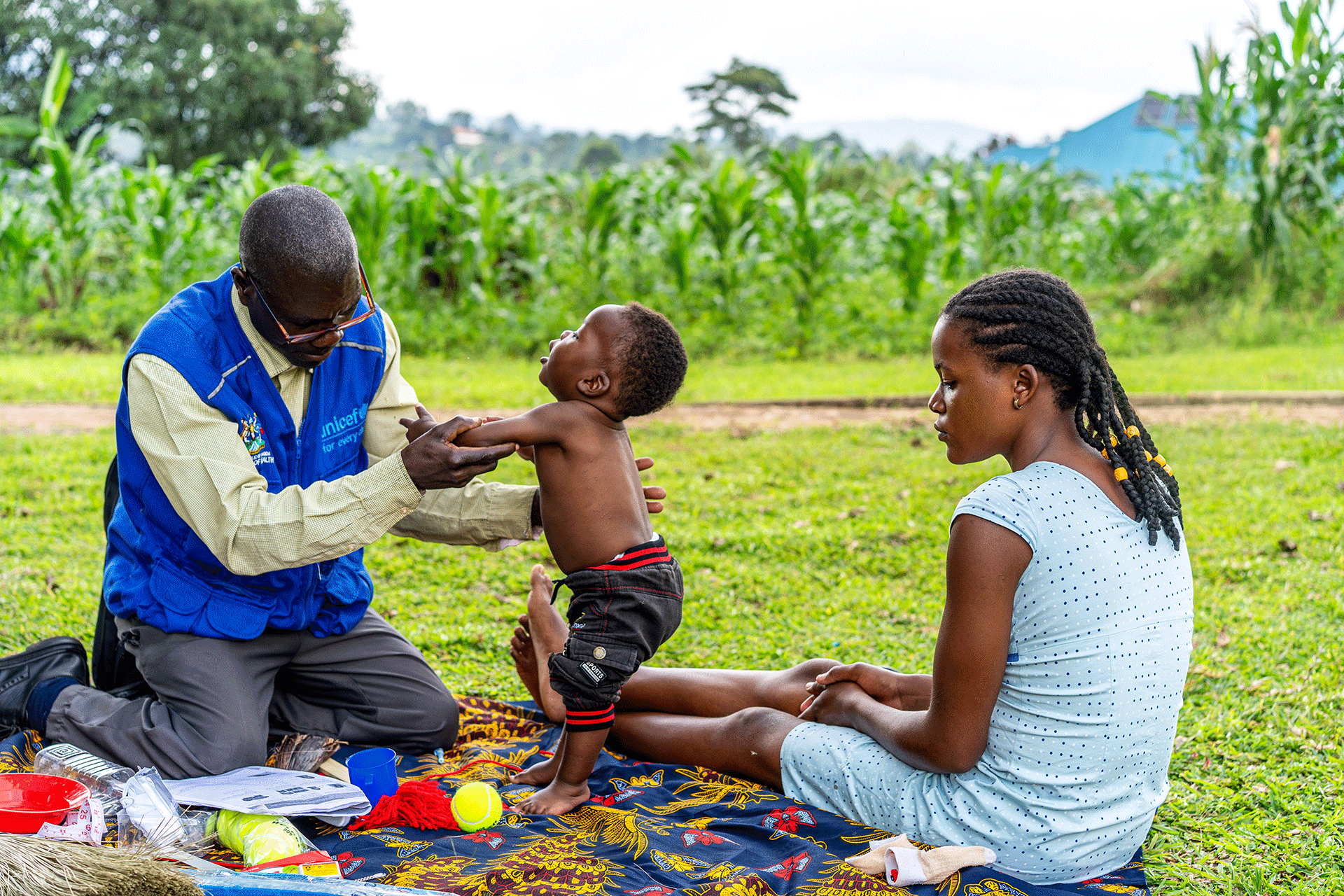
Outside the slightly dilapidated building, Matthias Baleke, a member of the village health group, sits on a blanket on the grass. Next to him sits Gloria Birungi with her one-year-old son, Michael Bukenya.
Birungi watches nervously as Baleke examines Michael. The man dangles a toy above the baby to see if Michael follows it with his eyes. Next, he shakes a hidden bottle filled with stones to see if the baby reacts to the sound.
Baleke is a member of a health care team supported by Finn Church Aid (FCA). FCA works closely with local health care services in Bukere and in partnership with UNICEF to ensure that services also reach the most remote households. The team members are trusted members of their own communities and play a crucial role in identifying and supporting vulnerable children.
FCA trained Baleke to assess the situation of children with disabilities using a special development assessment tool. Based on the information provided by this tool, he is able to refer families to additional support services.
Baleke gently asks Birungi about Michael’s history. His mother explains that her baby was born prematurely and spent his first week in the hospital before being discharged. Baleke carefully measures Michael’s head and notes every important detail.
He has noticed something in Michael’s leg that prevents him from standing properly. Michael, like many other children examined by Baleke’s team, will next be sent to a local hospital for further examination and specialized treatment.
For the residents of Mubende, something as simple as transportation to the hospital can be a huge financial burden, preventing families from seeking medical care. That is why FCA covers the transportation and hospital costs of children with disabilities.
John Tabaro, head of ear, nose, and throat medicine at Mubende Regional Hospital, says that early detection of diseases is important. It is equally important that children receive the treatment they need.
“We conduct a comprehensive assessment at the hospital. If the injury can be treated, we provide treatment for it. If more specialized care is needed, we refer the child to higher-level facilities,” Tabaro explains.
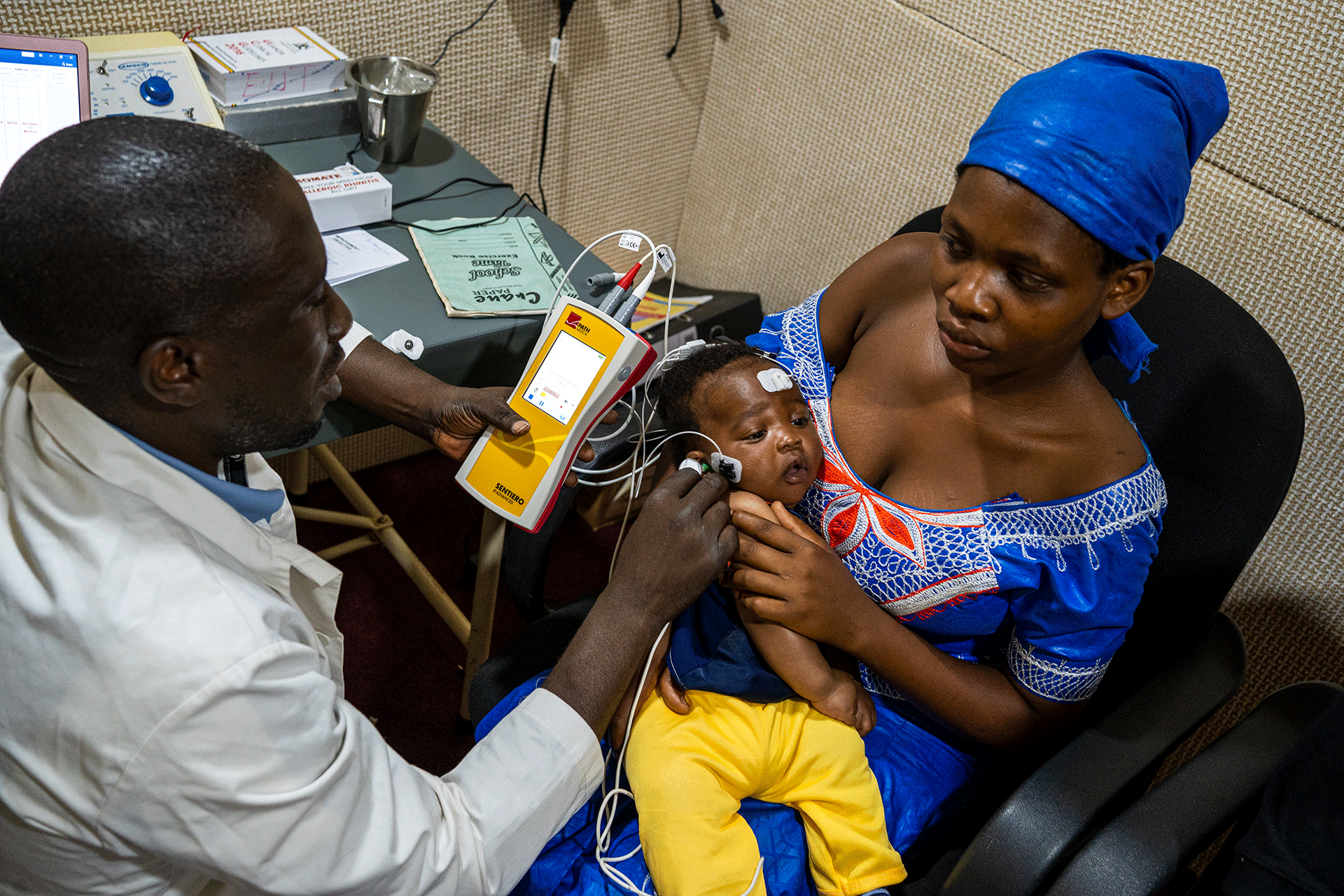
We meet the doctor in a padded room where no outside noises can be heard. He carefully attaches small electrodes to the child’s head and body and connects them to a hearing test device. This is how he tests the hearing of a baby who is a few months old. The doctor observes the electrical signals that indicate how the child reacts to different sounds.
“Early detection is extremely important,” he explains. “It helps us identify hearing problems quickly so that we can provide treatment, rehabilitation, or refer the child to specialist care if necessary.”
“When a child is referred to us, we begin with a thorough examination to understand their condition and determine the best course of treatment,” explains occupational therapist Annet Nassiwa.
Nassiwa works carefully on the mat in the rehabilitation room, where she provides the baby with physiotherapy alongside other care. She briefly shines a soft light into the child’s eyes to check his vision. The baby is five-month-old Joseph Sekito.
Sekito’s mother, Fortunate Mpirirwe, sits nearby and watches the proceedings. Sekito was born by Caesarean section. Shortly after birth, his skin turned yellow.
“The doctors told me it was jaundice,” Mpirirwe recalls. “They advised me to put the baby in the sun.”
Little Joseph spent a week in the children’s ward before being sent to nurse Nassiwa for treatment. Further examinations revealed a hole in his palate. The operation could not be performed immediately because Joseph was severely malnourished.
The baby received nutritional supplements until he was strong enough for surgery. With physical therapy, baby Joseph has made rapid progress: he can now sit up and play.
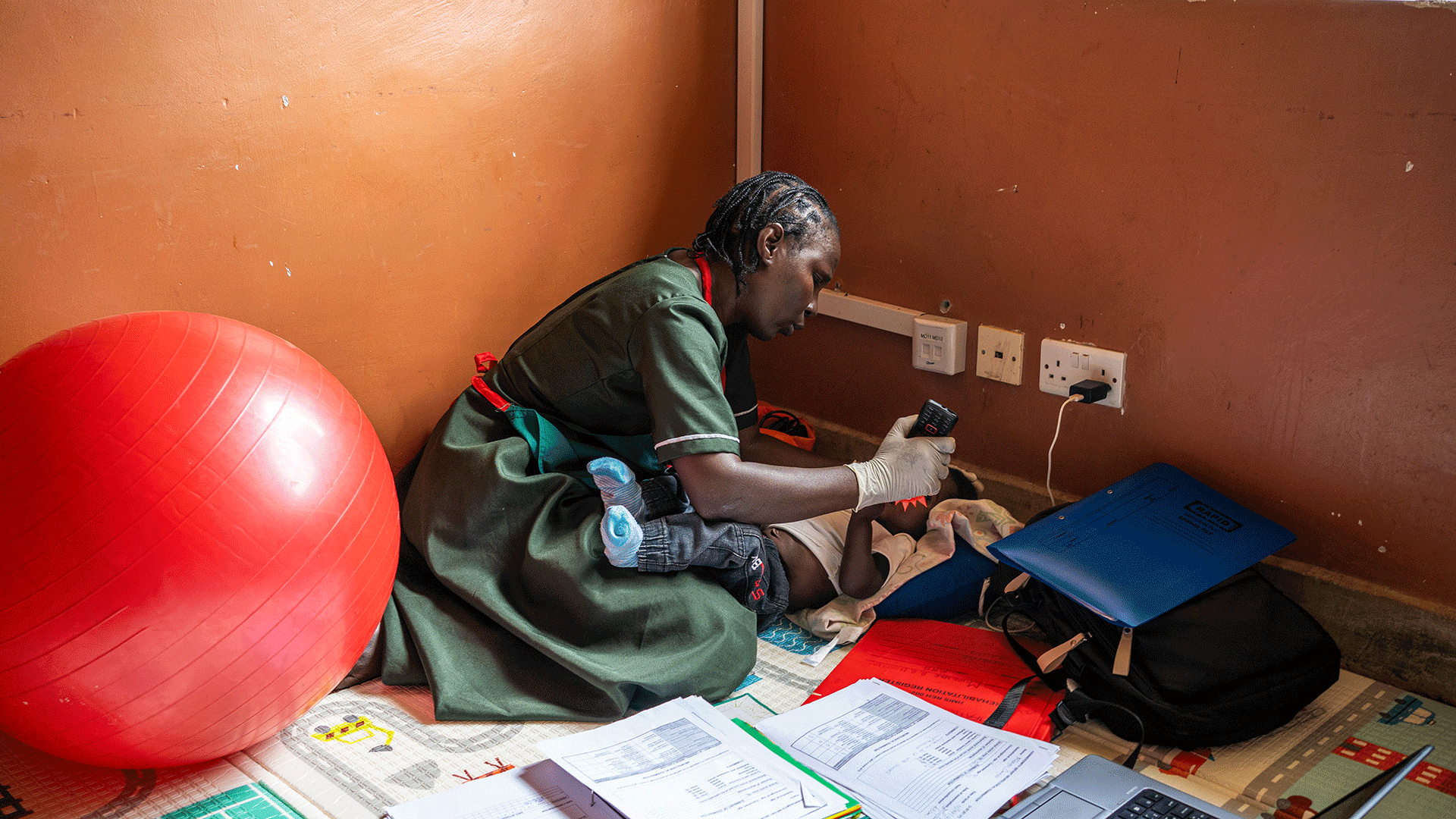
According to Nassiwa, physical therapy has had a decisive impact. Mpirirwe agrees.
“It has helped my baby get stronger. When I used to hold him in my arms, I could feel how frail and small his body was. I was afraid he would die. I am so happy to see how healthy he is now.”
The soil in the small town of Mubende, located in central Uganda, is fertile. According to locals, any seed will grow in the town, and crops are often harvested three times a year. Yet many families struggle with nutrition.
According to FCA project manager Esau Atwongyeire, the problem is complex.
“Many families do not have enough land to grow a variety of crops, so they often focus on just one crop, such as corn or beans. This means that their diet is very limited, and they may also have to sell part of their harvest to pay for school fees or medical expenses.”
Money is also distributed unevenly within families. Although women do most of the farming, men may take the proceeds from sales, leaving children without enough to eat.
Poor nutrition has serious consequences. There are more people living with disabilities in Mubende than the average for Uganda. The causes of disability are often linked to an unbalanced and inadequate diet.
The cost of caring for a child with a disability exceeds the budget of many families. In extreme cases, parents, especially fathers, may abandon their children or even harm them.
Mutebi Atusingwize, 4, is one of the children who has experienced such a fate. He was rescued by his grandmother, Specioza Nandugwa. At the age of three, Mutebi weighed only four kilograms. He was severely malnourished and neglected. His speech development was delayed, and he could barely sit or play.
Now Mutebi is a lively and cheerful toddler. He plays in his grandmother’s yard among the banana trees with his older cousin, a broad smile on his face.
“Shake, shake that mango tree,” his cousin recites the rhyme, and Mutebi tries to repeat it after the older child.
Mango yellow, mango green
The boy repeats the rhyme over and over again.
One for you and one for me
Shake, shake that mango tree
Rhyming is part of Mutebi’s speech therapy. Its purpose is to help him gain confidence in speaking in the classroom and at home.
Although Mutebi still lags behind his peers in many ways, his progress has been remarkable. His grandmother is rightly proud of him.
“He’s not yet in a perfect condition, but every day he surprises me,” says Nandugwa.
Specioza has already enrolled Muteb in preschool. Many children with disabilities do not have the same access to education that they are entitled to. As a result of long-term care, rehabilitation, and love, at least this one little boy is living his childhood to the fullest, despite his difficult start in life.
—
You can help. By donating, you can help where help is needed most. You can make a one-time donation or become a monthly donor. By participating in current emergency aid collections, you can help where the need is greatest.
Even a small donation is important. Thank you very much for your help.