For women, economic empowermenT
is a route to safety
Forwomen,economicempowermenTisaroutetosafety
From April to December 2025, FCA Myanmar ran the Pathway to Protection project in Taungoo, funded by the French Embassy through UN Women, with a total budget of EUR 150,000. The project reached 500 women living in internal displacement, offering a combination of practical business training, cash support, and sessions on gender-based violence (GBV).
THE LINK BETWEEN financial insecurity and gender-based violence (GBV) is well-established. Research consistently shows that women with little or no independent income face higher rates of violence: they have fewer options to leave dangerous situations, are more likely to be coerced into transactional relationships, and have less standing to make decisions at home.
In displacement contexts, this is more pronounced. UN Women research find that when women earn their own money and develop financial skills, rates of intimate partner violence fall and women report greater confidence in making household decisions.
Recognizing this connection, FCA Myanmar provided livelihood skills training, including small business development and financial management, combined with GBV awareness sessions and conditional cash assistance to enable women to initiate income-generating activities and small business start-ups.
A total of 173 women participated in livelihood skills training, and 150 women received targeted livelihood cash support to apply their skills in practice.
Three women took time to talk to us about their experiences during the project.
Weaving back stability — Naw Shwe Htoo
Naw Shwe Htoo, 42, has been weaving since she was 17. It is not just a trade; it is how she has always expressed herself. Before conflict forced her family to flee their village in Kayah Pyone Chaung, she also kept cattle, pigs, and ducks. When their home was burned down, they lost everything — animals, equipment, and income. She has now been living in camp for displaced people with her six family members, including four children, for over a year.
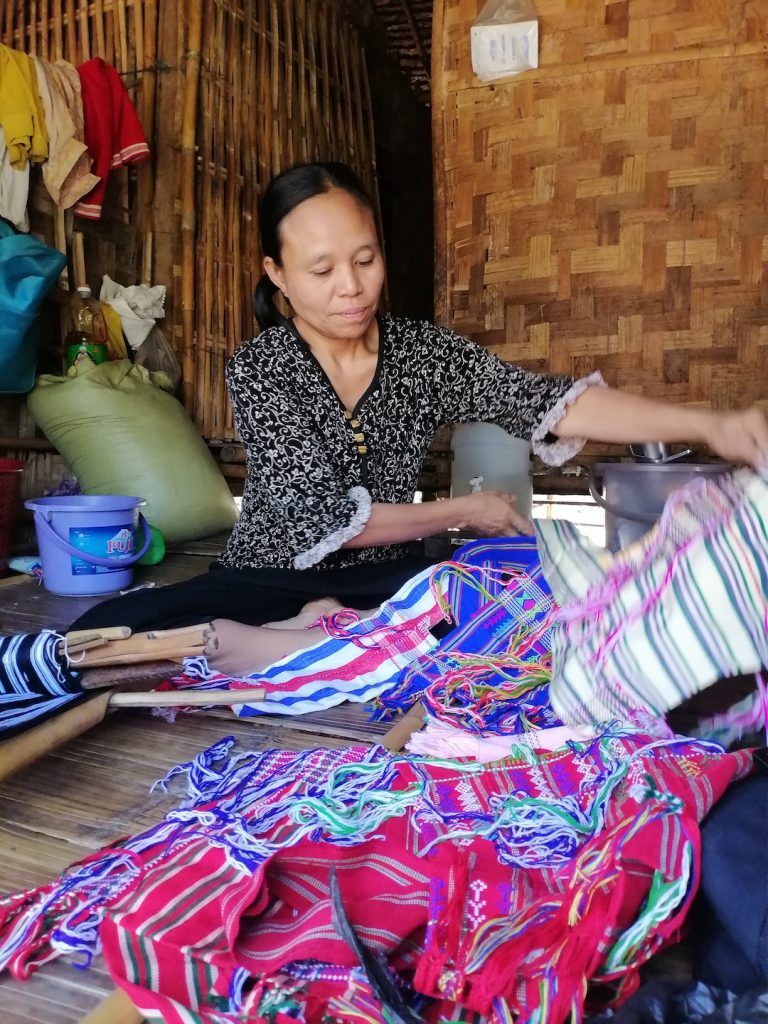
People kept placing orders for her weaving. The problem was lack of funds. No money to buy thread meant no materials for weaving. No weaving meant no income. Meanwhile, a bag of rice lasted the family only a month and her children also needed school fees.
In December 2025, after completing the project’s business development and financial management training, she received 1,150,000 Myanmar Kyat (MMK), which is around 470 euros in cash support from FCA Myanmar. She bought weaving materials immediately and was able to fill the orders she had been turning away. Her income increased because she could now work consistently.
She also set aside part of the cash to buy two pigs. In six or seven months, she expects to sell them and use the money for her children’s school fees the following year. It is a small but considered plan — turning a one-time grant into continuing security.
“I kindly ask that opportunities like this also consider children’s education and livelihoods. I am deeply grateful to FCA and the donors. May God bless.”
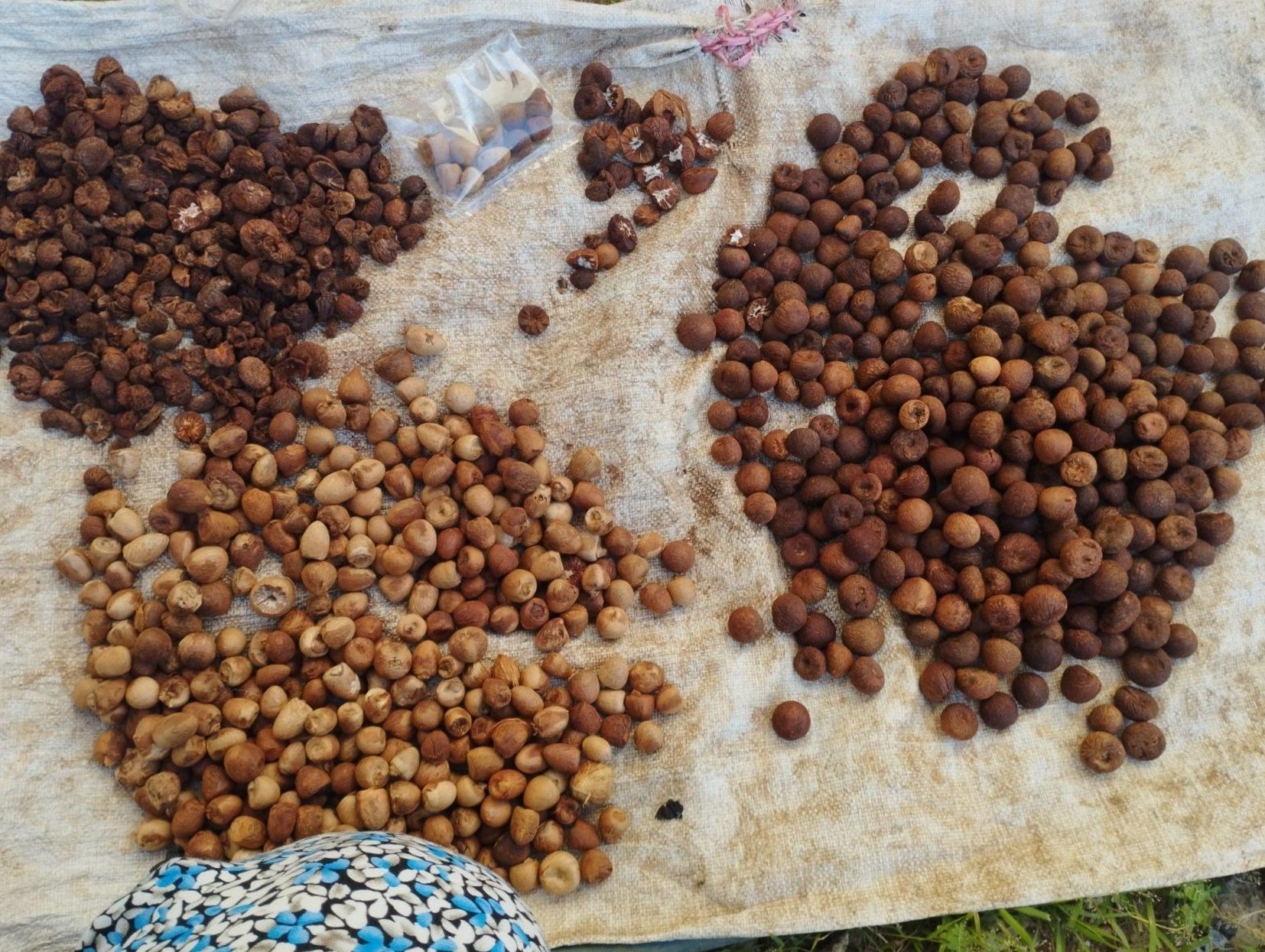
From surviving day to day to running a real business — Nay Nel Muu Wah
Nay Nel Muu Wah, 28, had sold betel nut in her village in Taungoo Township before displacement. After moving to a camp with her extended family, she carried on trading but with almost no capital — buying small amounts on credit, selling quickly at thin margins, and watching the small profit disappear into household needs. Debt repayment was a constant pressure.
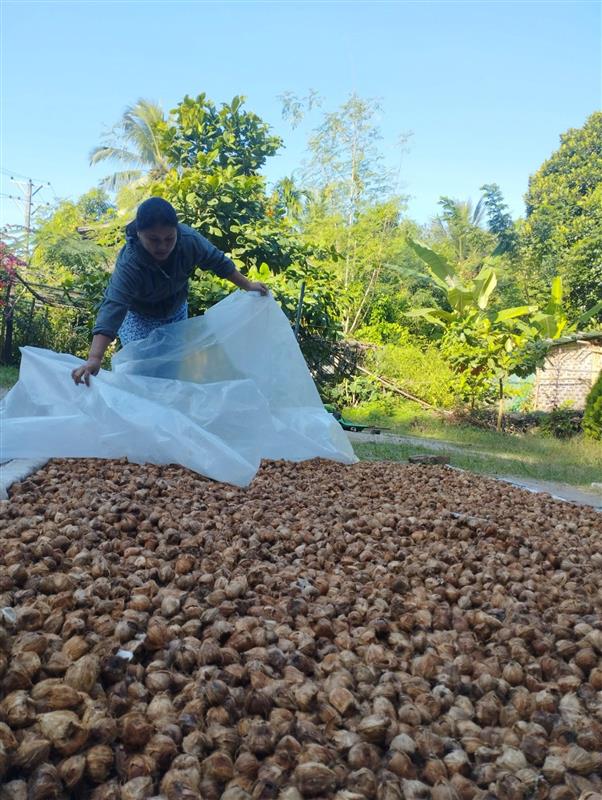
In November 2025, after completing the project training, she received 1,018,500 MMK (around 420 euros) in cash support. The training shifted how she thought about her work. Before, she focused only on buying and selling. After, she understood how to track her capital, calculate actual profit, and plan her stock.
With enough capital to work differently, she began buying betel nut in larger quantities and holding it until prices were better. She also added turmeric to her range. A typical cycle now looks like this: invest 100,000 MMK (40 EUR), sell at 115,000 MMK (47 EUR). Her net profit averages around 600,000 MMK (245 EUR) a month.
The most significant change, though, is the absence of debt. She no longer borrows to trade. She manages her own capital, saves, and plans ahead. The financial pressure that once ran through her household has lifted.
She describes herself now not as a seller but as a businesswoman — a distinction that reflects a shift in how she sees her own standing, at home and in her community.
Mushroom project builds confidence — Daw Khin Moe Kyi
In November 2025, she submitted a proposal for a cash grant and was selected. She was one of 27 women who received four days of hands-on mushroom cultivation training — practical instruction in preparing growing materials and caring for the crop, not just classroom theory. Shortly after, she received 1,410,000 MMK (around 570 euros) in cash support and set up her cultivation area in December.
Daw Khin Moe Kyi, 55, had been displaced twice before this project found her. She had previously supported herself through small-scale trading in Kin Mon Chone village in the east of Myanmar. After her second displacement, she was living in a camp with no income and, by her own account, declining motivation. Without work, her days felt purposeless.

Now she monitors her mushrooms daily and is preparing for her first market harvest. The income has not yet arrived, but the change in how she carries herself is already clear to those around her. She wakes up with a plan. She talks about her mushroom project with energy. She has begun passing on what she learned to neighbours in the camp.
For Daw Khin Moe Kyi, growing mushrooms is not only a route back to income — it is a route back to feeling like herself.
Financial independence is key to safety and stability
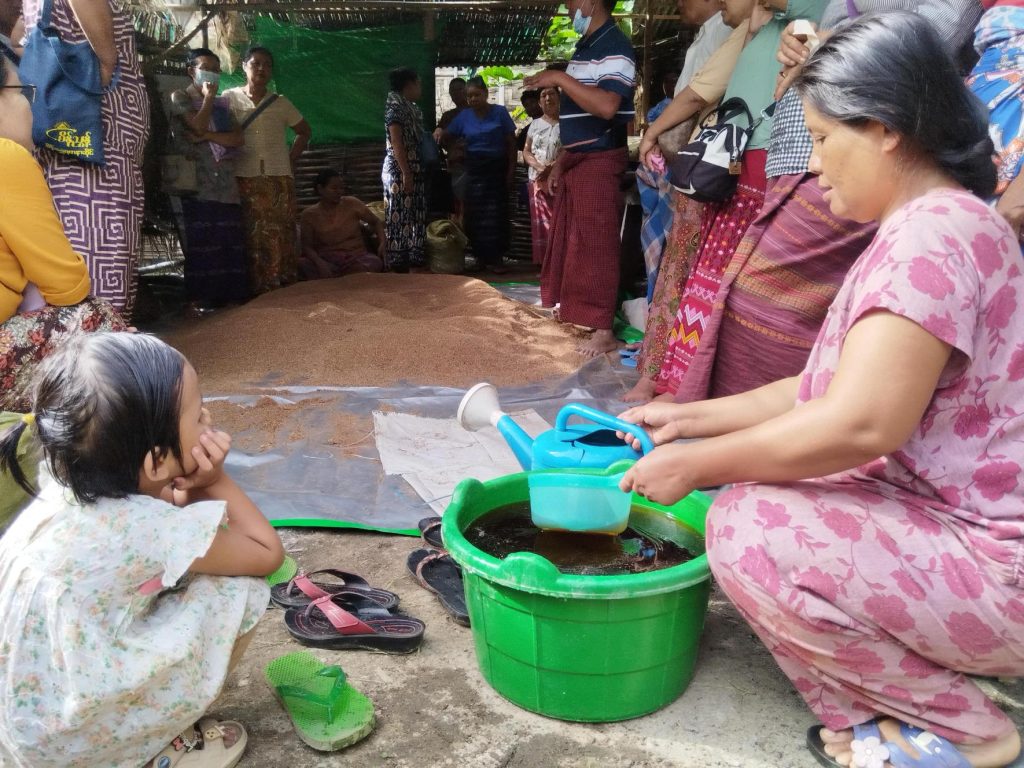
Financial dependence is one of the key factors that traps women in abusive relationships and limits their ability to seek help. The results of this programme reflect real change in women’s daily lives — not just in their households’ financial stability, but in their safety, their voice within their communities, and their capacity to protect themselves and others.
FCA Myanmar’s work went beyond helping women earn income. By building genuine economic independence, women gained greater control over decisions affecting their lives — including the ability to leave or resist unsafe situations. Research consistently shows that when women control their own money and livelihoods, they face lower rates of gender-based violence.