At the listening centre,
women are able to speak freely
The town of Paoua in the Central African Republic, near the border with Chad, has long suffered from conflicts and the activities of armed groups. Everyday violence is often directed at women, for example in the form of domestic violence. That’s why it is important that there is a place where local people can receive help and support.
WOMEN SIT IN LITTLE GROUPS in a small courtyard. One group is rolling soap paste into balls, whilst another is kneading dough by hand. A third group is working with sewing machines. We are at the ‘listening centre’ run by Finn Church Aid (FCA) for women: a place where women can come when they are facing problems.
Everyday life in Paoua is challenging. The region has a turbulent recent history, and the scars of the most recent conflict, which was at its worst in 2013–2014, are still visible both in the ruined buildings and in people’s behaviour. Violence flares up quickly, and this is evident in people’s homes too.
“I came here for the first time because my husband was abusing me,” says Dendo Rosine, one of the women who’s making soap.
She is still missing several front teeth.
“I received help from the listening centre. I was given emotional support and help with keeping in touch with the hospital. The centre’s staff also spoke to my husband. Things are calmer at home now,” Dendo Rosine continues.
Her story is very common amongst the women who come to the centre.
“The women who come here have usually been victims of violence or rape. We then support them according to their needs. We offer therapy and refer them to hospital or help them get what they need,” says support coordinator Rachidatou Salado.
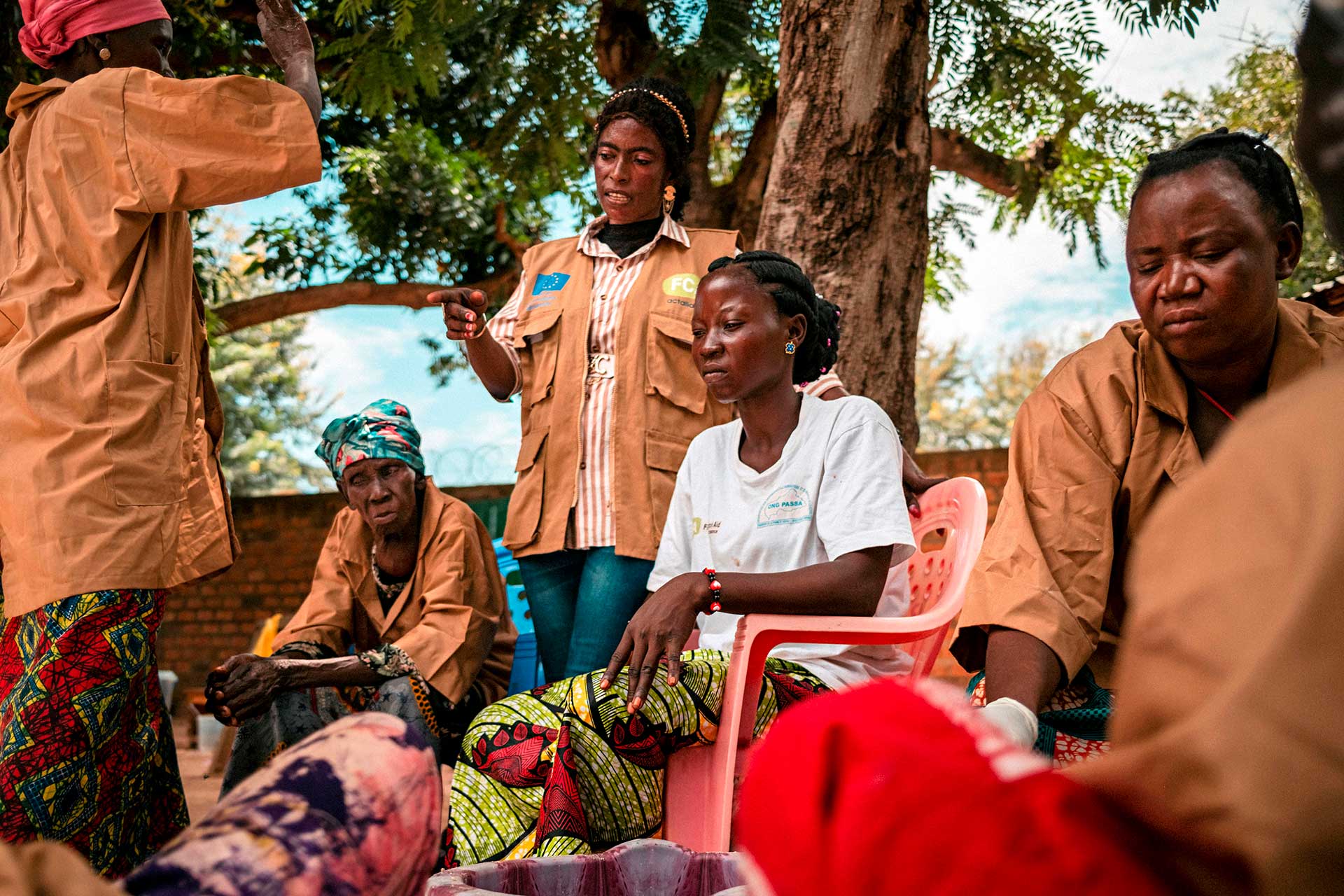
At the listening centre, conversation also plays an important role
Ngoyipe Audrey sought help from the counselling centre because her husband was not looking after her. She is her husband’s second wife, but he gave all the money the family earns from farming to his first wife. Ngoyipe Audrey was left without enough money to make ends meet.
“Here at the centre, I was given some advice on how to bring the matter up with my husband. For example: it’s best to discuss it calmly and explain what I feel is wrong. They also invited my husband along for a joint discussion,” she explains.
Now Ngoyipe Audrey says that her husband is pleased that she attends the counselling centre regularly. In fact, she’s found new hope that she can earn her own living. Among other things, she has learnt to make makara, a local pastry resembling doughnuts, which she sells for 25 local francs (around 0.04 euros) each.
“As well as helping women to earn an income, these courses provide them with emotional support. When women come here, they are often in a poor state of mind,” says Rachidatou Salado.
Women find security in a sense of community
Dendo Rosine says that the support she has received at the listening centre has made her everyday life safer.
“I used to argue more easily with my husband. Now I’ve learnt that it’s not always worth trying to argue when we’re angry; instead, it’s better to calm down for a moment and talk about it later.”
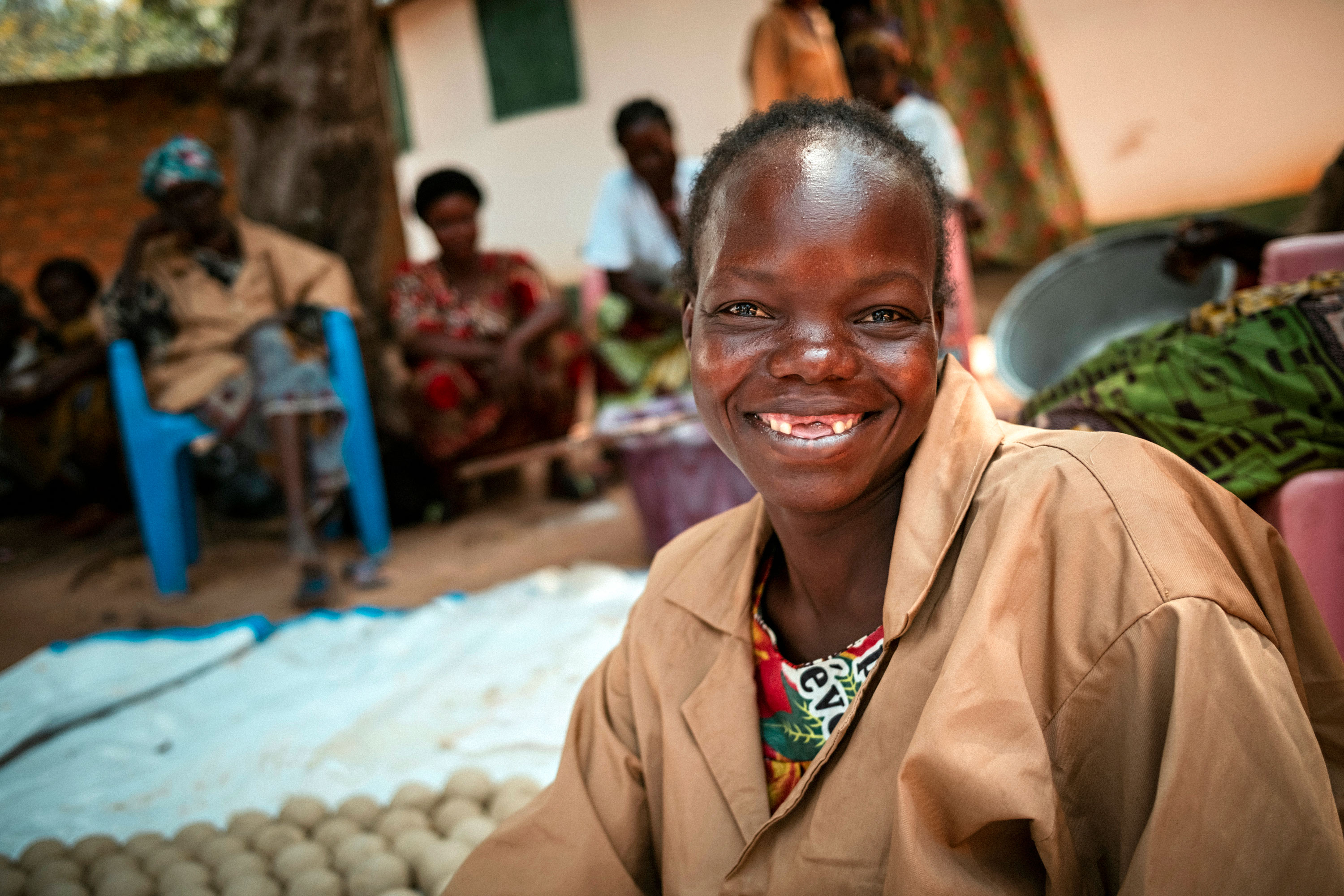
Dendo Rosine has learnt to draw new strength from a sense of community. The women support one another, and that lifts their spirits. It’s good to be able to speak your mind whilst learning, for example, how to make soap together.
“I want to make soap both for my own use and to sell. You can usually sell soap for 100 Central African francs (0.15 euros),” says Dendo Rosine.
The experience of being listened to and of a sense of community has significantly changed women’s lives, says Rachidatou Salado.
“Violence within their families is decreasing; they are more confident and know how to help if they see another woman in the same situation.”
Yet, she says that even if the women in Paoua are able to seek help at the moment, that is only part of the problem.
“We have this listening centre serving women, but we would need one catering to men as well. The men here go through enormous difficulties, too. They would also need someone who listens.”
—