He learned to teach by teaching
now he wants more for future generations
As 132 teachers graduate from Maridi National Teachers Training Institute, one of them began his career in a classroom with no training at all.
When Santos Badista first entered a classroom as a teacher in 2023, he had no formal training in how to teach.
He had completed part of his secondary education and wanted to work with children. Standing in front of learners, he found that wanting to teach and knowing how to teach were different things.
For example, he had never been shown how to draw up schemes of work, the term-long plans that set out what to teach and when.
“I didn’t have any experience, but our head teacher taught me a little about scheming. From there, I decided to go to the college so I could learn better how to teach, scheme and support my learners,” Santos recalls.
After two weeks of coaching, he decided to train properly. In 2024, he joined Maridi National Teachers Training Institute (MTTI) in Western Equatoria State. Two years earlier, tuition fees had kept him away.
“I didn’t know that FCA was supporting the institute. One of the reasons I didn’t join in 2022 was because of tuition. I was excited that I would be helped in one way or another,” he says.
Finn Church Aid (FCA) has supported students at the institute with food, incentives and help towards their education, so they can continue their training.
“Teachers are playing more roles in this world,” Santos says. “I want the young generation to get quality education, now and in the future.”
A country short of trained teachers
Santos’s experience also points to a wider challenge facing South Sudan’s education system: preparing qualified teachers is essential, but ensuring they can work effectively and remain in the profession is equally important.
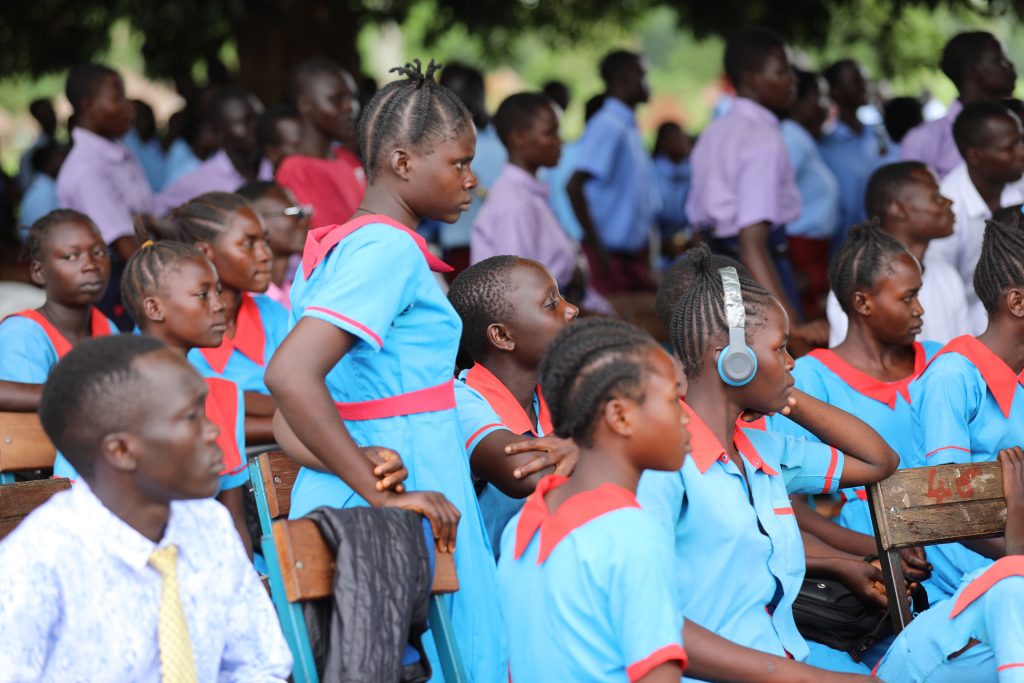
According to the 2023 Annual Education Census, government-aided schools employ fewer than 49,750 teachers. Some 36 percent of them, about 17,720, have no formal teaching qualification. Nearly 70 percent are not on the government payroll, getting by on small stipends from humanitarian organisations or working unpaid.
Classrooms are crowded, with ratios often exceeding 200 pupils per teacher, and 2.8 million children are out of school.
A study published by Education International in April 2025 found that some teachers had gone more than a year without pay, and that no category of teacher, whether government, volunteer or incentive, earns a livable wage amid hyperinflation. One interviewee called the teacher “the most disadvantaged person in the entire workforce of South Sudan.” The report also found that most teachers have been unable to gain the minimum qualifications for the level they were hired to teach.
More than a graduation certificate
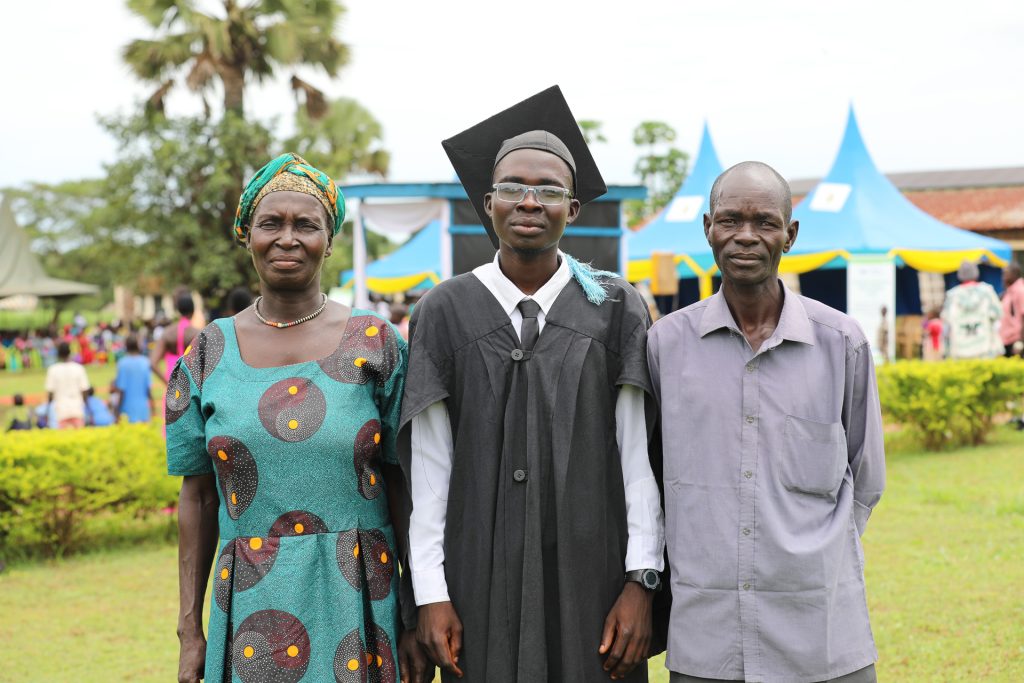
On 27 October 2026, Santos joined fellow graduates at MTTI. The ceremony brought together 132 graduates from the third cohort of the diploma programme and the fourth cohort of the certificate programme.
Having completed his two-year certificate, Santos is continuing towards a diploma while working as a teacher. He says he has grown in confidence along the way. When he first joined the institute, he was afraid of speaking in public. Today, he says, he speaks freely.
The journey has not been easy. His father, who paid his school fees in secondary school, lost his job in 2020 and now relies on casual work. Santos took on more responsibility.
“I told my dad that he should take care of the younger ones, and I pay for the two who are in secondary school,” he explains.
His sister is proud of him and grateful for his support.
“I’m appreciative of what my brother has done. He is even helping me with school fees and so on. I’m so happy that he has graduated, but I want him to continue with his studies too,” she says.
Now, he must balance the cost of continuing his diploma with his responsibilities at home.
From a handful of graduates to a growing institution
When the institute held its first graduation after reopening in 2023, just 14 students graduated. In 2025, 207 did, including 94 diploma graduates. On 27 October 2026, another 132 followed. FCA has contributed to students’ food, incentives, school fees and internet connectivity.
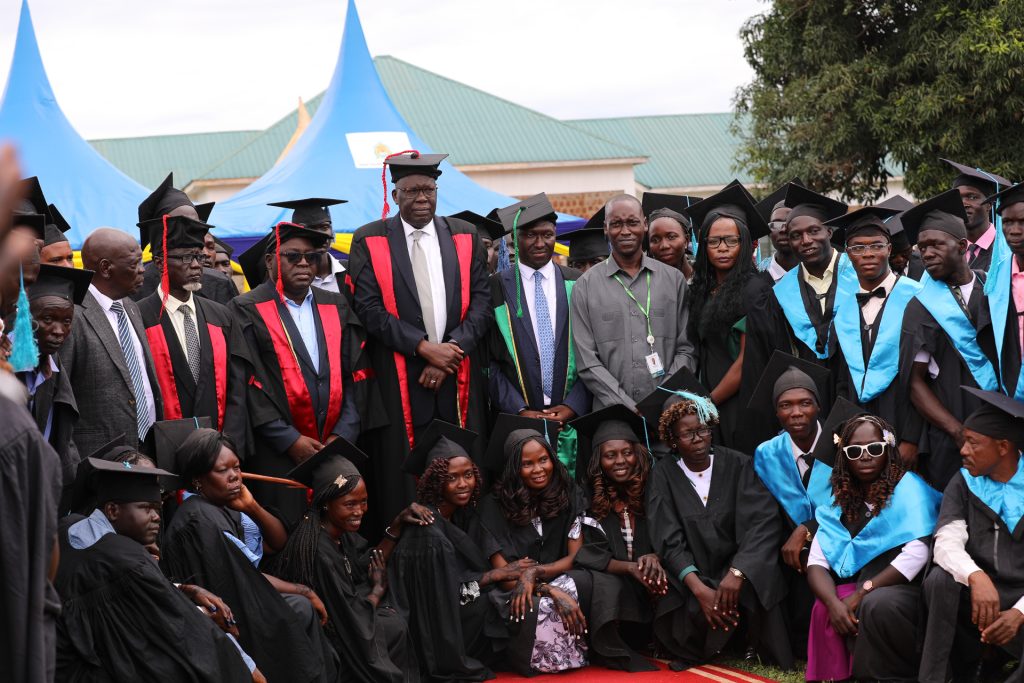
Principal Jackson Sebit said 29 of this year’s 132 graduates were women. The institute prioritises recruiting female student teachers, he said, and has moved from teacher-centred instruction to a competency-based approach that has produced encouraging results in school assessments.
Caretaker Minister of General Education and Instruction Hon. Dr. Kuyok Abol Kuyok acknowledged FCA’s longstanding support and urged graduates to put their knowledge into practice, noting that South Sudan cannot achieve quality education without qualified teachers.
What teachers face
Having already worked in a school, Santos knows the conditions. In community and government schools, he says, teachers can go three months or longer without receiving their salaries. In some schools, a lack of teaching materials makes lessons hard to deliver.
Some of his pupils have hearing impairments, he says, and many teachers have not been trained to teach them. FCA reported in 2025 that the institute’s programmes now include modules in braille and sign language through partnerships with other organisations. However, with only one teacher currently equipped to provide this specialized instruction, he says more investment is needed to strengthen inclusive education and ensure that all learners receive the support they need.
His advice to people considering teaching is to look beyond immediate pay.
“Don’t put money first. Look at your country and the coming generation. You can sacrifice for the future,” he says.
At the graduation ceremony, FCA Country Director Seme Nelson spoke about teachers’ welfare.
“What is the future of a nation without motivated teachers in the classrooms?” he asked. “When teachers are respected and their welfare is taken care of, they, in turn, innovate, become motivated to remain in the profession, and ensure they are committed to their students’ growth.”
Nelson acknowledged that funding cuts have affected the quality of services and the welfare of students at MTTI. FCA, he said, remains committed to working with MoGEI to mobilise resources for the institute in the coming years.
For Santos, these ambitions begin in the classrooms where he already teaches and in the lessons he continues to learn through his diploma studies.
“Teachers are playing more roles in this world,” he says. “I want the young generation to get quality education, now and in the future.”
—