Displaced by drought, a 12-year
old learns to read
An emergency learning centre in Somalia’s Southwest State is helping displaced children return to school
TWELVE YEAR OLD Sawda Adan Hassan reads aloud from her exercise book, tracing each word with her pencil as she goes. Three months ago, she could not read or write. Now she says she wants to become a teacher.
Sawda’s family is originally from Borame village in Bardaale district, where they farmed for a living. Years of prolonged drought destroyed their crops, leaving the family unable to sustain itself. Like thousands of other households across Southwest Somalia, they left their home and eventually settled in Dawta Malabley, a camp for internally displaced people (IDPs) in Baidoa.
The move interrupted Sawda’s schooling: “When we left our village, I was sad because everything we knew was gone. I thought I would never learn like other children.”
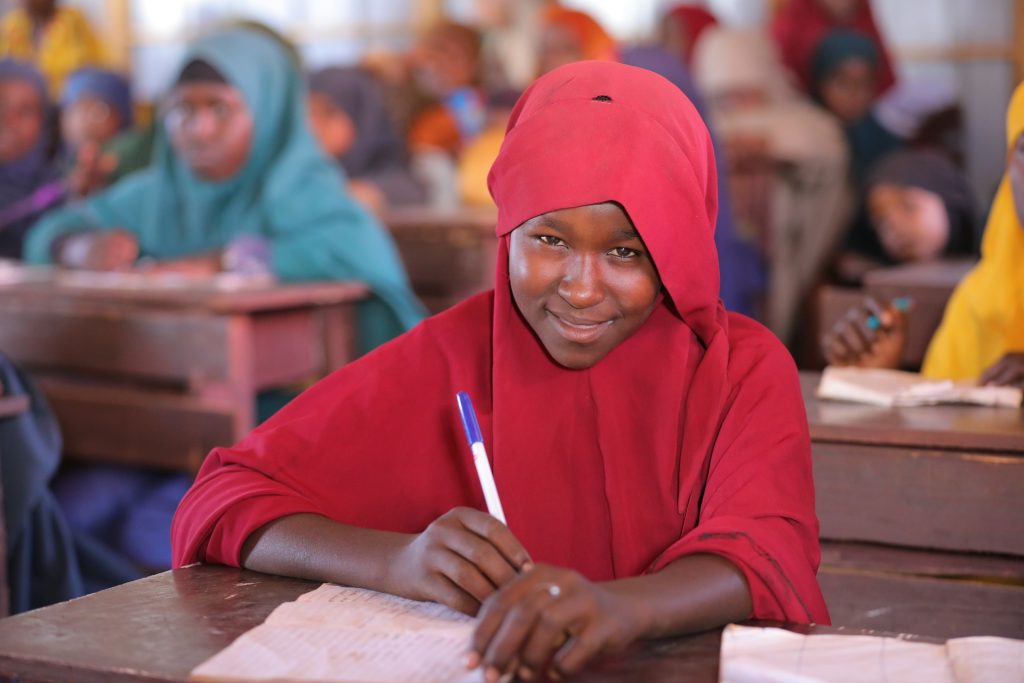
Across Baidoa and other parts of Southwest State, recurring drought, floods and displacement have disrupted children’s access to education. A rapid needs assessment by Finn Church Aid (FCA) found that many school-aged children in displacement sites had experienced significant interruptions to their learning as families tried to rebuild their livelihoods. The assessment identified poverty, child labour, food insecurity and a lack of safe learning spaces as the main barriers to school attendance.
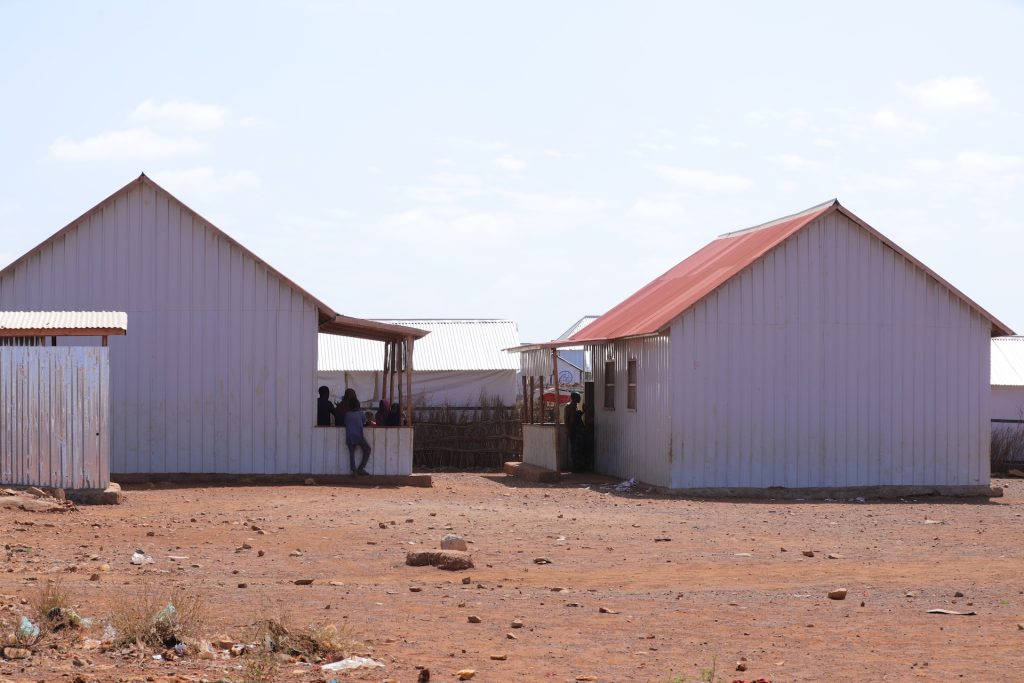
Sawda enrolled three months ago at the Emergency Community Learning Centre (ECLC) in Dawta Malabley camp. The centre was established by Finn Church Aid with funding from the European Union’s humanitarian aid organization, ECHO, and provides a learning space for children affected by displacement.
In three months, Sawda learned to read and write:
“Before coming here, I did not know how to read or write. Now I can read stories and write. I want to become a teacher so I can help other children learn, just like my teachers are helping me.”
Sawda is one of 355 children currently enrolled at the ECLC in Dawta Malabley camp. The centre opened with 60 learners; enrolment has grown as displacement in the area has continued.
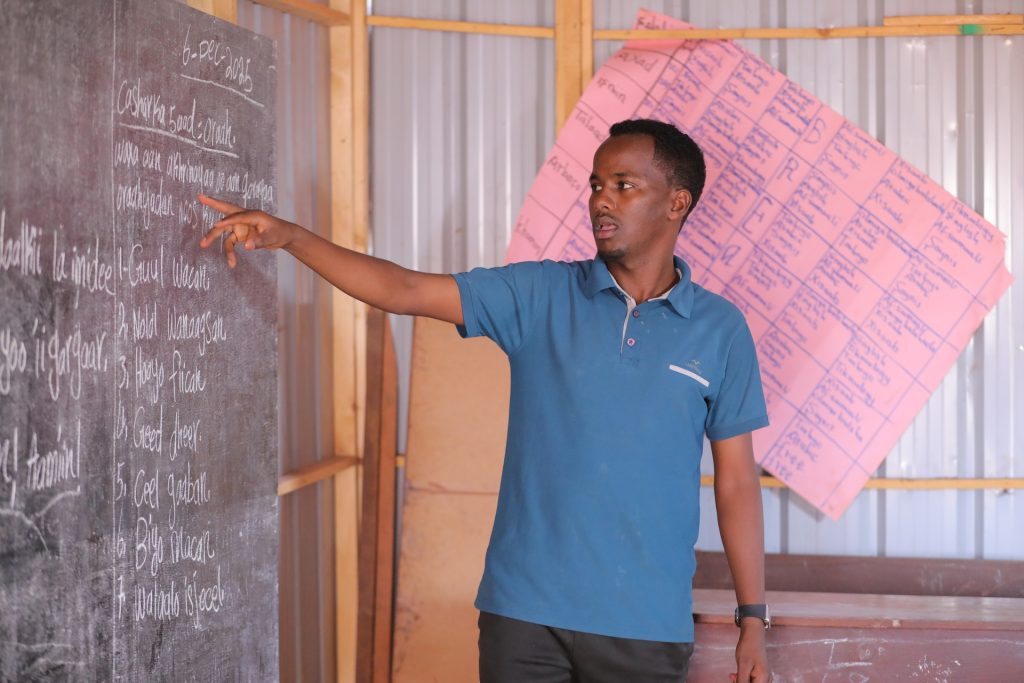
“When we started, only a few parents brought their children. Today we have 355 learners. Families have seen changes in their children and consider education important for their future. Without this centre, many of these children would have no access to learning,” says Abdimajid Ali Abdirahman, an ECLC teacher in the Dawta Malabley camp.
The centre currently lacks a protective fence, a playground and dedicated space for teachers, needs FCA staff describe as immediate and fixable. A more structural challenge concerns how such centres are financed: ECLCs are funded as short-term humanitarian interventions, even though displacement in Southwest Somalia has become protracted for many families rather than temporary.
Without a pathway connecting emergency learning to Somalia’s formal education system, children risk reaching the end of a cycle with no means to continue their education. Teacher retention is also a concern, since incentive-based pay tied to project funding cannot compete with longer-term employment options. According to FCA, these issues are not unique to Dawta Malabley, but reflect a broader financing and transition gap facing emergency education across Somalia’s displacement settings.
The centre is one of several ECLCs that Finn Church Aid operates in Southwest Somalia with ECHO funding, aimed at providing displaced children with continued access to education.
Asked what she wants to become, Sawda answers: “A teacher, because every child deserves the chance to learn.”
Text: Mohammed Eisse
Photos: Siid-Ali Nuur