Menstruation taboos
hold strong in Myanmar
In refugee camps, the cost of menstrual products forces families into situations where they have to choose between food and menstrual hygiene.
SOMETHING FLIES into a small black plastic bag at the store checkout so quickly that no one else has time to notice. It’s a pack of sanitary pads.
Menstruation is surrounded by such strong taboos in Myanmar that rituals like this have become commonplace. However, as the name suggests, menstruation occurs once a month for most girls and women, even in places where it is not spoken of openly.
Menstrual products have become a contentious issue in the country in recent months. Violent armed conflicts have been raging across Myanmar for five years now.
The government has attempted to undermine the rebels’ capabilities in various ways. One such measure is a ban on transporting sanitary pads to conflict zones. The reason given was that the pads could be used as medical supplies, for example, to dress bleeding wounds.
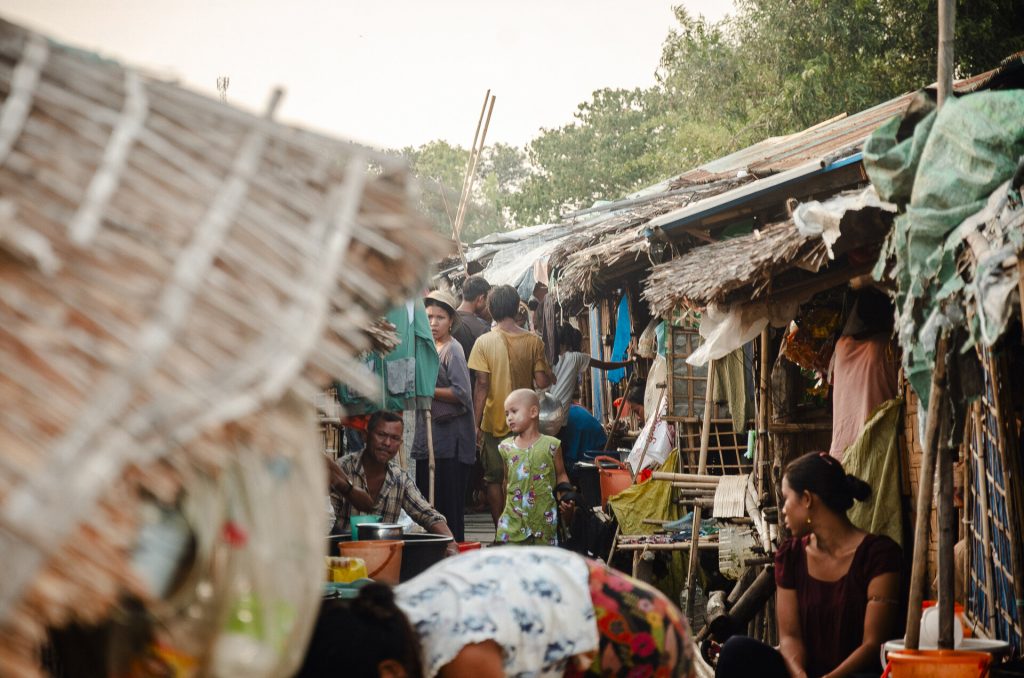
CONFLICT has forced more than 3.5 million people in Myanmar to become internally displaced. About half of them are girls and women. Restrictions on access to menstrual products have had the most significant impact on their lives.
The availability of sanitary pads has already been a problem in refugee camps, and the new regulations are making life even more difficult.
“If I absolutely have to, I’ll buy sanitary pads on credit at the local store. If we can’t even buy them on credit, we’ll have to stay home during my period.”
One of the conflict zones is the long, narrow Rakhine State, located on Myanmar’s west coast. Thein Thein Win, 41, was forced to flee her home in Sittwe District two years ago.
“Life is full of difficulties these days. Sometimes we can’t afford to buy enough food. Living in a refugee camp also means that no one has much privacy,” says Thein Thein Win.
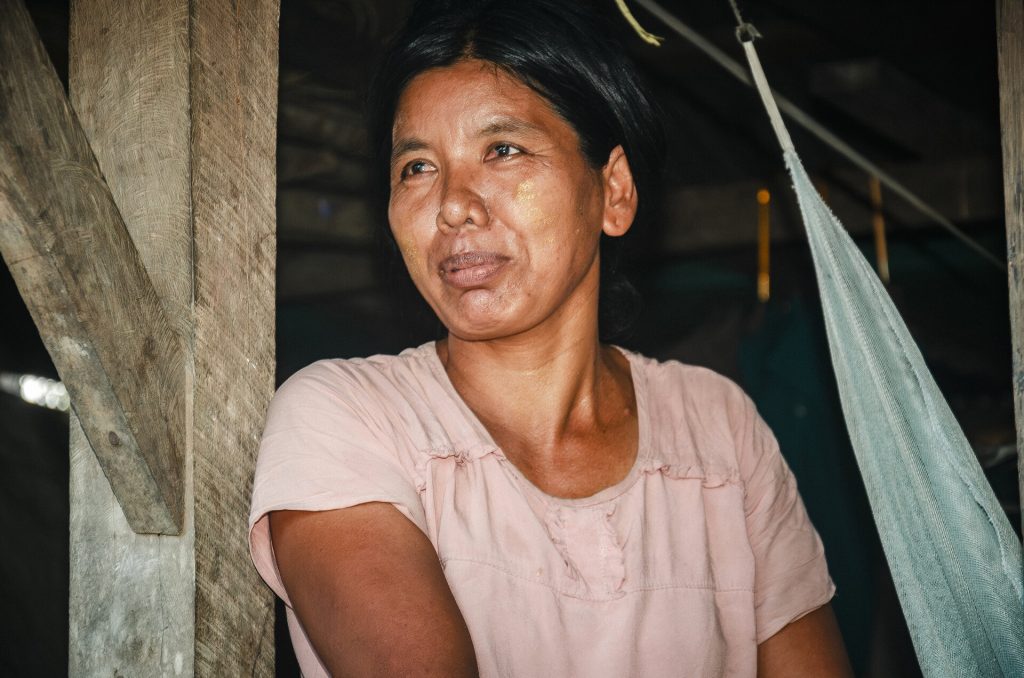
Her family of six who have been forced to flee their home lives in a dilapidated shack. The roof leaks, and the camp floods during heavy rains. The armed conflict also raises security concerns.
“We’re not just afraid of airstrikes, but also that someone will come and steal what little we have,” says Thein Thein Win.
When proper sanitary pads are not available, girls and women are forced to improvise using various materials that pose hygiene risks. Among other things, they have used rags torn from old clothes, newspaper, and large tree leaves.
In addition to hygiene concerns, there is a fear that menstruation will be revealed to others when using the materials mentioned above.
“I don’t usually talk about my period with people outside my family,” says Thein Thein Win.
“Even though women are expected to behave modestly, menstrual health issues cannot be ignored.”
She has three daughters, and as a mother, she feels it’s important for her daughters to understand that menstrual hygiene is a health issue.
“I’ve told my daughters that we need to talk openly about menstruation. Even though women are expected to behave modestly, we can’t ignore the health issues related to menstruation.”
Daughters don’t always feel comfortable talking to their fathers about their periods.
“Then I’ll help and explain the situation to my spouse.”
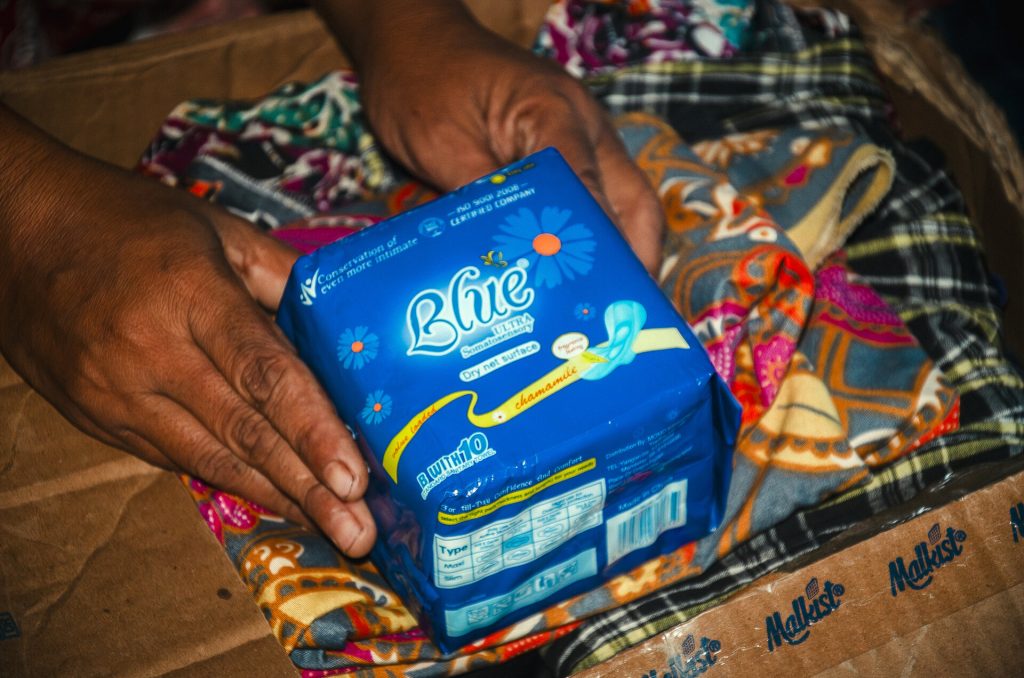
THEIN THEIN WIN’s youngest daughter is only four years old, but there are still three women in the family who need sanitary pads. Due to inflation, prices have risen in recent years, and now a single pack costs about 5,000 Myanmar kyats (about 2 euros).
According to Thein Thein Win, four to five packages are needed each month. That comes to 8–10 euros.
Money is often tight, since many other families are also competing for the same low-paying, occasional jobs.
“Schoolgirls shouldn’t have to miss school because of their periods, and women shouldn’t have to miss work.”
Thein Thein Win’s eldest daughter, who is 20, is unable to work. Her 17-year-old daughter has had to drop out of school and get a job to support the family. The other two children are too young to work. Thein Thein Win and her husband are not always able to find work.
“I try to avoid borrowing things from my neighbours, because they might then want to borrow something from us that we can’t afford to pay back. That could create tension in the camp,” says Thein Thein Win.
“If I absolutely have to, I’ll buy sanitary pads on credit at the local store. If we can’t even buy them on credit, we’ll have to stay home during my period.”
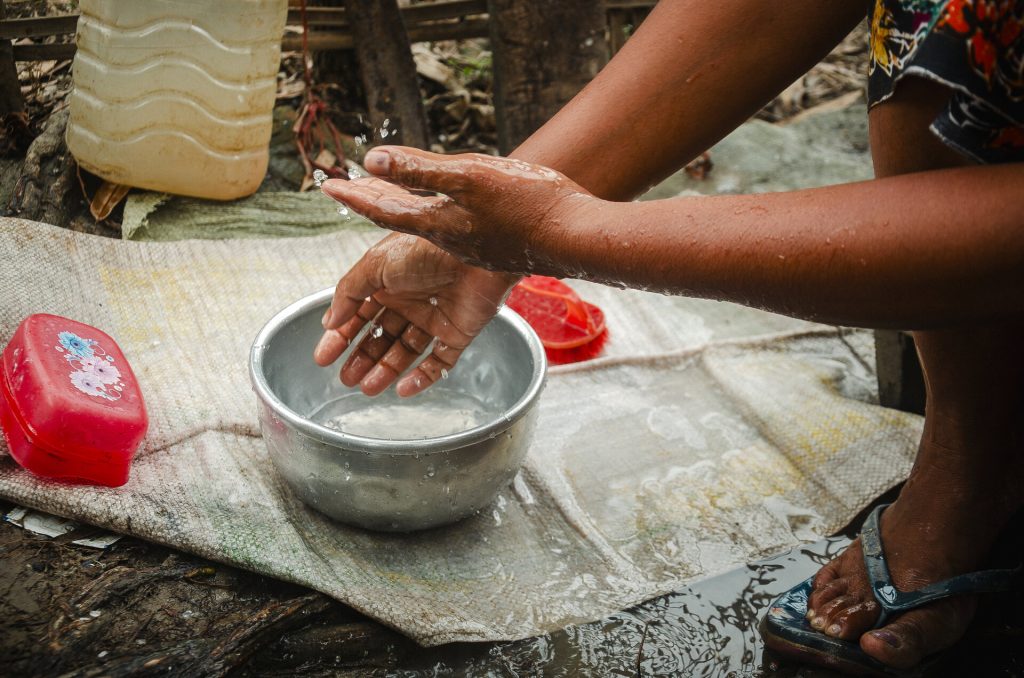
REUSABLE pads may not be the solution, as they should be boiled in hot water for hygiene reasons.
Since menstruation is considered taboo in Myanmar, washing reusable pads is done in secret and cannot be done in front of others. This can be particularly difficult in a refugee camp, where water sources must be shared with others.
“I don’t want any strangers to know that I’m on my period.”
Menstrual products may also be hidden away, especially from men, in unsanitary places where privacy is limited in camp conditions.
“If menstrual products were more readily available, everyday life would be so much easier.”
It can also be difficult to find privacy in the restroom facilities at refugee camps. Out of shame, girls and women may even put themselves at risk of sexual violence by using the restrooms only late at night or during the night.
“If menstrual products were more readily available, everyday life would be much easier. Menstruation is closely linked to women’s dignity and privacy. Schoolgirls shouldn’t have to miss school because of their periods, nor should women have to miss work,” says Thein Thein Win.
“Our family wouldn’t have to cut back on groceries just to be able to buy sanitary pads.”