If everyone wants peace, why is it so hard to achieve? In South Sudan where political instability and violent conflict have persisted, the answer lies in building peace at every level of society: from national institutions down to individual communities.
“When young people have nothing to lose, they are easily mobilized. They have energy, but without opportunities, that energy can be redirected toward violence.”
THIS STARK REALITY captures one of the greatest challenges facing South Sudan today, but it also points to where the solution begins.
In South Sudan, peace is something the entire population desire, yet seems distant. It is a daily pursuit shaped by communities, institutions, and partnerships working together to overcome a legacy of conflict. At the centre of this effort is a continuous collaboration between Finn Church Aid (FCA) and the Ministry of Peacebuilding, working to redefine how peace is understood, practiced, and sustained across the country.
‘Peace cannot be achieved overnight‘
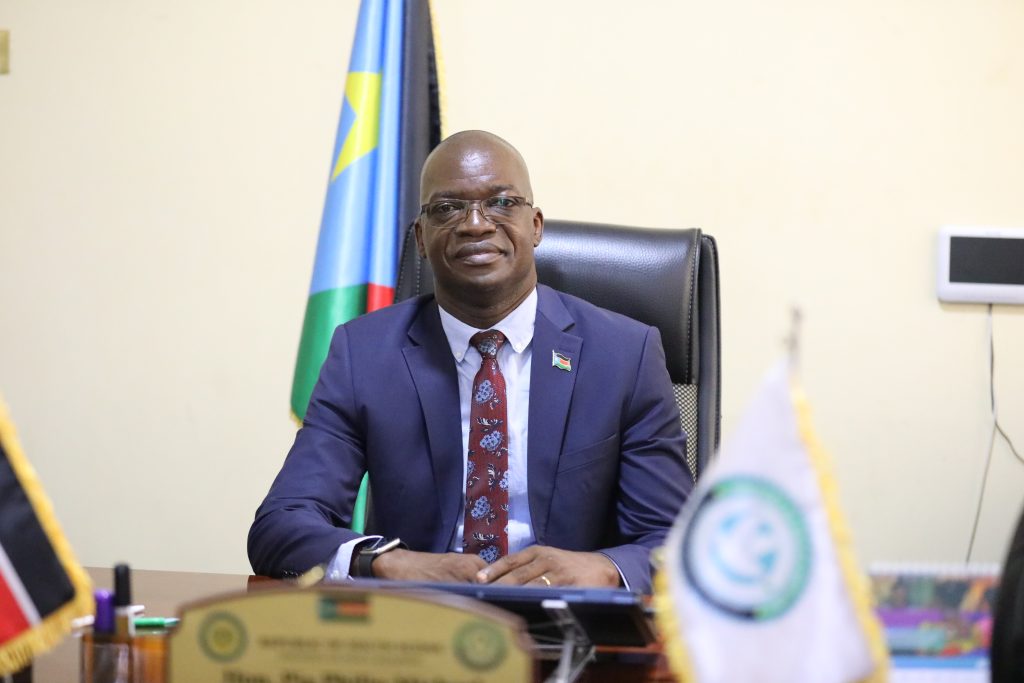
Since its establishment, the Ministry of Peacebuilding has led efforts to design policies and programmes that promote dialogue, reconciliation, and social cohesion. Yet peacebuilding, according to Undersecretary Hon. Pia Philip, whose words lead this article, is not a timed intervention.
“Peace cannot be achieved overnight,” he explains “It is a process that must be built step by step, through dialogue and through communities themselves.”
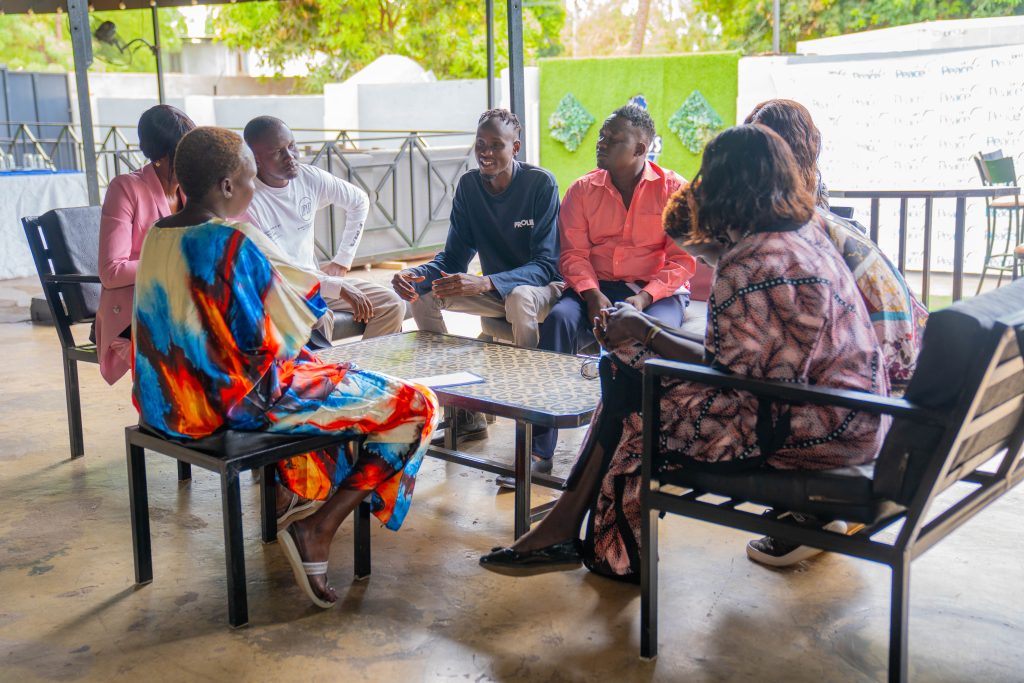
Across the country, there are encouraging signs of this process taking root. Communities are increasingly choosing dialogue over violence, often requesting only simple support to bring people together; a safe space, a few chairs, water to share and an opportunity to speak openly.
This shift is especially visible among young people.
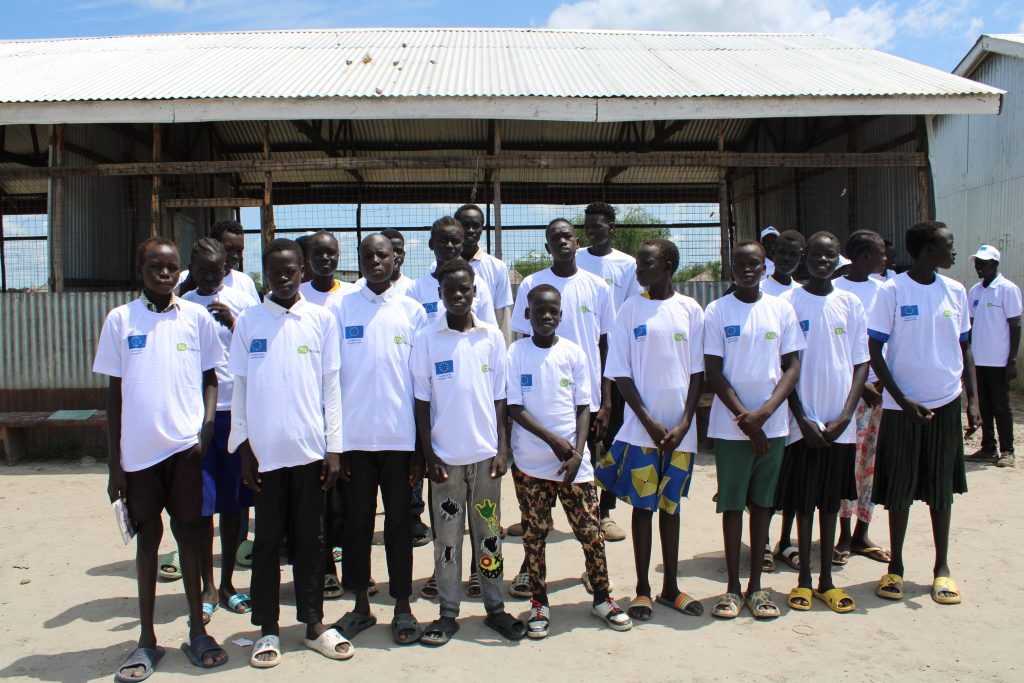
In schools across Greater Pibor Administrative Area, Jonglei State, Greater Equatorial, and Upper Nile, classrooms are being transformed into spaces for dialogue through peace clubs. Sports for peace initiatives are also bringing together children and young people from different communities, creating opportunities for interaction, understanding, and cooperation.
“Transforming classrooms into places for peace through peace clubs and sports for peace has been one of the most powerful ways of bringing young people together,” says Seme Nelson, FCA South Sudan Country Director.
Through partnerships with youth groups, including youth of faith through the South Sudan Council of Churches, FCA is helping young people take on active roles peace ambassadors in their communities.
Over time, this investment is showing results.
“Working with the youth, we have seen them transition from peace ambassadors to employees in different NGOs, where they continue to serve as peace champions,” Mr Nelson explains. “In many of the locations where we have worked, some of these individuals are now leading mediations and engaging communities directly on peacebuilding.”
Poverty drives conflict
Yet despite progress, the challenges remain significant. One of the most persistent drivers of conflict in South Sudan is poverty, particularly among young people. With limited access to education, employment, and economic opportunities, many young people find themselves vulnerable to manipulation by political actors or other influential figures.
“So many politicians use that level of desperation, to mobilize them (youth), to fight on their behalf,” Undersecretary Pia Philip notes.
This is where the connection between peacebuilding and humanitarian work becomes critical.
South Sudan continues to face repeated crises, including conflict, displacement, and flooding. While humanitarian assistance remains essential, it cannot address the root causes of violence on its own.
“The humanitarian sector often focuses on dealing with the effects of conflict, violence and flooding,” continues Seme Nelson. “But too often, it does not deal with the root causes. We must also focus on how communities can coexist, especially displace people and the host communities.”
Peacebuilding as part of humanitarian work
In response, FCA has increasingly integrated peacebuilding into its humanitarian work. That means both practical efforts, like supporting peace clubs for youth, but also listening to local concerns and providing space for discussion before, during and after we act. In areas affected by flooding and displacement, this approach has helped reduce tensions and create opportunities for dialogue between host communities and displaced populations.
In Upper Nile and other affected areas, communities that once competed over scarce resources are beginning to work together, demonstrating how peacebuilding can strengthen humanitarian outcomes.
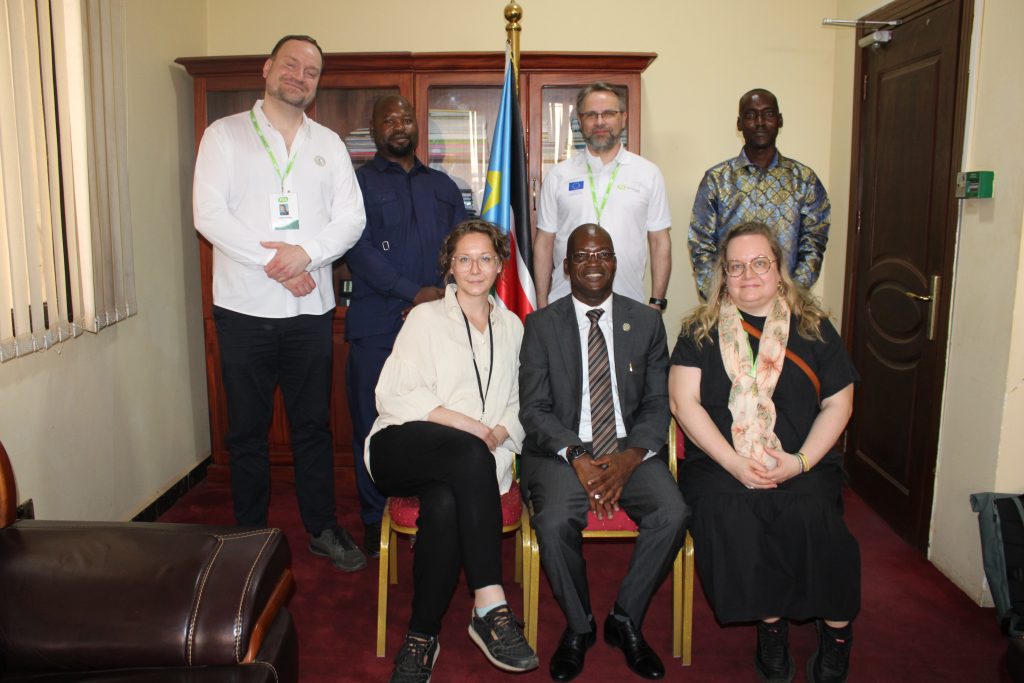
At the national level, a key strength of the collaboration between FCA and the Ministry of Peacebuilding lies in its dual focus on systems and community-level engagement. At the institutional level, FCA has supported the Ministry in strengthening its capacity, including policy development and organizational assessment. These efforts have helped identify gaps and improve the Ministry’s ability to respond to conflict dynamics across the country.
Local ownership
At the same time, the Ministry has emphasized that sustainable peace must be rooted in local ownership. This shared commitment was reflected in 2023, when FCA supported the convening of all 79 Paramount Chiefs across South Sudan. A Paramount Chief is the person responsible for a payam (district), elected by the chiefs of each buma (village), who works with a government-appointed director for the area. This meeting brought together traditional leaders from across the country for the first time since its independence.
“FCA gave us a platform to inform South Sudan about the critical benchmarks that we are working on as a ministry,” Undersecretary Philip recognises.
The impact of the meeting extended far beyond the event itself. By bringing together traditional leaders, the Ministry was able to share critical information about national processes, including the ongoing constitutional and transitional justice frameworks.
“Community-driven peacebuilding is the most sustainable,” the Undersecretary continues, “communities understand their problems and have always found ways to resolve them. Our role is to support and guide, not to replace them.”
FCA and peacebuilding at the community level
This principle continues to guide FCA’s work at the community level.
In Juba and Malakal, youth spaces established by FCA provide safe environments where young people can meet, learn digital skills and engage in peace initiatives. However, the focus is now shifting toward sustainability.
“We want to continue our work with young people especially youth of faith,” Seme Nelson says. “Both these spaces need to become more self-sustaining so they can benefit even more young people in the long term.”
The need for sustainable local ownership is becoming even more urgent as South Sudan moves toward elections expected in 2026. Elections can either strengthen peace or deepen divisions depending on how they are managed, especially in vulnerable contexts.
Recognizing this, the Ministry is encouraging FCA and other partners to focus more deliberately on election-related peacebuilding. This includes identifying possible flashpoints, strengthening early warning systems and supporting dialogue before, during and after the vote.
“There are activities we need to do before, during and after elections,” the Undersecretary explains. “This should be more on civil-military relationship. Our goal is to ensure that elections lead to stability, not conflict.”
Sustainability is key in peacebuilding
For FCA South Sudan, this moment reinforces the importance of sustained collaboration.
“We will continue working closely with the Ministry of Peacebuilding and other partners on policies,” says Mr. Nelson. “Peacebuilding must remain at the centre of our work.”
Unlike other sectors, the results of peacebuilding are not always immediately visible.
“When we talk about education, we can count enrolment and attendance,” he explains. “In peacebuilding, we might have 400 people attend a conference, but years later only a few may have truly transformed. But those few can influence others.”
For this reason, he cautions against viewing peacebuilding as abstract or secondary.
“I do not want to look at peace as something floating on water,” he says. “Peacebuilding is at the centre of everything.”
As Undersecretary Philip highlights, international partners like FCA play a vital role, but they must work alongside national systems rather than replace them.
“Partners should not work for the people of South Sudan,’ he says. “They should work with them.”
—