Finnish church leaders visiting South Sudan see impact of work firsthand
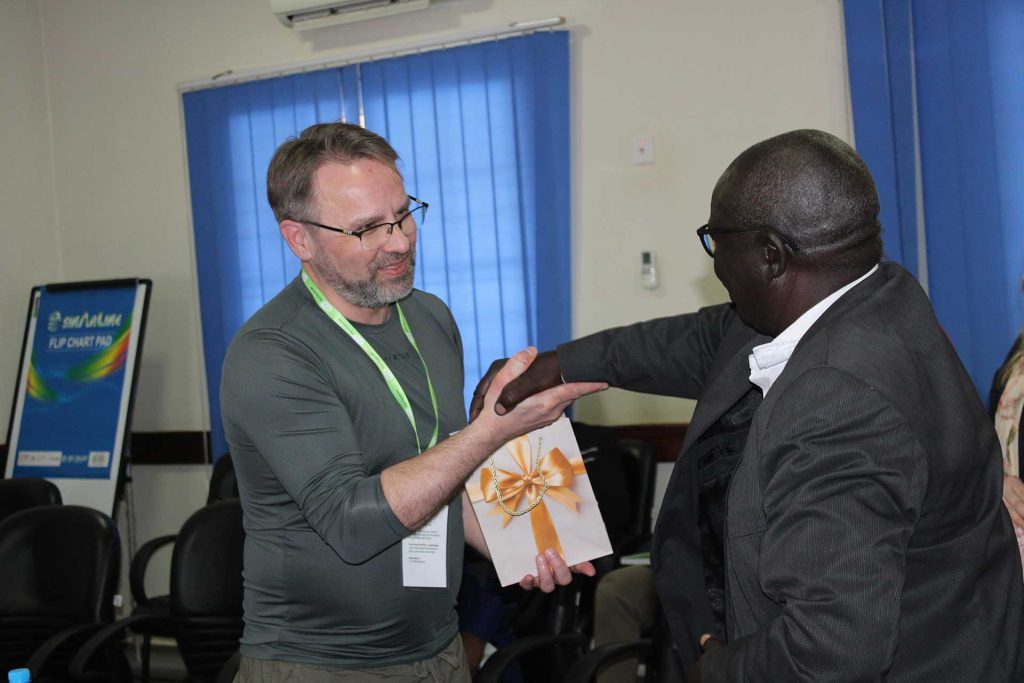
A delegation of Finnish vicars and church representatives visited South Sudan to witness firsthand the humanitarian work their parishes help fund and the important role faith leaders can play.
Text & photos: Kiden Viola Lubang
IN MANY humanitarian crises, faith leaders are often the first people communities turn to for support, guidance, and mediation. Long before international organizations arrive and long after emergencies fade from global headlines, churches, mosques, and religious leaders remain present in the lives of people navigating hardship.
In South Sudan, where years of conflict, displacement, and climate shocks continue to affect millions, churches and religious leaders play a critical role not only in providing spiritual support but also in promoting peace, education, and humanitarian assistance.
When vicars Jussi Peräaho and Daniel Nyberg arrived in South Sudan, they were not arriving as strangers to the cause. The congregations they lead in Finland have long supported Finn Church Aid (FCA)’s work in fragile contexts around the world. But nothing prepares you for seeing a crisis up close.
“It is one thing to read the news and another thing entirely to see the situation with your own eyes,” said Nyberg.
The week-long visit, spanning meetings with government officials, humanitarian partners, and religious leaders, offered the delegation a rare window into one of the world’s most protracted and under-reported humanitarian emergencies. South Sudan continues to face overlapping crises: conflict, mass displacement, catastrophic flooding, and deep economic hardship.
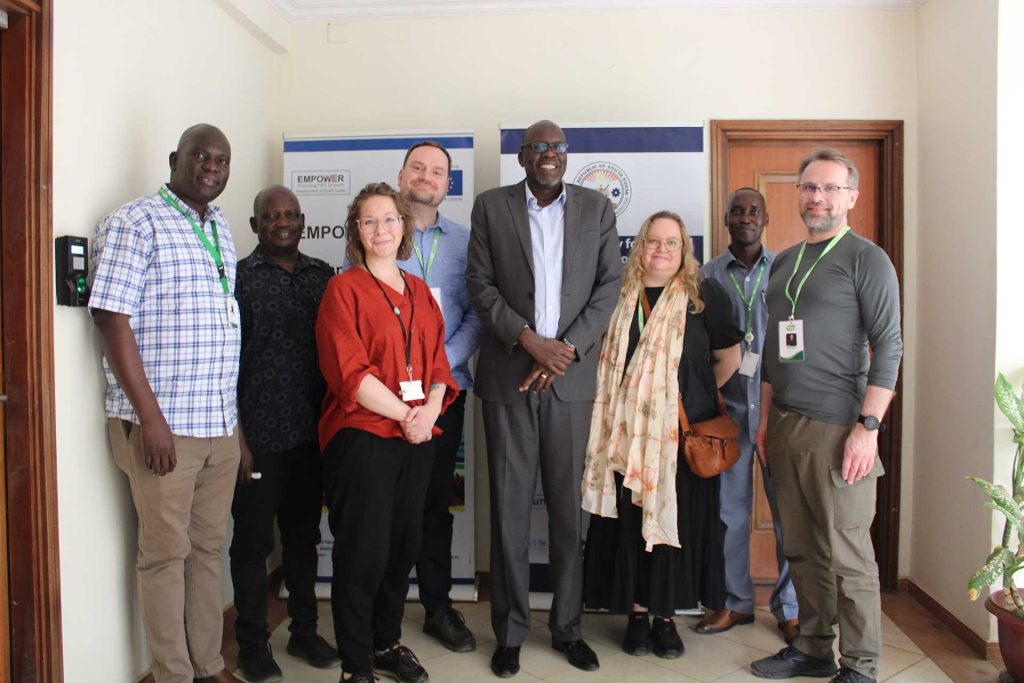
When formal institutions cannot reach, faith leaders can
A central moment of the trip came during meetings with the South Sudan Council of Churches, the influential body that brings together religious denominations across the country and has partnered with FCA for more than a decade on peacebuilding initiatives empowering youth and women of faith.
Organizations such as FCA typically work closely with faith leaders and church institutions like these to strength these efforts. Through long-standing partnerships with local churches, communities, and government institutions, we support education, peacebuilding, and humanitarian assistance programmes that reach some of the most vulnerable populations in the country.
Church leaders in South Sudan often serve as mediators during times of conflict, helping communities navigate disputes and rebuild trust. Their deep community connections allow them to reach people in ways that formal institutions sometimes cannot.
What struck Peräaho was not simply what the churches were doing, but how – through trust built over years of consistent presence at the community level, long before international organisations arrive and long after global attention fades elsewhere.
“It was important for me to meet bishops from different denominations,” Peräaho said. “I saw that churches have a crucial role in the situation in South Sudan. They are willing to try to solve the crisis by building trust among people.”
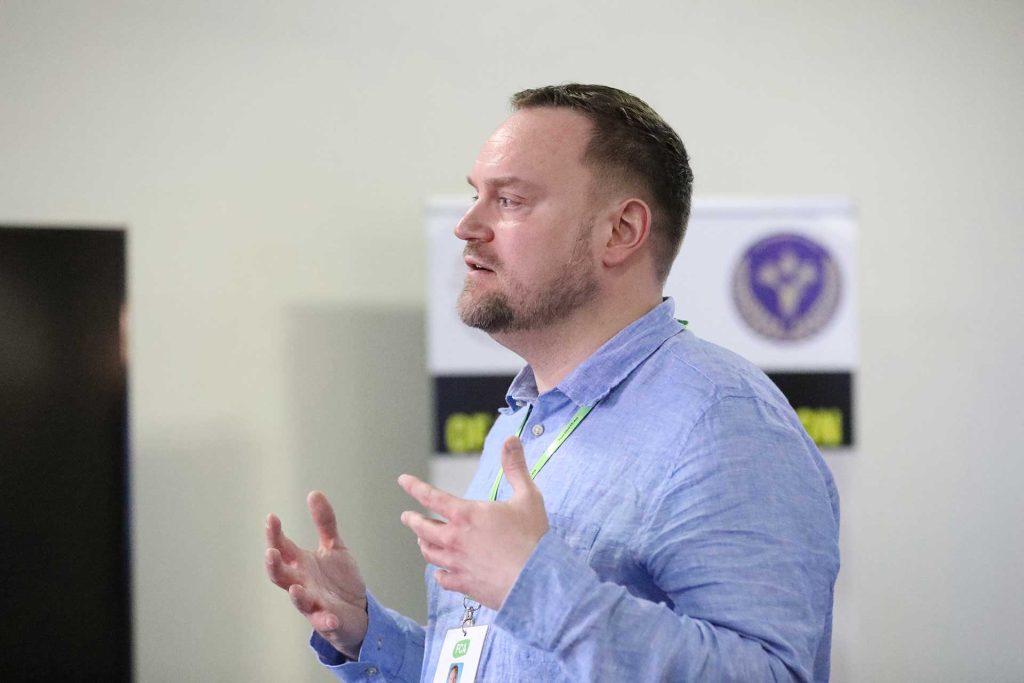
Nyberg was direct about what this means in practice: “When we talk about peacebuilding, it has to reach the grassroots. The church and the congregation have a big role in making that happen.”
A partnership in action, rooted in solidarity
The Finnish delegation’s visit comes from a partnership that goes back decades. In 2025, parishes of the Evangelical Lutheran Church of Finland contribute around 10% of FCA’s total funds, supporting education, peacebuilding, and livelihood programmes across some of the world’s most fragile places.
In South Sudan, Finnish parish support helped fund €100,000 in disaster relief in 2025 alone, assisting families in Upper Nile State – Malakal, who lost homes and livelihoods to flooding and conflict.
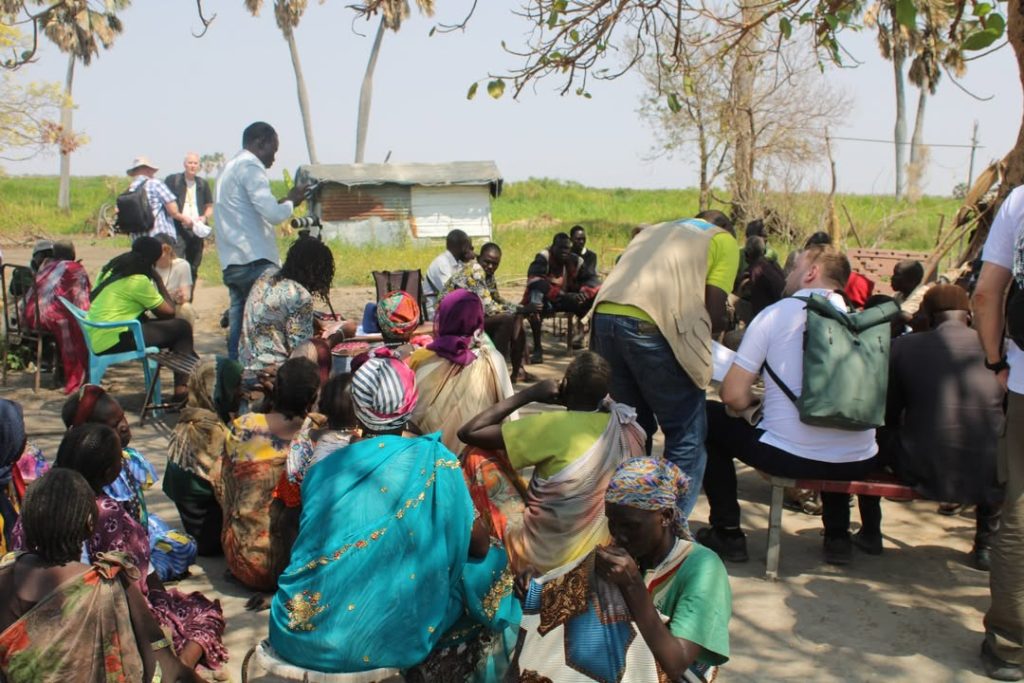
Seeing that money at work: in cash distribution programmes for displaced households, in classrooms at the Gorom Refugee Settlement, in teacher training initiatives for Sudanese educators adapting to a new curriculum, gave both vicars a concrete sense of what solidarity looks like when it lands.
“We came here because it is important for us to see what FCA is doing with the support we provide and to understand how people are living here and what further support might be needed,” said Peräaho.
Education as foundation for stability
The Gorom Refugee Settlement is located approximately 26 km south west from the capital Juba. Originally built for 5,000 people, it now hosts more than 25,000. The delegation saw FCA’s education programmes operating under intense pressure.
Here, FCA South Sudan not only build and rehabilitate schools and provide learning materials. They also support teachers’ English language training, professional support, and provide incentives. Parents are involved as well with Parent Teacher Associations trained in child protection.
For Nyberg, the resilience he witnessed in the children was striking. “You see hope every day,” he said. “Even in a difficult context, you see children smiling and attending school.”
Countries with prolonged crises must not be forgotten
Beyond education, the delegation also witnessed how humanitarian assistance supports families struggling to recover from repeated shocks. In Malakal, where communities have faced severe flooding and displacement in recent years, FCA has been supporting vulnerable households through cash assistance programmes.
During their visit, the delegation observed with interactions reinforcing the importance of sustained international support. While humanitarian actors continue to respond to urgent needs, the scale of the crisis in South Sudan remains significant.
Both vicars returned to Finland with a clearer impression: South Sudan’s crises are not new, but they are ongoing and in a world crowded with emergencies demanding attention, the risk of forgetting is real.
“There is a lot happening around the world right now,” Nyberg said. “But we should not forget South Sudan, or anyone who needs our help.”
Reflecting on the week-long visit, Peräaho said he left with three strong signs of hope in South Sudan.
“The first is the work being done by FCA and its staff,” he said. “The second is the churches working for peace. And the third is seeing children in school uniforms. That is a sign of hope for the future.”
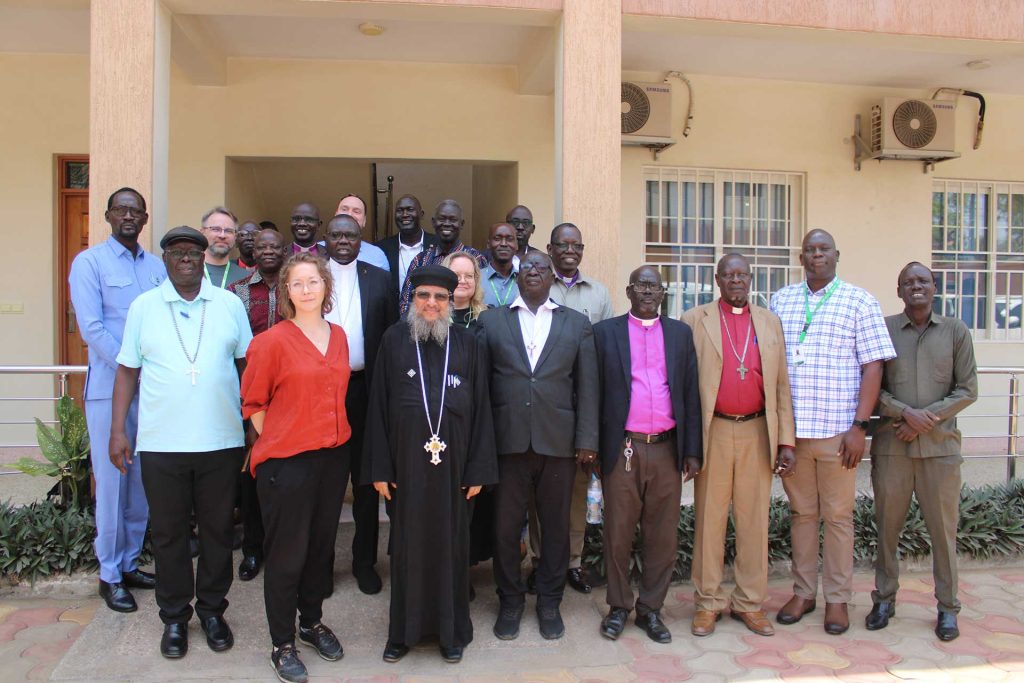
Finn Church Aid works in partnership with the South Sudan Council of Churches and local communities to deliver education, peacebuilding, and humanitarian assistance programmes across South Sudan.