‘I am always afraid’
In South Sudan, where humanitarian needs continue to rise while global funding declines, FCA’s Disaster Fund is providing unconditional cash assistance to some of the most vulnerable displaced households in the country — helping families survive, stabilise, and retain a measure of control over their own lives.
FOR FAMILIES uprooted by conflict, flooding, and chronic insecurity, cash assistance offers something that often aid often cannot: dignity, flexibility, and the ability to meet needs that no single organisation could anticipate.
Mary’s story: Disability, displacement, and the weight of distance
At just 26 years old, Mary’s life has been shaped by conflict, displacement, and a disability that severely limits her mobility. Today, she lives in Malakal internally displaced persons (IDP) camp in Upper Nile State, separated from the two children she was forced to leave behind when violence erupted in her village.
Because of her condition, Mary could not make the difficult journey with her children. They remained with their father while she sought safety elsewhere.
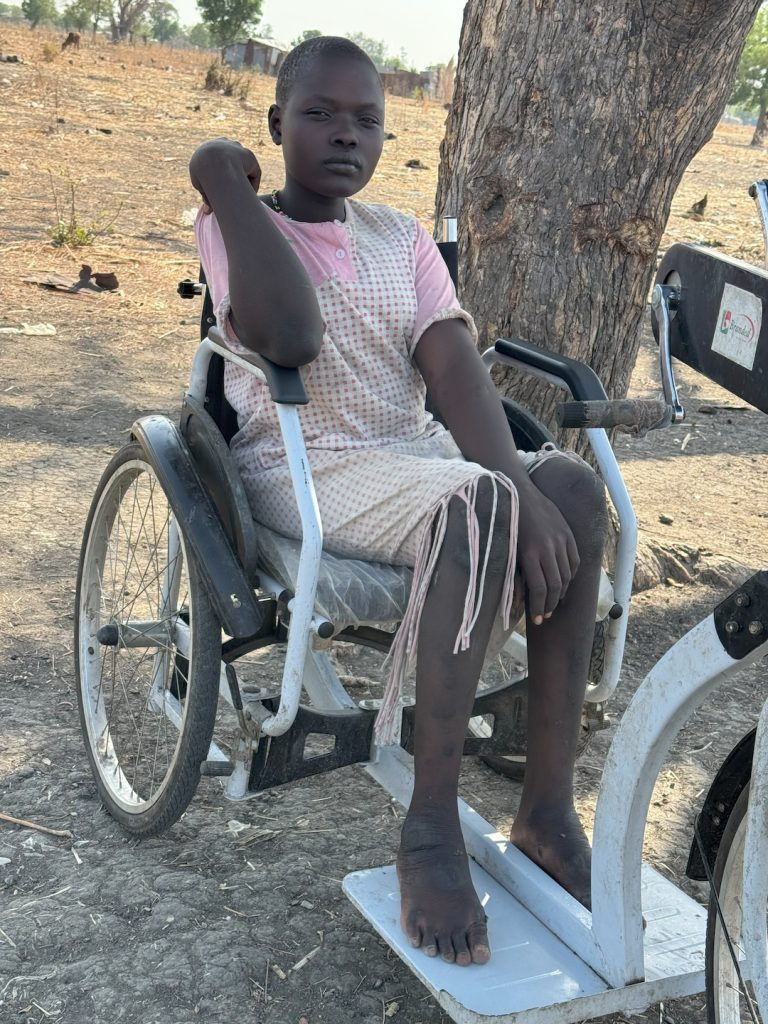
“I am here in Malakal, but my heart and mind are always with my children,” she says.
Mary’s disability is not something she was born with. She grew up healthy, but in 2010 began experiencing severe pain in her legs. By 2012, the condition had significantly reduced her mobility and she became dependent on a wheelchair. Since then, accessing treatment has been difficult and expensive, opportunities to earn an income have been limited, and displacement has only deepened her vulnerability.
In Malakal, she lives with her uncle in the crowded conditions of the IDP camp. With no stable income and ongoing medical expenses, meeting even basic needs had become a daily struggle. Her mobility challenges make it difficult to move around the camp, access services, or engage in any livelihood activity.
Severe flooding in the Upper Nile forced families to flee
The humanitarian situation in Upper Nile had already been severe when, in 2025, unprecedented flooding submerged homes, destroyed farmlands, and forced thousands more families to move to higher ground. According to the United Nations, more than one million people across South Sudan were affected by flooding last year, with over 85,000 impacted in Upper Nile State alone. The disaster deepened an already critical food crisis.
In response, FCA mobilised EUR 100,000 from its Disaster Fund to provide unconditional cash assistance to the most vulnerable households in Malakal and surrounding areas. Mary was identified as eligible under the category of persons living with disabilities.
The impact was immediate. For the first time in a long time, she was able to prioritise her health without worrying about where the money would come from. The assistance enabled her to purchase prescribed pain medication, sorghum, and soap. She sent part of the money to support her children, and shared some with her uncle to ease the financial pressure on his household.
Before the intervention, she had never heard of FCA or known that such support existed. For Mary, the cash assistance was more than financial aid. It gave her a brief but meaningful period of stability at a time when everything else felt uncertain — and it kept her connected, across distance, to the children she cannot yet reach.
Huruma’s story: When every breath is a battle
When Huruma Valerie’s daughter asks, “Mama, how will my future be?” the question lingers long after the conversation ends.
It comes after another missed week of school. Another asthma attack. Another night without proper sleep.
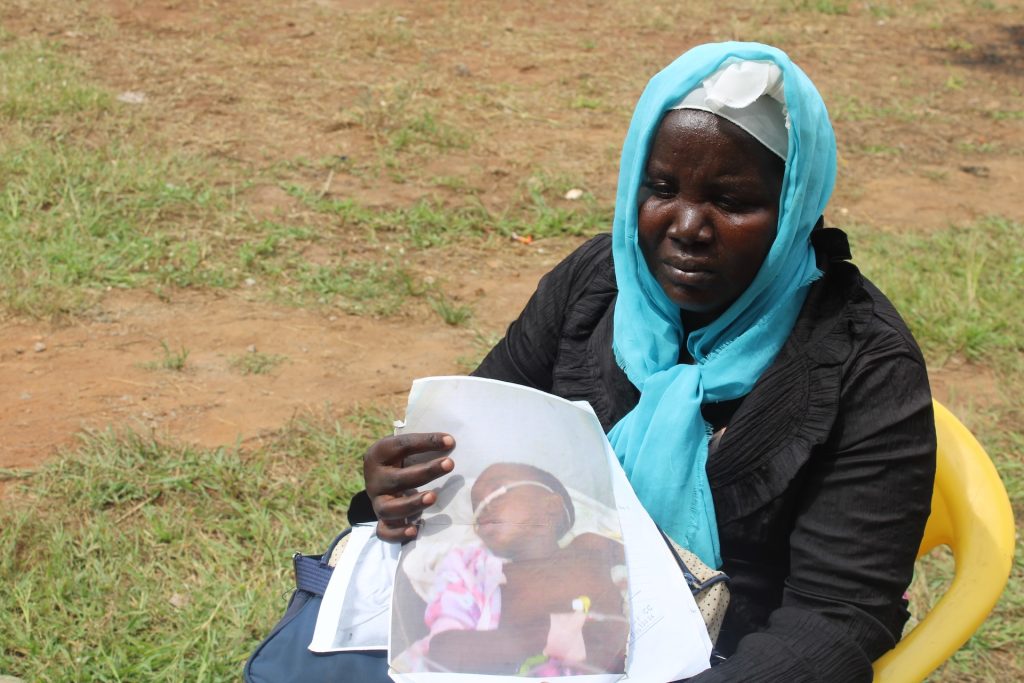
For Huruma Valerie, a Congolese refugee and mother of five, survival has never been straightforward. Her family’s journey has taken them through the Democratic Republic of Congo, Uganda, and Kenya — each move made in search of safety, each one met with a new form of hardship. In 2022, they arrived in South Sudan hoping to finally rebuild their lives.
Instead, they found themselves facing a new crisis.
Huruma was born with asthma, a condition that has grown more severe over the years due to environmental factors. Two of her daughters now suffer from the same illness. Tragically, asthma claimed the life of her first-born child.
“I am always afraid,” she says quietly. “When one of us starts struggling to breathe, I don’t know what will happen.”
Life in the camp has made everything worse. Dusty conditions, overcrowded shelters, and limited sanitation all increase exposure to the triggers that cause severe asthma attacks. Clean air and stable living conditions — essential for managing the disease — are nearly impossible to maintain.
“Every day, we are going to the hospital,” Huruma explains. “If it is not me, it is one of my daughters.”
Disruption to every part of their lives
The constant illness has disrupted every part of their lives. Her daughters miss school two to three times a week. Medical expenses are relentless. Because of her condition, Huruma is unable to work, leaving her husband to provide for the family — a burden that has become increasingly difficult to bear.
“He moves from job to job,” she says. “Sometimes he cannot work because he has to take us to the hospital. And with the language barrier, I cannot go alone.”
With five people depending on one unstable income, the family often goes one or two days without a proper meal. When funding cuts reduced the humanitarian assistance available to them, the situation became even harder. The daily reality became a constant calculation: food, medicine, or transport to the hospital — rarely all three.
It was during one of these critical periods that Huruma was identified for support through FCA’s Disaster Fund.
“By the time the help came, it was at the right moment,” she says. “We had nothing left.”
The cash assistance allowed her to buy food, cover transport to the hospital, and purchase essential medicines. It also reduced the immediate financial pressure on her husband, giving him space to focus on finding more stable work.
“I want to thank FCA very much for considering me,” she says. “The help you have given us has helped so much. I don’t even know how to express my excitement.”
Her daughter’s question about the future still lingers. But for now, the family is breathing a little easier.
—
Through the Disaster Fund, FCA provides unconditional, flexible and timely support to families facing urgent needs. For households like Huruma’s and Mary’s this assistance helps them manage immediate crises, protect their well-being, and maintain access to essential services.