Equality takes a step backwards
Something alarming is happening in the world right now: equality is being pushed backwards. Read our guest column from our colleagues at Women’s Bank.
THE ADMINISTRATION of US President Donald Trump has brought ultra-conservative values to the fore. A number of words related to equality work have even been removed from the government’s programme descriptions and various documents. The list of banned words includes terms such as gender, climate, and woman.
Influential companies have followed suit. Meta and Microsoft banned advertising with words such as women’s rights and equality.
Misogyny is rampant in the depths of the internet and has become part of everyday life. One in three girls has already experienced sexual violence online.
Something is wrong, because according to the UN, gender equality has either deteriorated or made no progress at all since 2019 in almost half of the world’s countries.
The exceptional nature of the situation is reflected in the fact that UN Secretary-General António Guterres has described the current situation as a global attack on women’s rights.
“Instead of mainstreaming equal rights, we’re seeing the mainstreaming of misogyny,” Guterres said on International Women’s Day last year.
Ironically, it is precisely equality work that would give the world a boost.
The World Bank estimates that the global economy would grow by a fifth if women could participate equally in the workforce. Discriminatory structures and violence against women, on the other hand, cost around six trillion US dollars annually.
Harassment, violence, and insecurity are particular obstacles to women’s employment. In addition, legislation in many countries restricts women’s opportunities to own property and obtain financing.
“Development cooperation has achieved good and sustainable results,” says Eva-Marita Rinne-Koistinen, leading expert on equality work at Finn Church Aid.
Finn Church Aid implements Women’s Bank development cooperation projects that support women’s work and entrepreneurship. Since 2007, 100,000 women have been given the opportunity to earn a living.
“When women have a stable income, children can continue their education and families have better access to healthcare and adequate nutrition,” says FCA’s Country Director in Kenya, Alexon Mwasi, explaining the results of Women’s Bank’s work.
Businesses founded by women boost the economy and improve families’ livelihoods. The effects go even deeper.
“Work is important for human dignity. A woman’s self-esteem is strengthened through her own work,” emphasizes Programme Manager Surmila Shakya from FCA’s Nepal office.
She has seen how women who are financially independent have been encouraged to challenge old traditions. Mothers who previously stood quietly on the sidelines have risen up to defend their daughters’ rights.
Who benefits from marginalizing women?
“Groups that want to promote traditional patriarchal values and do not see the benefit of women being involved in decision-making,” replies Rinne-Koistinen.
It’s about power. Instead of gainful employment and social influence, women are assigned traditional roles with caregiving responsibilities. Women still do 2–4 times more housework than men.
Especially in developing countries, time spent on housework is time lost from gainful employment, studying, and social engagement.
Rinne-Koistinen says that discussions about women’s rights in civil service and politics may currently be focused on issues such as how to protect women from violence – something on which everyone strongly agrees.
“Protecting women is important, but we should also talk about how to promote women’s own agency and the realization of their rights,” Rinne-Koistinen emphasizes.
The work of Women’s Bank shows that it is precisely women’s own income that effectively strengthens their position and opportunities to influence.
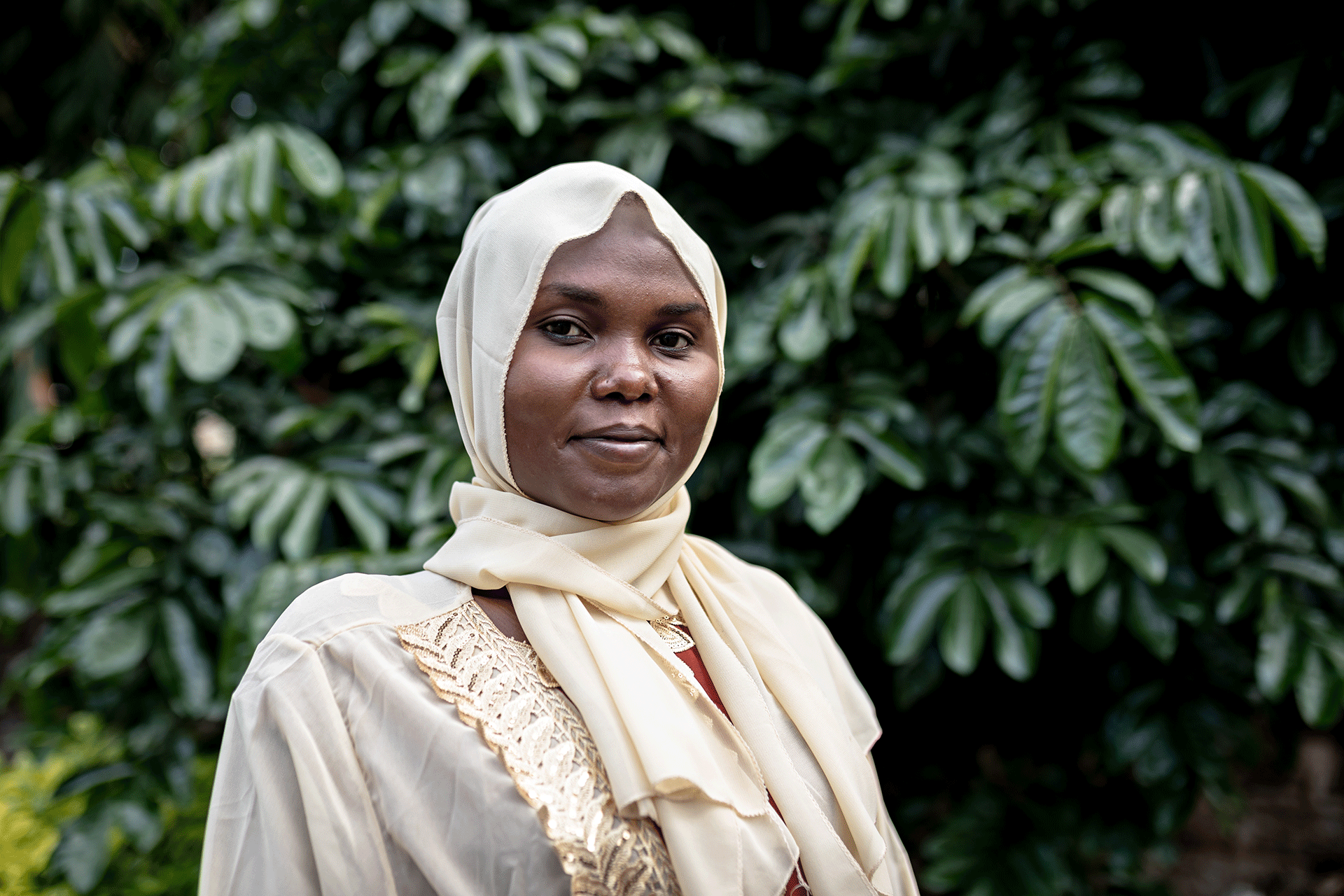
Huda Arbab, 29, a Sudanese refugee living in Kenya, has succeeded in increasing sales of her handicraft business with the help of Women’s Bank entrepreneurship training. She now employs other women at the Kakuma refugee camp.
“Women have been able to pay their children’s school fees and even send them to better schools. That makes me feel really good, because I see myself in them.”
Arbab has lived her entire life as a refugee in various countries and has witnessed the plight of women. She has one goal:
“I want women to have the same opportunities as men – and to be financially independent.”
Perhaps the world’s greatest force for change can be found at the grassroots level, among women who work and couldn’t care less about superpower politics. What would happen if each of them could influence things through their own work?
This International Women’s Day, support women’s work by becoming a monthly donor to Women’s Bank.
—
Sources: World Bank, Save the Children, Statistics Finland, SDG Gender Index, UN Women, Pen America, Yle and António Guterres 8.3.2025.
Opening image: Elisabeth Wahito from Kenya had to drop out of school at the age of 17 due to lack of money. “I did odd jobs, but coronavirus took away my work and I was left alone with my little boy. The turning point came when I got a job at a waste management facility and was selected to train as a forklift operator with the support of Women’s Bank. Before, only men were forklift operators, but now no one is surprised to see women operating the machines. When you have skills, you get a good salary.”