Teacher of the Year in Ukraine
champions inspiration
Biology teacher Ruslan Shalamov does all he can to ensure that his students receive real-life examples and role models from real life.
BIOLOGY TEACHER Ruslan Shalamov’s path to becoming a teacher began by chance. He dreamed of becoming a researcher in biochemistry; but after graduating in the 1990s, Ukraine’s economy was in chaos, making a career in research impossible.
Shalamov was forced to work as a car salesman. His short time in the profession was abruptly interrupted by a threatening situation that forced him to quit and lie low for a while. Then a friend offered him a job as a teacher at a school in Kharkiv in eastern Ukraine.
“Two months after I stepped into the classroom, I knew this was where I belonged,” he says in his classroom at Obdarovanist High School, where he began teaching in 2019.
Today, he describes the school as his first home. “In my second home, I just sleep. Here I work, here I live.” The war has made that feeling even stronger.
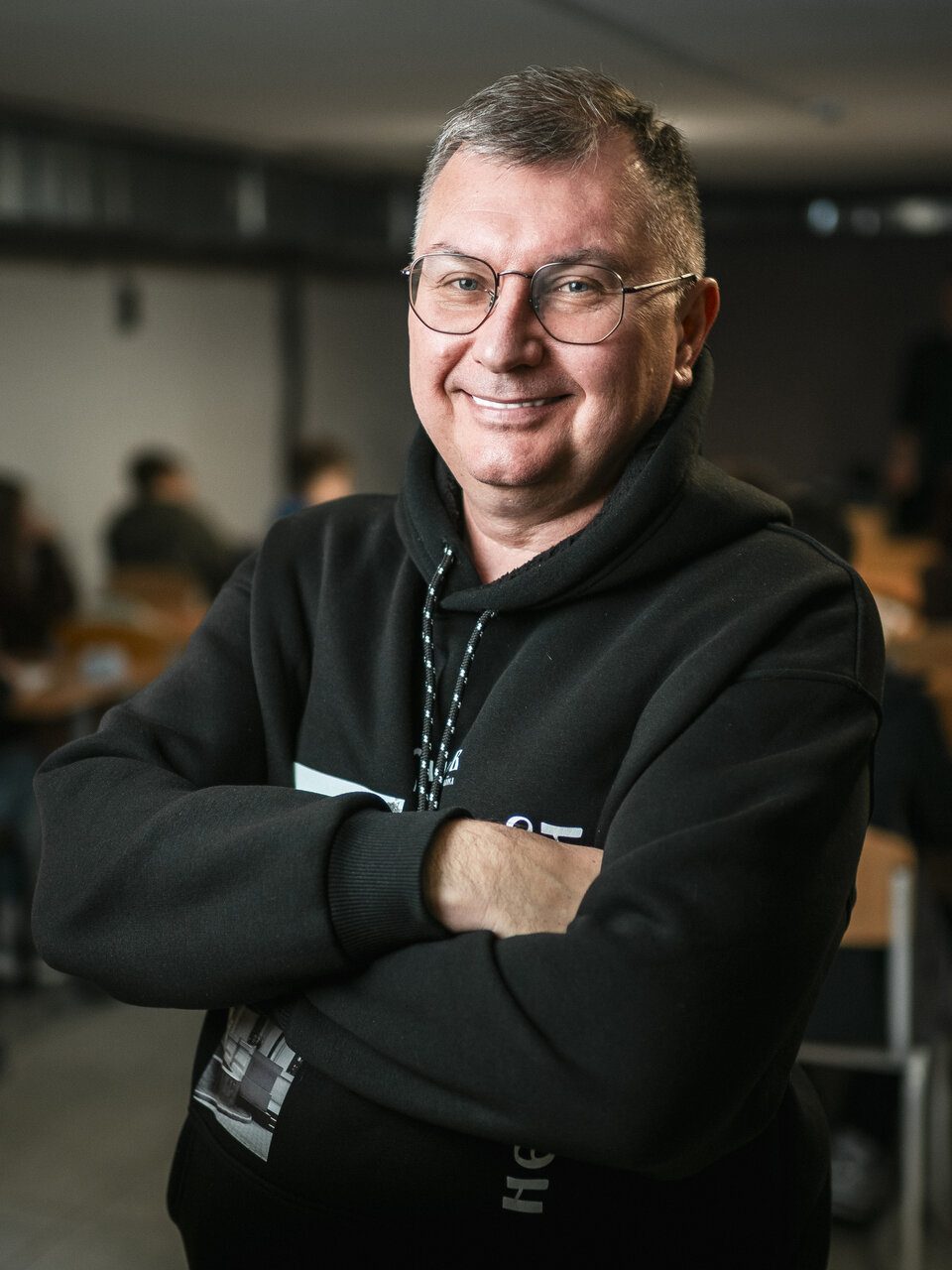
IN OCTOBER, 55-year-old Shalamov was named Teacher of the Year in Ukraine. The award is presented annually in a live television programme reminiscent of a film gala with hosts and performances. The president’s wife, Olena Zelenska, is there to present the awards.
This recognition tells Shalamov that he is succeeding in breathing life into his students’ dreams – against all odds in Kharkiv, which is located a few dozen kilometres from the front line. Dozens of his students have achieved success in international competitions for science students.
“My students’ success earned me the award,” says Shalamov. But the most fundamental aspect of his students’ success is their belief that life goes on despite the war.
“That’s what motivates me and keeps me going.”
SHALAMOV’S FORMER CLASSROOM has not had any students for five years. Teaching now takes place underground – in shelters equipped with desks, blackboards and even sleeping quarters – or online when it is too dangerous to come to school.
“The pandemic prepared teachers for distance learning, but nothing prepares anyone for bombs, attacks and air raid sirens,” says Shalamov.
Many students in the region have lived through an occupation during the early stages of the war. Some have lost their homes and now live in temporary accommodation. Shalamov teaches biology, but the war is present in every lesson – as a responsibility to the students.
“In every lesson, I think about them, what they are going through, and what we must do to save them.”
For Shalamov, teaching is also about inspiring students through new impressions and role models from life outside school. With support from FCA, Shalamov has provided the school with new teaching tools and taken students on excursions to universities and laboratories. When students see that there are career paths in subjects such as cell biology, genetics and microbiology, they can paint a much more hopeful picture of the future.
Before the war, the students used to benefit from having more free time. Now, most of them want to study.
“If they have less free time, they think less about the war and more about a future they can influence,” he says.
—