FORGING A FUTURE
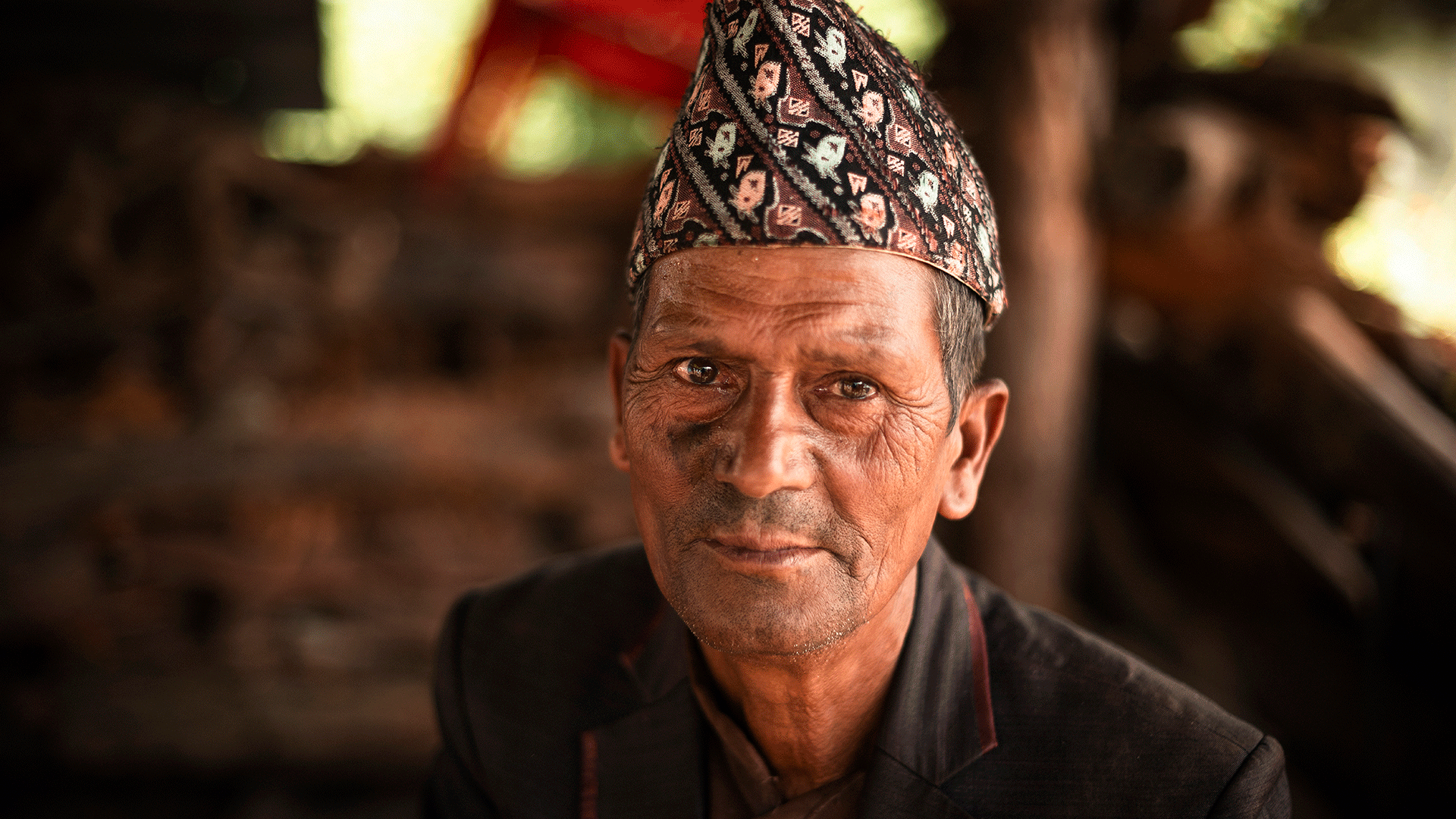
The future of 72-year-old Gopal Tamrakar depends on how long he can continue doing heavy physical work. In Nepal, elderly people need sons to provide for them in their old age, but the coppersmith has daughters, who have long since moved away.
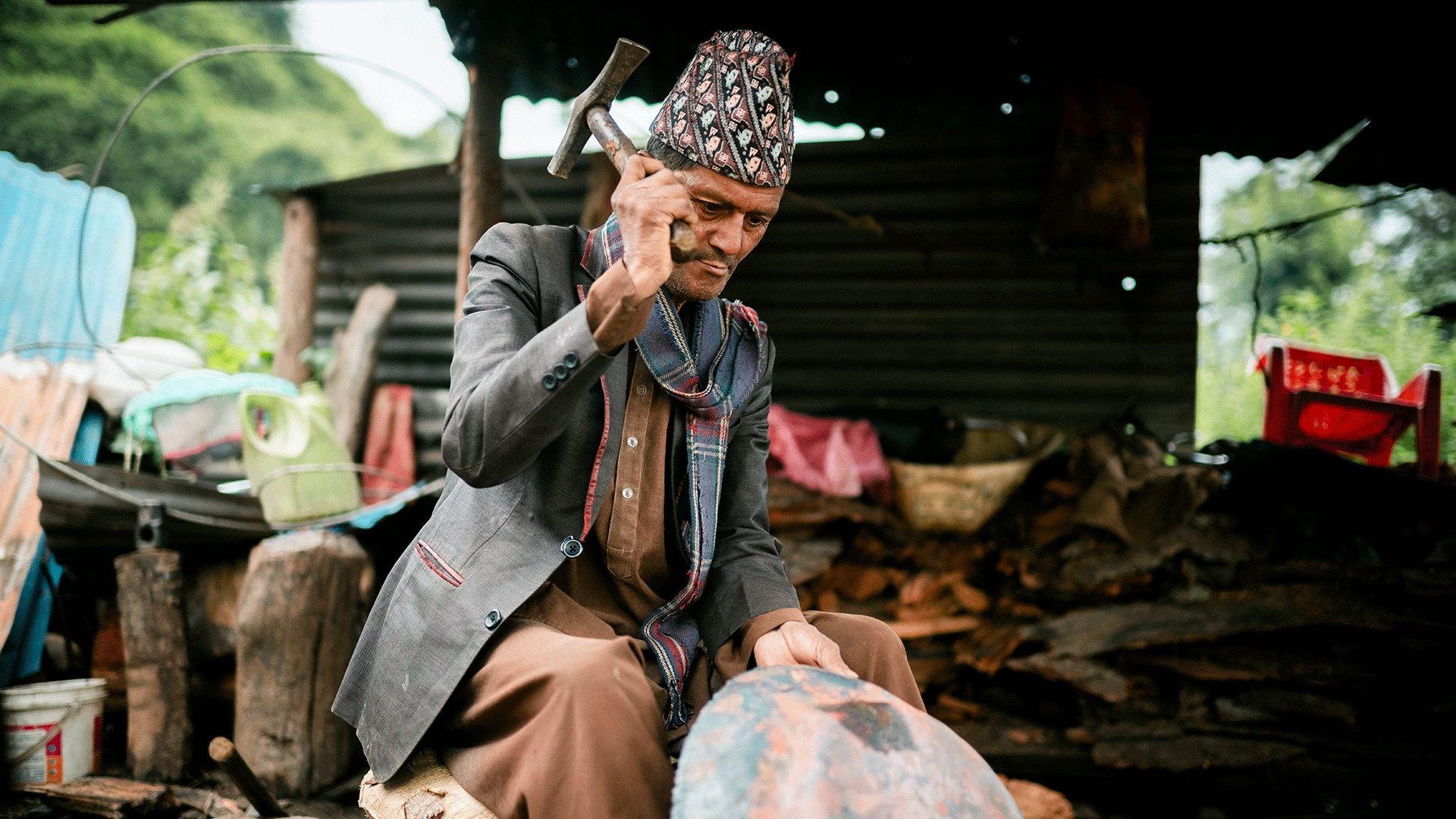
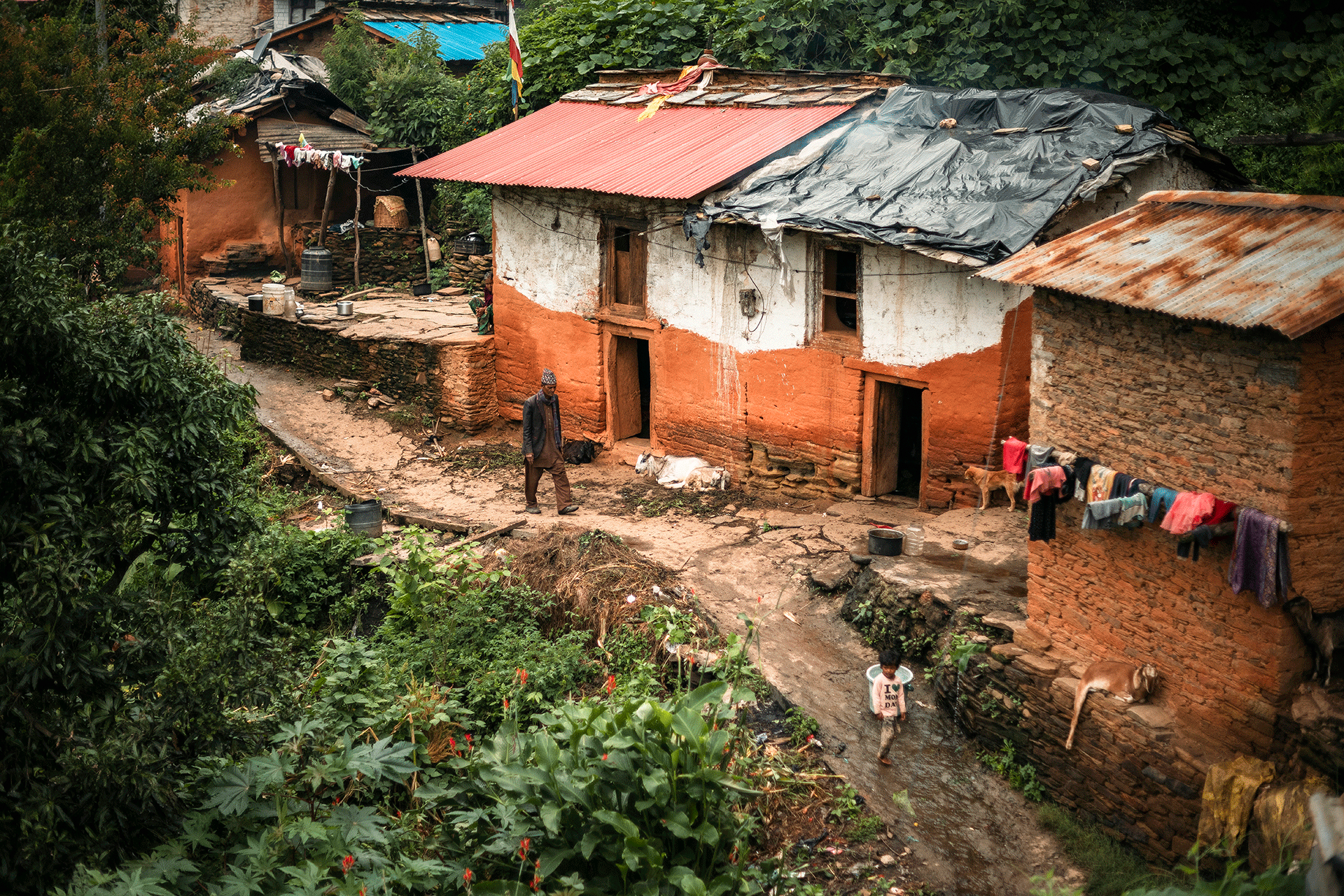
CLANG, CLANG, CLANG. The hammering of copper sets the rhythm for a new day in western Nepal. The sound comes from Gopal Tamrakar’s workshop, which can be reached by climbing three steep steps from the narrow main street of the village.
In this village in the district of Dadeldhura, west of Nepal, men traditionally grow up to be blacksmiths. Gopal, now 72, also started as a blacksmith shortly after puberty.
“Making these pots is a tradition in my family. My ancestors made them too,” he says, showing us a copper pot he is working on. As he works, its surface changes from grey to a shiny reddish brown.
ONE POT takes about two days to make by hand from a thin sheet of copper into a finished product. Although shops now sell all kinds of cookware, traditional pots are still highly valued, especially during large celebrations, used, for example, to serve rice.
“People think that these pots are made of sacred copper, which is purer than brass. That’s why they like them,” Gopal explains.
Despite their popularity, people are no longer willing to pay a decent price for the pots. Still, according to Gopal, a good pot can fetch 5,000 rupees, or about 29 euros. The amount may sound small, but in Nepal, that money can feed a family for many days.
Or used to. The price of copper has also risen sharply during Gopal’s career. He recalls that copper used to cost 45 rupees per kilo. Now the price is close to 2,000 rupees.
Fortunately, Gopal has received support for purchasing materials through Finn Church Aid.
THE WORK OF A BLACKSMITH is often physically demanding. Early in the morning, breath is steaming in the damp and cool air that accumulates in the lush valley during the night. During the day, the sun raises the temperature to nearly thirty degrees, even though it is the monsoon season.
Although Gopal has been a blacksmith all his life, in recent years his age has begun to take its toll. He no longer has the strength to do everything on his own. Nevertheless, he continues, because without blacksmithing, he and his wife have no income.
In addition, according to Gopal, the market for the nearest city, Amargadh, considered the centre of the county, is now worse than before.
“Competition is fierce. You have to go around the markets,” says the blacksmith.
One pot weighs about two kilograms. In order for Gopal to get to the market with his pots, he has to walk, as the only way to leave the valley is on foot. The nearest bus stop is almost an hour’s walk away. To get there, he first has to climb out of the valley.
Gopal no longer has the strength to travel around the steep terrain of the local area as he used to. That is why he has given the responsibility of travelling to the market to his young cousin.
“I am old. My hands and feet are weak,” Gopal says.
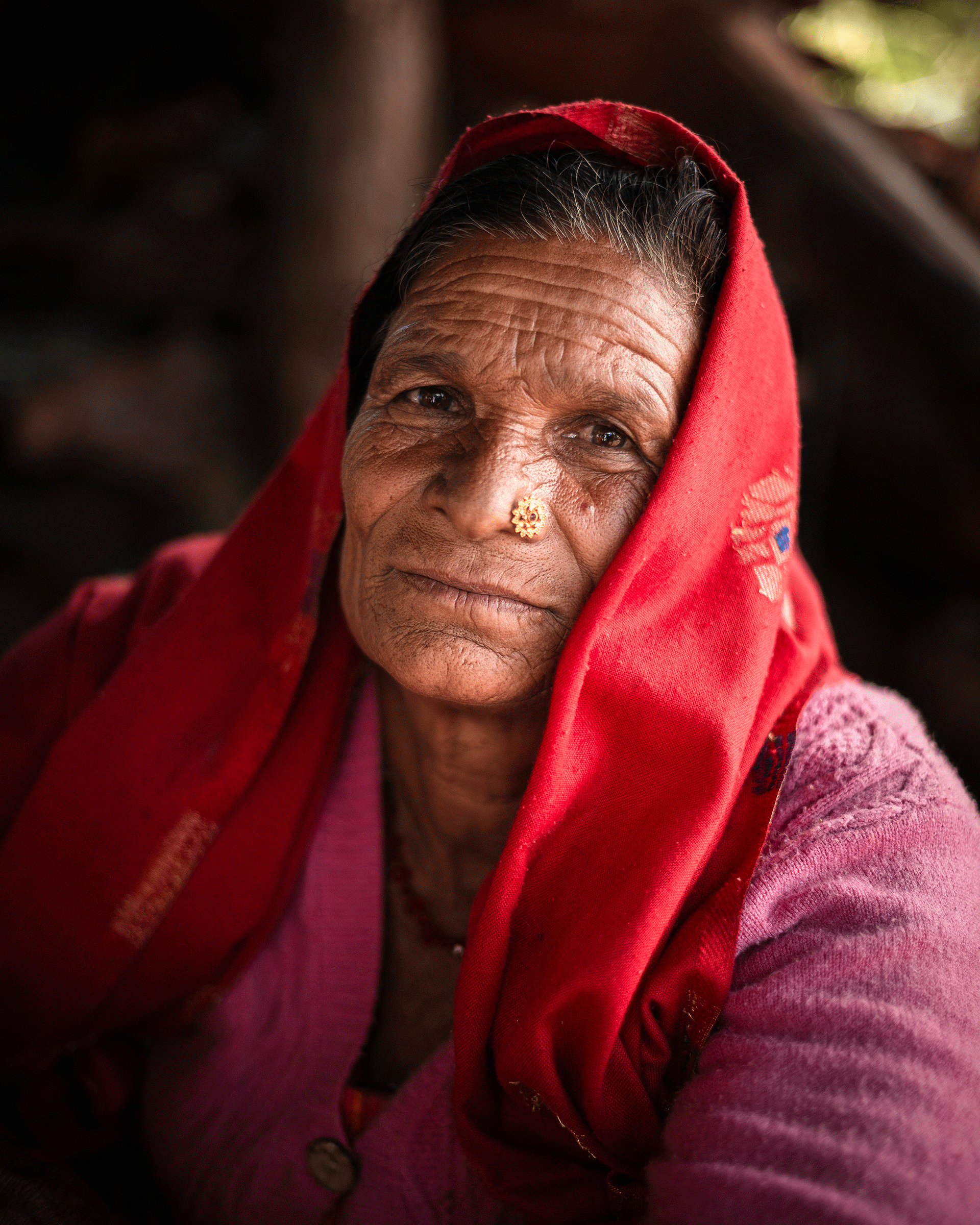
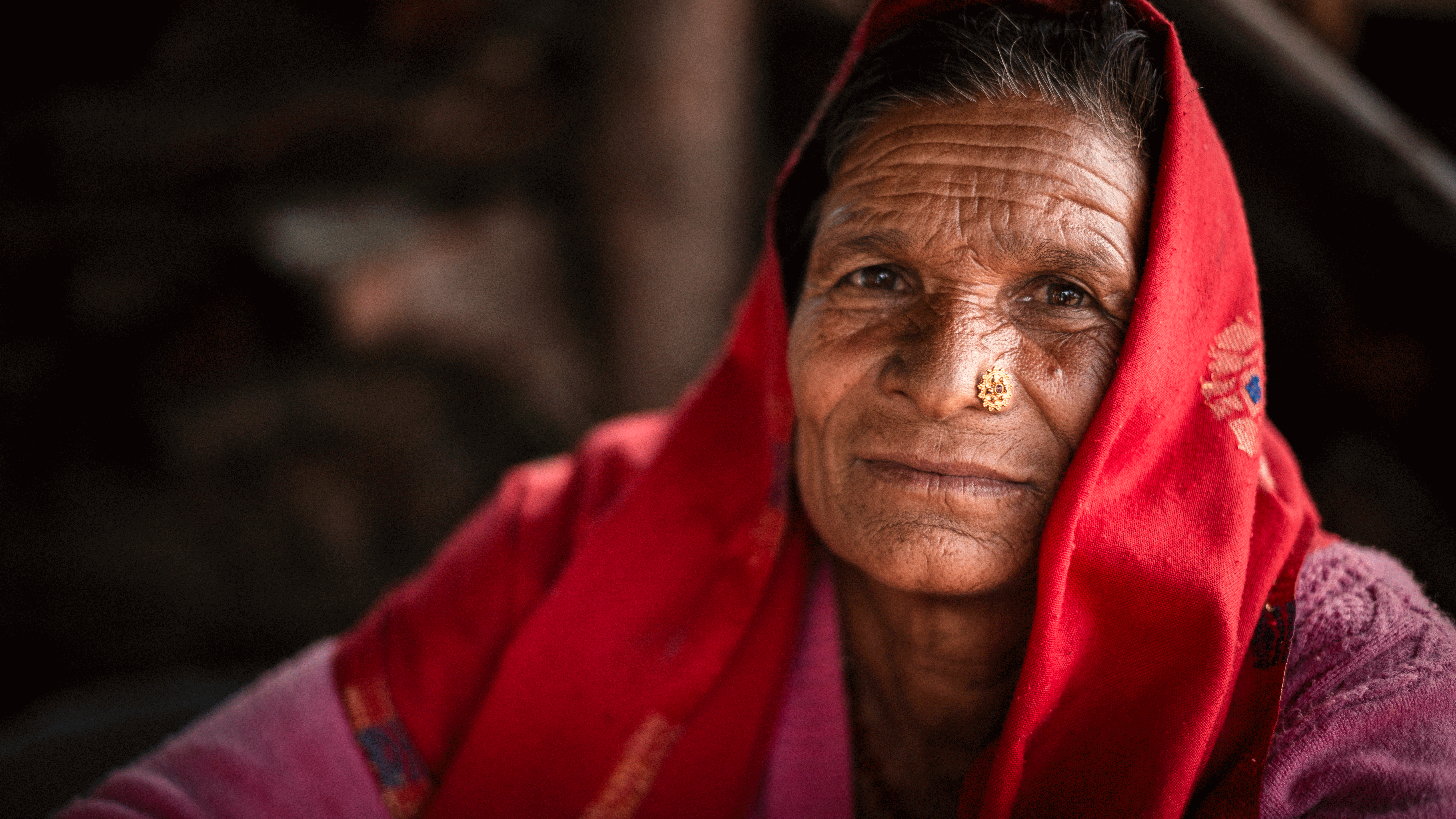
MADHAVI TAMRAKAR, 70, sits next to her husband Gopal. She collects the firewood needed to heat the copper and manually operates the machine that blows hot air under the forging hammer.
“My husband’s relatives told him to take another wife who would bear him sons. He didn’t want to,” Madhavi says later, as she carries a pot filled at the village water point.
“He loves me so much,” Madhavi continues.
The parents of three daughters are together, but left to fend for themselves.
“We are worried about the future. We have no security for the future. Our daughters live elsewhere and we have no sons,” says Gopal.
In rural Nepal, the number and gender of children matter. After starting a family, sons stay in their parents’ home, while daughters move in with their spouses. Sons can therefore be seen as a kind of social security.
The couple have been together for a long time. In accordance with traditional customs, they married early. Gopal estimates that he was twelve and Madhavi ten.
“We got married very young and didn’t go to school. We were just children. It’s not good to get married as a child. We were left without an education,” says Madhavi, sitting down on the shady edge of the house.
Neither of them can read or write. As a result, Gopal and Madhavi have spent their entire lives doing physically demanding work without being able to save any money.
“Fortunately, young people go to school nowadays. You have to study first. You can get married later,” Madhavi says.
UNDER THE ROOF of his workshop, Gopal makes room for his younger cousin, whom he has trained as a blacksmith. Cousin Kailash Tamrakar’s parents moved to India when they were young, and the young man has now returned to Nepal. He has found a wife in his new home village. The couple’s little daughter peeks through the doorway, watching the events in the yard.
As a returnee, Kailash has gone against the tide. Nepal is suffering from acute youth emigration. According the government’s Nepal Labour Migration Report, supported by the International Labour Organisation (ILO), the number of workers leaving for foreign employment has frequently hovered around or exceeded 2,000 per day in recent years. Every year, half a million young people enter the labour market.
There are only enough jobs for a fraction of them, as Nepal is a country of young people. The median age of Nepal’s population is only 25. Only 10 per cent of Nepalese are over 60 and about 6 per cent are over 65.
Young Nepalese people are particularly drawn to India, Malaysia, Qatar and Saudi Arabia. They are driven to these countries by hopes for a future that their homeland does not seem to offer.
Leaving can come at a high price. Working abroad means being separated from one’s family. Many migrant workers abroad also fall victim to exploitation and even human trafficking. Without education and language skills, it is difficult for young people to recognise danger and demand their rights. Young people who travel abroad via unofficial routes are most at risk.
THE DEPARTURE OF YOUNG PEOPLE also affects those who remain. Up to 60 per cent of Nepalese earn their living from agriculture. Small-scale farming is hard physical work. When those of prime working age leave, leaving only children and older people at home, agricultural work becomes even harder.
The situation is unlikely to improve, as the number of elderly people has also grown faster in recent decades than before. In 1950, the life expectancy of Nepalese people was only 40 years, but today it is around 70 years. This has raised important questions about how the elderly can cope in a country with poor social security.
Gopal appreciates his young cousin’s help. The young man is better than Gopal at hammering copper and transporting the pots to market.
“As long as I am alive, my cousin will help me. When I die, he will work only for himself.”
Easy-to-care-for domestic animals such as goats, chickens and pigs are one way in which Finn Church Aid supports elderly people in Nepal. Gopal and Madhav also have goats. Madhav takes the goats to a nearby forest in the morning to eat and leaves them there for the day. In the evening, the goats are brought home.
THE DESIRE for a better income also took Gopal abroad at one point. He says he travelled around northern India for years when his legs were still stronger. The arduous journey was worth it, as copper pots fetched a better price across the border than at home – or at least better than in his home region.
“I was at home alone with our daughters and took care of everything here,” Madhavi recalls.
She has no bad memories of those years. Time with the children passed quickly in the small village community as she went about her daily chores.
“I love that she took good care of our home and children. She has been a wonderful wife,” says Gopal.
Now that age is taking its toll and health is failing, it is good to stick together. Gopal returned home three years ago and has not ventured further than the nearby town since.
“I love being here. I was born here and I know the people,” says Gopal.
SOMEWHERE A GOAT BLEATS. A large dog seeking shade from the wall of the house walks lazily under the shed roof and flops down behind Gopal, who is sitting on a bench.
When asked about his plans for the future, the blacksmith becomes pensive.
“I’ll keep working as long as I can. I can’t say whether our future will be easy or difficult.”
In Nepal, people who have reached the age of 68 receive a monthly allowance of about 4,000 rupees (about 23 euros). It is a small amount of help. Many elderly people spend their allowance on medicine.
The village has developed in recent years, which Gopal is grateful for. A new road and new water points have been built in the valley. The nearest one is a few minutes’ walk from Gopal’s blacksmith’s workshop. Before, the journey was longer.
Madhavi is responsible for fetching water and carries it home on her head in a copper pot made by her husband.
The sight of 70-year-old Madhavi walking along a slippery path turned muddy by rain is quite impressive. Wearing plastic sandals, she strides along so briskly with her load weighing over ten kilograms that younger people have to run to keep up with her.
But then, Madhavi has been walking these same paths since she was a child. She was born in a neighbouring village, but after getting married, she moved to her spouse’s home in accordance with tradition. She knows every step of the way here and is not afraid to set foot on the stones.
At home, Madhavi puts down the pot and goes to stoke the fire in the workshop. The couple work together.
“We support each other strongly in everything. We don’t need to argue,” she says with a smile.
—