Echoes of the earthquake
In March 2025, Myanmar was struck by the strongest earthquake in 113 years. In the midst of this disaster, those who were already living as internally displaced persons are the most vulnerable.
Around lunchtime, the ground began to shake and tremble. It all happened very quickly. An earthquake spares nothing: homes, schools, monasteries.
Nature is so powerful that in 80 seconds it can destroy almost anything humans have built over tens or hundreds of years. All that remains is dust and rubble; what were, just moments ago, temples, homes, and classrooms. What also remains is the trauma, not least fears of a new earthquake.
When an earthquake strikes a densely populated area, it is difficult at first to obtain accurate information on the number of victims. This was the case in the Mandalay area of Myanmar. Everything was in a state of chaotic confusion; communications with the disaster area were intermittent and aftershocks hampered both the search for the missing and victims and efforts to assist survivors.
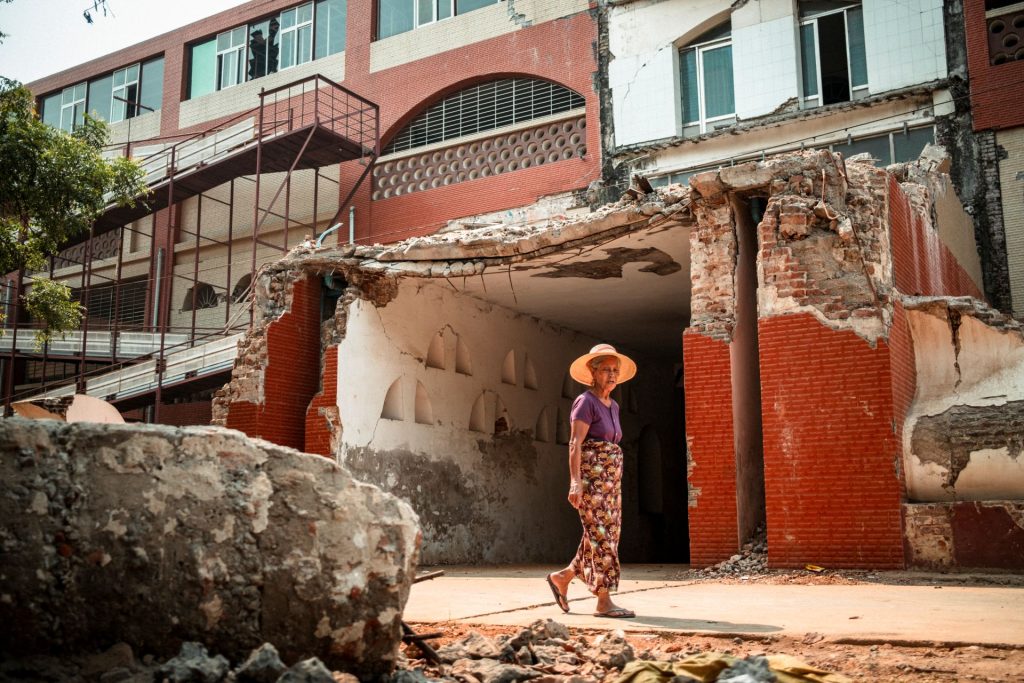
A monastery is a refuge for refguees
If you look at a map, the Buddhist monastery in Tant Kyi Taung is located right on the edge of the epicentre of the earthquake. A large pile of bricks and concrete rubble serves as a reminder of the destruction that occurred a year ago. One of the monastery’s larger buildings partially collapsed due to the earthquake. The building housed, among other things, classrooms for Buddhist monks. They remain off-limits, and the monastery has not yet received any funds to repair the damage.
Otherwise, life seems normal.
Life at the Tant Kyi Taung Monastery had already been turned upside down before, just six months prior to the earthquake. Three hundred people moved into the monastery’s grounds after fleeing to Mandalay to escape the armed conflict raging in their home region.
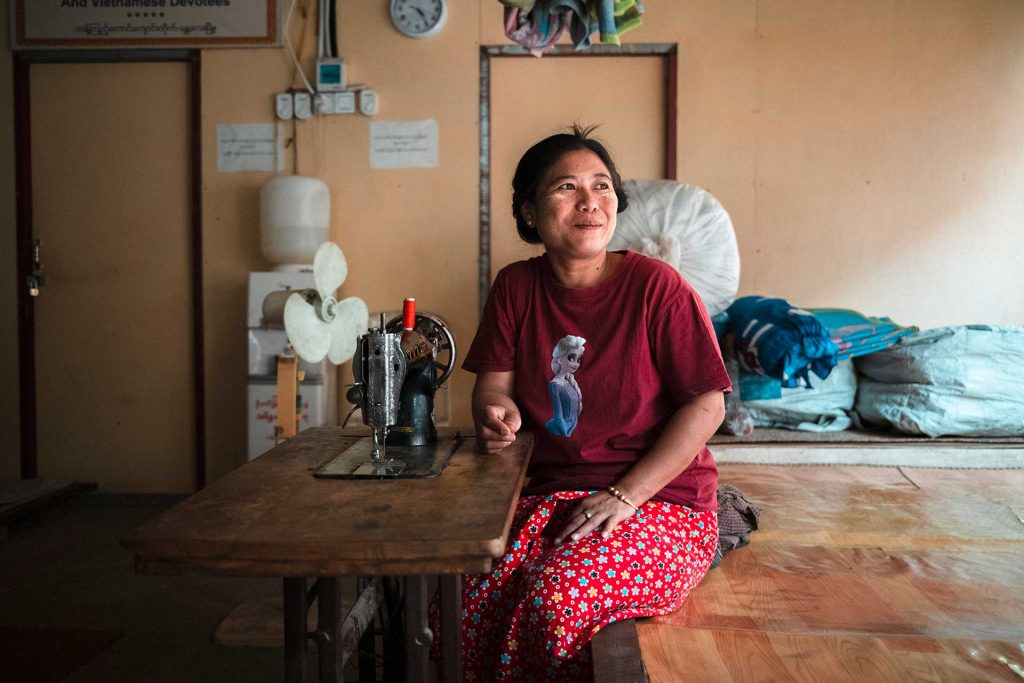
One of them is 37-year-old mother Aye Aye Tun. She is standing in a large hall located right next to the collapsed building. The room has high ceilings, and at the back wall sits a large wooden Buddha. Fans whir on the ceiling beams, trying to cut through the warm air that hangs heavy all around.
“I’ve experienced earthquakes before, but never one like this. I’ve never seen buildings collapse like that,” says Aye Aye Tun.
The deadliest earthquake in Myanmar in over a century
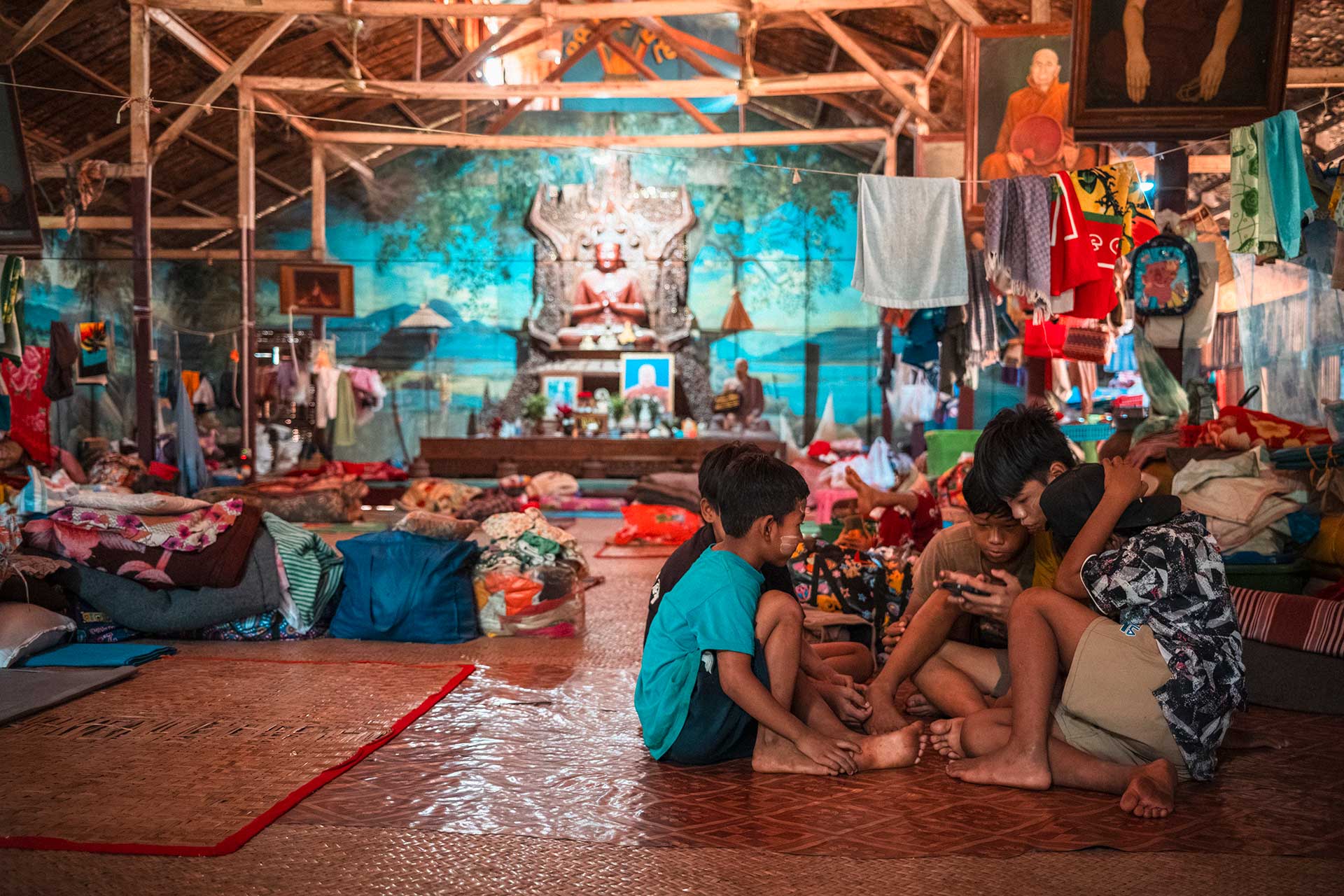
Portraits of the monastery’s leading monks hang from the pillars inside the building, and straw mats and sacks filled with bedding are spread out beneath them. Strings tied to the pillars divide the space into sections of about five or six square metres. Mosquito nets hang from the strings.
Normally, this place is the heart of the monastery’s spiritual celebrations. Now, the hall serves as a refuge for people fleeing armed conflict.
Aye Aye Tun points to the spot at the front of the hall where she used to sleep with her family. Fearing aftershocks, all 60 people who had been living in this space fled further away from the building, which was in danger of collapsing.
The monastery complex protected its residents. Not everyone was quite as lucky. The March 2025 earthquake was the strongest to hit Myanmar in 113 years. The death toll eventually rose to over 5,300, and 11,000 people were reported injured.
Driven from her hometown
The families living on the grounds of the Tant Kyi Taung Buddhist monastery are connected by their shared home village of Mingun. Their home is located in the Sagaing region, where armed conflict has been ongoing for years. Aye Aye Tun and the other families fled to this monastery in the fall of 2024.
“We didn’t have time to take almost anything with us. Just the clothes on our backs,” says Aye Aye Tun, a mother of two children aged 7 and 12.
I’ve experienced earthquakes before, but never one like that. I’ve never seen buildings collapse like that.
The children are at school elsewhere during the day, which Aye Aye Tun thinks is a good thing. “They learn a lot more in a regular school than the children here do.”
Volunteer teachers stepped up in the midst of the crisis
In the monastery courtyard, there is a small classroom where about ten children are already sitting at double desks, waiting for the teacher. Myo Min Khant, 8, and Thandar Aung, 11, are of different ages but are both studying third-grade material.
“I’m happy when I get to do math. Working with numbers makes me happy,” says Myo Min Khant.
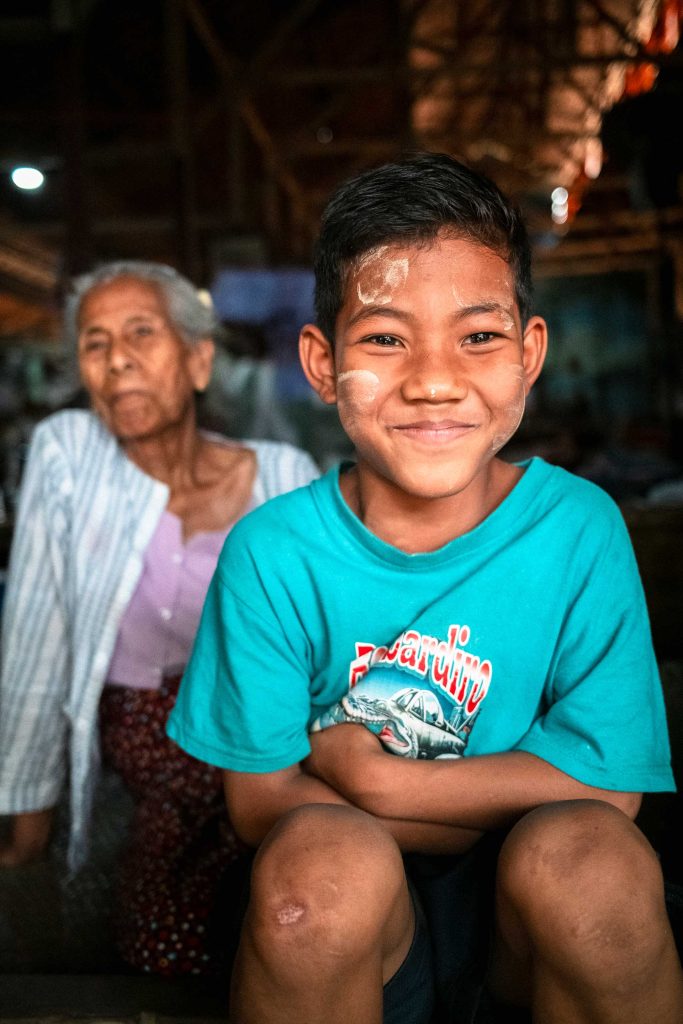
Thandar Aung, on the other hand, enjoys studying English.
“I like the way the words sound,” the girl says, and lists a series of words she’s learned: pineapple, mango, orange, giraffe, dog.
The children at the monastery school have received notebooks, pencils, erasers, and drawing paper as part of a project supported by FCA’s disaster relief fund and ACT Alliance’s Myanmar earthquake response.
School is really only two lessons a day, five days a week. For the children, however, it’s an important time.
“It’s nice to hang out and do things with friends,” says Thandar Aung.
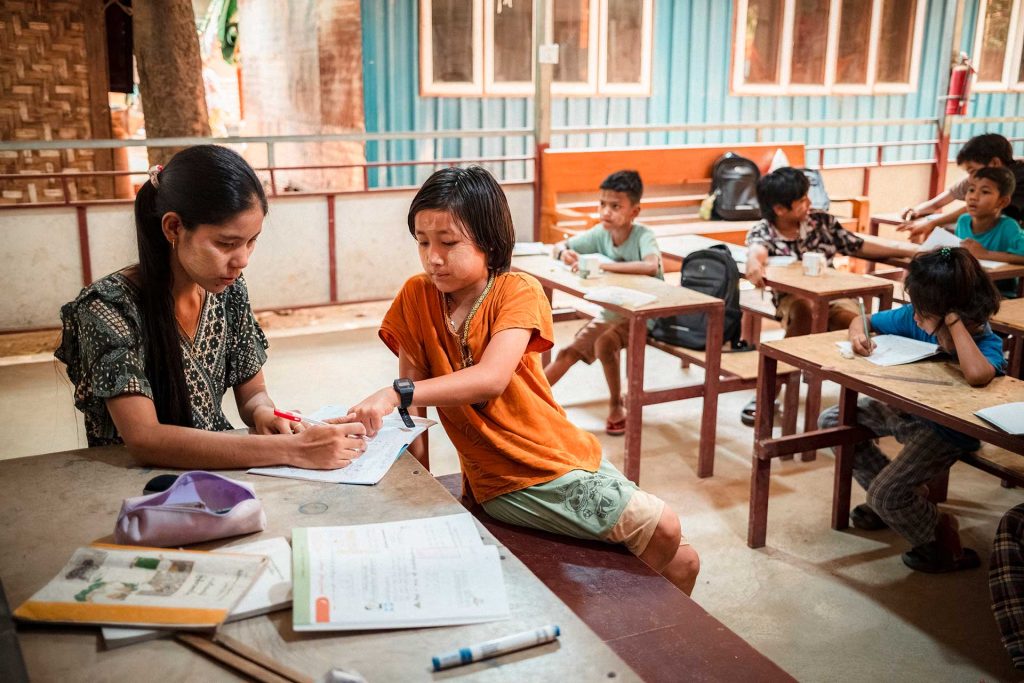
Children have a wide range of difficulties concentrating
Teacher Aye Aye Myat has noticed that children sometimes have trouble concentrating in class.
“They’d rather just play with each other than concentrate,” she says.
A major factor behind this is undoubtedly the fact that very few of Aye Aye Myat’s approximately 40 students have ever attended a formal school. Instead, many have been home-schooled. Being refugees has also brought its own set of challenges.
“The children’s parents also have a lot on their minds, and because of that, they haven’t always been able to teach their children things like basic hygiene, manners, or how to get along with others. That task has fallen to me.”
Aye Aye Myat is actually a volunteer teacher at a monastery school and does not receive a salary for her work. She comes from the same community as her students and managed to study at the university for one year before she was forced to flee to Mandalay to escape the armed conflict.
In addition to Aye Aye Myat, there are two other volunteer teachers at this school, one of whom is a Buddhist monk. FCA has supported the volunteer teachers as part of its post-earthquake emergency aid project.
Volunteering a way to give back to the community
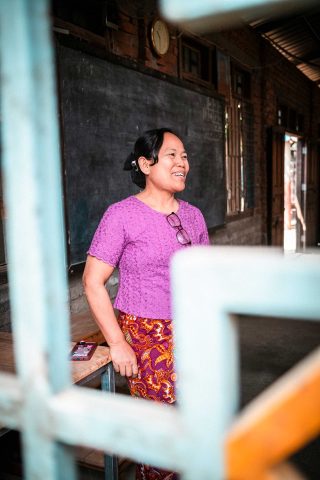
On the other side of Mandalay lies the Yadanar Sani Monastery School. Volunteer teacher Daw Cho, 54, shows us around the school.
Since retiring, Daw Cho has returned to her home community.
“I signed up to volunteer because I wanted to do something good for my community,” she says.
This monastery school has also taken in children of internally displaced persons who have fled to the city from other parts of the country. In addition, the school has admitted children from the poorest families in the surrounding community, whose parents cannot afford to buy textbooks and other supplies required by public schools.
The shock of the earthquake turned into a lesson
Volunteer teacher Aye Aye Aung, 23, still remembers the terror caused by the earthquake. She saw the building at the entrance to the convent school collapse.
“It’s been a year, but it still feels like it happened yesterday. I’m afraid the same thing might happen again,” she says.
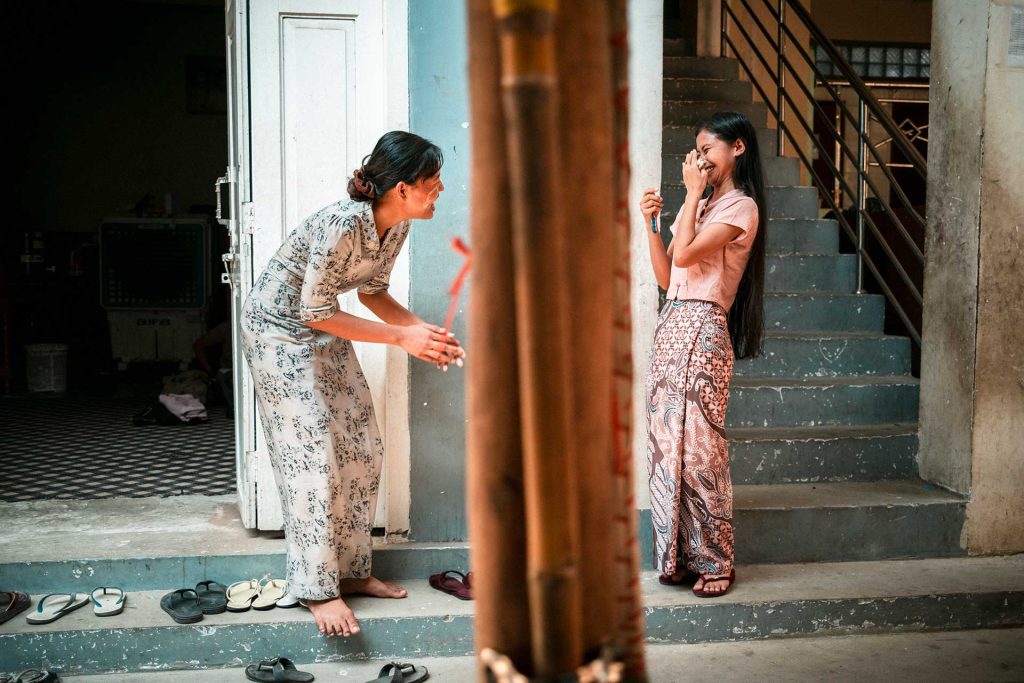
There has been a lot of discussion at school about what to do if another earthquake strikes.
“Now, as soon as we feel even the slightest tremor, we know to gather all our students right here in the courtyard. We’re better prepared,” says Aye Aye Aung.
A year ago, they had a stroke of luck. When the earthquake struck, the school’s students and teachers were on their lunch break. During that time, everyone usually retreats to rest during the hottest part of the day. This time, the school principal had given the students permission to take their nap in a different building than usual. The part of the school that collapsed was exactly where the students normally spent their rest period.
Six people died, but the principal’s decision likely saved dozens of lives.
“Now, as soon as we feel even the slightest tremor, we know to gather all our students right here in the courtyard. We’re better prepared.”