future talents
Young East African entrepreneurs in the creative industries believe that when you invest in digital skills, the sky’s the limit. There are the pioneers, as Africa’s creative economy is projected to be worth as much as $200 billion by 2030.
EAST AFRICA is an extremely enterprising region. Almost everyone has a business, a side business, and a side business to their side business. This is especially true of young people. On the other hand, ambition, combined with the lack of proper safety nets, puts immense pressure on young people.
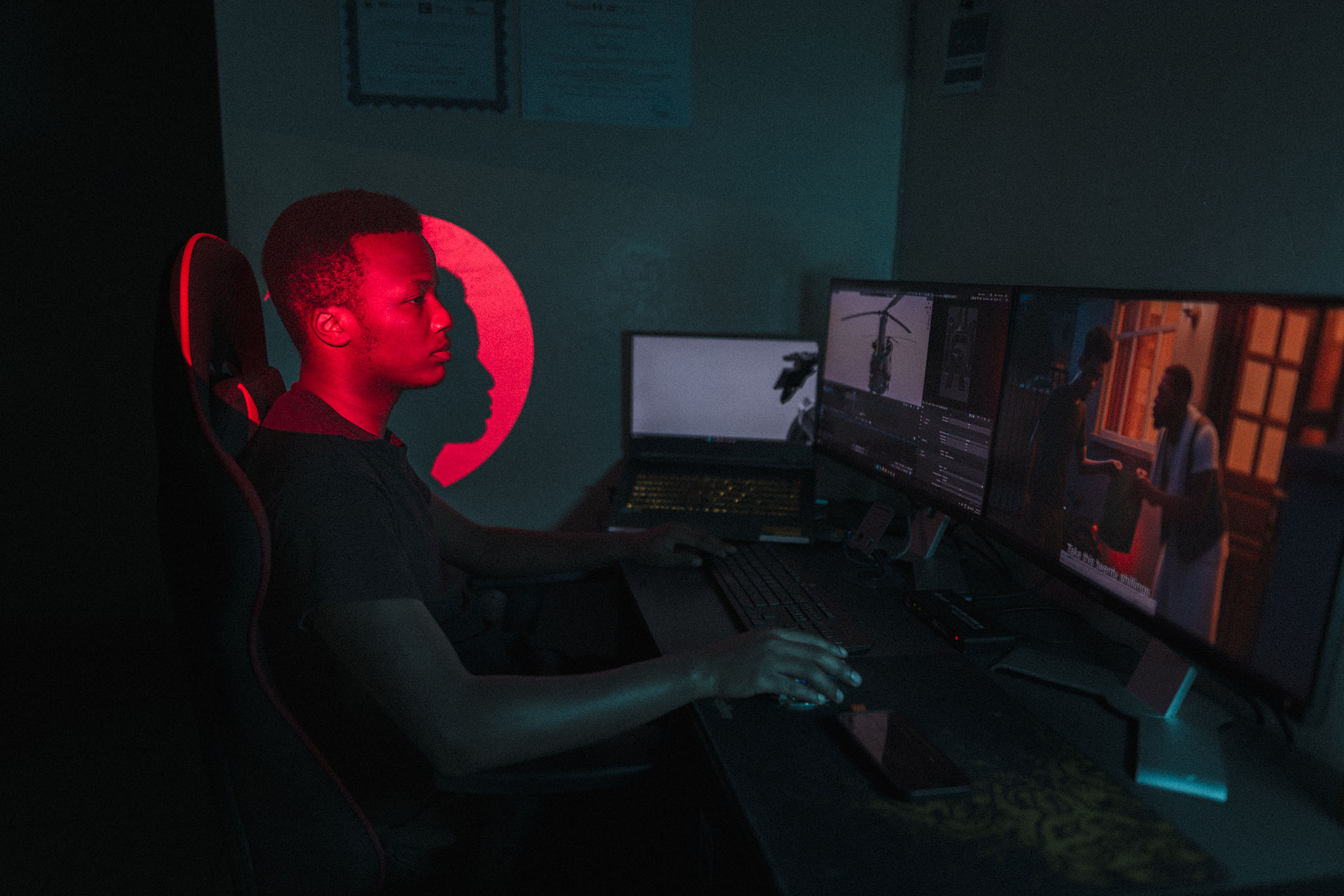
“I attended an AI workshop for animators and used AI software there. I realized that AI isn’t smart, it’s actually pretty dumb. But at the same time, I was able to use it to create a film during the 10-day course. After that experience, I started using AI in my work. Now I charge my clients different rates for animations created with AI and those made using traditional methods,” says Joseph Raina.
Raina completed the animation training programme offered by Finn Church Aid (FCA) and now runs a successful animation company. He also serves as an instructor for FCA courses.
“In animations from other cultures, Africans were portrayed in a stereotypical way. We wanted to create an African style in which all the characters could be recognized as part of that style. It has been a success. It was precisely because of my own style that I was noticed, and I received a commission from Penn State University in the United States.”
The game where the challenge is to talk

“When I was younger, I was depressed and withdrew from others. At some point, I realized I didn’t have anyone I could talk to about personal things,” says Phelister Amondi Awor, 24.
She started going to the youth centre where she received support for mental health issues. It helped. Now she is studying at university and runs her own organization, which uses art, poetry, theatre and dance to raise awareness about mental health, sexual health, and gender-based violence.

Phelister developed a board game. It plays similar to Monopoly, but players have conversations. Topics may range from family and friends to issues like interactions with police.
“Data is the new oil”
The administration is also raising questions among young entrepreneurs in neighboring Ethiopia. Jalene Tadesse Chali, 24, founded a company a year ago that collects and processes customer data for businesses by conducting surveys, for example.
She says it’s important to help companies understand how to use data effectively. Once they do, the sky’s the limit.
“I hope my company will grow into a billion-dollar business bigger than Google.”


“In 10 to 20 years, data will be even more important than it is now. Technology is coming to Ethiopia. Data will be the new oil.”
“Data is going to be very expensive. The biggest challenges in Ethiopia are culture and governance. Permits are required to collect data, and people need to trust that the data they provide will not be misused. We try to ensure that our data is not tied to politics and that we do not collect names or personal identification numbers, so that respondents can remain anonymous and trust us.”
I worked as a virtual assistant for companies in the United States and Canada and noticed that they all used data in their decision-making. I thought: why not here, too? I took some online courses from Google, Microsoft, and IBM on data analysis and programming, and learned to code in Python. “I realized there was a huge gap in the market because no one here uses data that way,” says Jalene Tadesse Chali.
“It was important to make young people’s voices heard”
The police have been a source of concern for young Kenyans in recent years. The country’s president, William Ruto, was elected in 2022 on a “Hustler Nation” platform. Kenya was supposed to become a promised land for small business owners. That is why it came as a shock to young people when the 2024 budget proposal called for tax increases that would hit small business owners particularly hard.
Young people were protesting, and the police responded with violence.
“I’m the type who likes to stay home, so I didn’t want to go out on the streets, but I wanted to do something. I spoke with a friend who works in the film industry, and he told me that a documentary film was being made about the protests,” says Joseph Raina. He served as the assistant editor on the documentary film about the protests.
“It was tough. Some of the footage was quite graphic at times, but it was important to make sure young people’s voices were heard.”
“The home of one of the directors was raided by the police. We had several backup copies stored in different locations. We secretly swapped out the hard drives and made sure no one was following us. We did this to show what the protests meant to Kenyans,” says Joseph Raina.